THE CLASSIC COLLECTION✦The Disappearing EyeCLASSIC FREE BOOKS
The Disappearing Eye
Fergus Hume
THE CLASSIC COLLECTION · 1890
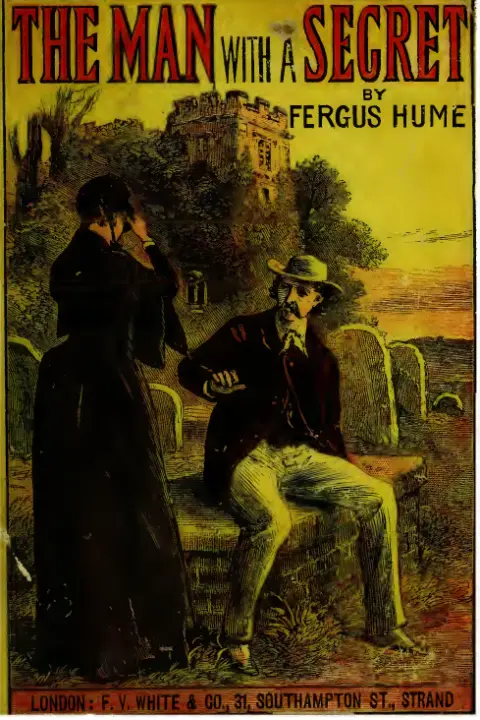
"The Man with a Secret: A Novel" by Fergus Hume is a work of fiction written in the late 19th century. The story centers on the character of Basil Beaumont, a morally ambiguous artist returning to his childhood village, Garsworth, to escape his creditors and indulge his vices. As he navigates the shadows of his past, we also meet Dr. Duncan Nestley, whose life Beaumont nearly ruined, setting up a complex relationship between the two men that embodies themes of friendship, betrayal, and the struggle for redemption. The opening of the novel introduces a grim and evocative setting, establishing the tone of melancholy and intrigue as it presents Beaumont at a scenic yet bleak location near Garsworth. Beaumont's character is fleshed out through introspective musings about his life and regrets, drawing the reader into his cynical worldview while hinting at the fragility of his current situation. An unexpected reunion with Dr. Nestley, who harbors resentment towards Beaumont for his past influence, further complicates matters, suggesting that both men are at the mercy of their intertwined fates. The narrative sets the stage for exploring the darker sides of human nature as well as the potential for change amidst moral dilemmas in this intriguing tale.
Introduction adapted from the source catalogue; source summaries may be automatically generated.
Free to read · English · 91,755 words · No account needed
MAKE TIME FOR A GOOD BOOK
On by default. Untick to stop anonymous reading totals. Each page counts after 10 seconds in view. How this works.
Anonymous counting is on unless you have switched it off.
Many the goblets of wine I quaffed
To health of dames who were fair and frail,
A kiss of the hand and a plumed hat doffed.
Then away to the wars in a coat of mail.
But, ah, that armour could not prevail
Against your eyes and your lips so red,
Nay, but such thoughts are a twice-told tale,
The past is past, and the dead are dead.
Time, wilt thou never let me forget
Those perished days till I'm cased in lead?
Folly to dream with such vague regret,
The past is past, and the dead are dead.
"The style is Villon, I see," observed Beaumont, when the poet ended.
"It's more than the genius is," muttered Dick, who cherished a deadly hatred of Ferdinand's poetry.
"I like your refrain, my dear Ferdinand," observed the vicar graciously; "it has a certain pleasant lilt about it, but I'm afraid your verses are somewhat gruesome. Still, they have merit. Oh, yes, they have merit."
"I'm glad you think so," said the modest poet humbly, to whom praise was as rain on thirsty flowers. "I hope to do better soon."
"I've no doubt you will," said Beaumont, rather sorry for the poor youth, who was blushing painfully. "Your verses are, to a certain extent, an echo of Villon, still you have a musical ear, and that is a great thing. If I may be permitted to give an opinion I rather think your views are a trifle pessimistic."
"Just what we were talking about," cried Reginald gaily. "A regret for the past and a lament for the present."
"It is the spirit of the age," sighed Ferdinand, putting the poem in his pocket. "It is hard to escape its influence."
"If any one had a chance of escaping it you ought to be the individual," said Beaumont, with a smile. "In London, where the latest ideas are floating in the air, it is difficult to be original, but out here, where the work is standing still, you ought to have struck out a new line. I'm afraid your poetry comes from books, not from Nature."
"Why so?" demanded Ferdinand, rather nettled.
"By the very fact that you used in that ballade an exotic form of rhyme, and the ideas therein are the dreary, hopeless sorrows of a worn-out world. Sing, like Herrick of the things around you,
'Of brooks, of blossoms, birds and bowers,
Of April, May, of June and July flowers,'
then you will probably strike a new note."
"I don't think much of Herrick," muttered Ferdinand proudly.
Your reading position is saved on this browser. Take it to another device with a library code. Reading pages adapt to text, rather than matching a printed edition.
Fergus Hume

Fergus Hume

Fergus Hume
Fergus Hume
BEHIND THE BOOK
This eBook is for the use of anyone anywhere in the United States and most other parts of the world at no cost and with almost no restrictions whatsoever. You may copy it, give it away or re-use it under the terms of the Project Gutenberg License included with this eBook or online at www.gutenberg.org. If you are not located in the United States, you will have to check the laws of the country where you are located before using this eBook. Read the source licence.
The original source file, including credits and licence, is retained by this library. Request an original-format copy at no charge. Please include the book title and Project Gutenberg identifier #55404.
KEEP YOUR CURIOSITY GOING
Coulson Kernahan

Maurice Baring
Frances Wright
Cécile Tormay

Frederic Jesup Stimson

W. H. P. (William Henry Pope) Jarvis