THE CLASSIC COLLECTION✦The Disappearing EyeCLASSIC FREE BOOKS
The Disappearing Eye
Fergus Hume
THE CLASSIC COLLECTION · 1890
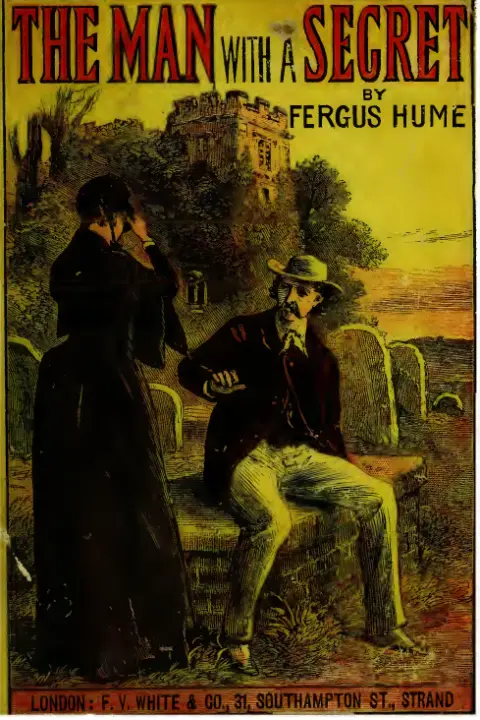
"The Man with a Secret: A Novel" by Fergus Hume is a work of fiction written in the late 19th century. The story centers on the character of Basil Beaumont, a morally ambiguous artist returning to his childhood village, Garsworth, to escape his creditors and indulge his vices. As he navigates the shadows of his past, we also meet Dr. Duncan Nestley, whose life Beaumont nearly ruined, setting up a complex relationship between the two men that embodies themes of friendship, betrayal, and the struggle for redemption. The opening of the novel introduces a grim and evocative setting, establishing the tone of melancholy and intrigue as it presents Beaumont at a scenic yet bleak location near Garsworth. Beaumont's character is fleshed out through introspective musings about his life and regrets, drawing the reader into his cynical worldview while hinting at the fragility of his current situation. An unexpected reunion with Dr. Nestley, who harbors resentment towards Beaumont for his past influence, further complicates matters, suggesting that both men are at the mercy of their intertwined fates. The narrative sets the stage for exploring the darker sides of human nature as well as the potential for change amidst moral dilemmas in this intriguing tale.
Introduction adapted from the source catalogue; source summaries may be automatically generated.
Free to read · English · 91,755 words · No account needed
MAKE TIME FOR A GOOD BOOK
On by default. Untick to stop anonymous reading totals. Each page counts after 10 seconds in view. How this works.
Anonymous counting is on unless you have switched it off.
Father!--art thou my father?--pause, good sir,
Ere thou profanest thus that holy name.
A father should protect and guide his child
Through the harsh tumult of this noisy life,
But thou hast stood apart these many years
And left me to the mercy of the world,
With all its snares and madd'ning influence,
Yet now thou say'st "I am thy father"--nay,
No name is that for such a one as thou.
Looking at that quiet room illuminated by the mellow light of the lamp, no one could have imagined the scene of terror and despair which had lately taken place, yet when Reginald entered, his face wore a somewhat puzzled expression.
"How do you do, Beaumont?" he said as the artist arose with a frank smile and took his hand. "I thought I heard a scream."
"Did you?" replied Beaumont, assisting his visitor to remove his great coat. "Then I'm afraid I must have been asleep, as I heard nothing, not even your knock; the opening of the door aroused me."
"I didn't knock at all," said Reginald, sitting down by the fire and drawing his chair closer to the burning coals. "I should have done so, but I forgot and walked straight in--you don't mind, do you?"
"Not at all, my boy, you are perfectly welcome," answered the artist
heartily. "Will you smoke?"
"Thank you, I've got my pipe."
He lighted his pipe and lay back in the chair watching the fire, while Beaumont, bending forward with his face in the shadow puffed at his cigarette, watching Reginald, and crouching on the dark staircase with her eye to the keyhole, a silent woman watched both. It was a curious situation and not without a touch of grim comedy, though, as a matter of fact, the play which the trio were about to act had more in it of the tragic than the comic element.
Reginald, looking sad and weary, watched the fire for some moments, till Beaumont, feeling the silence oppressive, broke it with a laugh.
"How fearfully dull you are, Blake," he said gaily, "is anything
wrong?"
Blake withdrew his sad eyes from the fire and looked at the speaker
with a singular smile.
"Not what many people would call wrong," he said at length. "I have a large income, I am young, and I marry the girl I love next week."
"Well, as you can't call any of those blessings wrong, my friend, you ought to be perfectly happy."
"No doubt--but perfect happiness is given to no mortal."
"You are very young to moralize," said Beaumont with a faint sneer.
Your reading position is saved on this browser. Take it to another device with a library code. Reading pages adapt to text, rather than matching a printed edition.
Fergus Hume

Fergus Hume

Fergus Hume
Fergus Hume
BEHIND THE BOOK
This eBook is for the use of anyone anywhere in the United States and most other parts of the world at no cost and with almost no restrictions whatsoever. You may copy it, give it away or re-use it under the terms of the Project Gutenberg License included with this eBook or online at www.gutenberg.org. If you are not located in the United States, you will have to check the laws of the country where you are located before using this eBook. Read the source licence.
The original source file, including credits and licence, is retained by this library. Request an original-format copy at no charge. Please include the book title and Project Gutenberg identifier #55404.
KEEP YOUR CURIOSITY GOING
Coulson Kernahan

Maurice Baring
Frances Wright
Cécile Tormay

Frederic Jesup Stimson

W. H. P. (William Henry Pope) Jarvis