THE CLASSIC COLLECTION✦The Disappearing EyeCLASSIC FREE BOOKS
The Disappearing Eye
Fergus Hume
THE CLASSIC COLLECTION · 1890
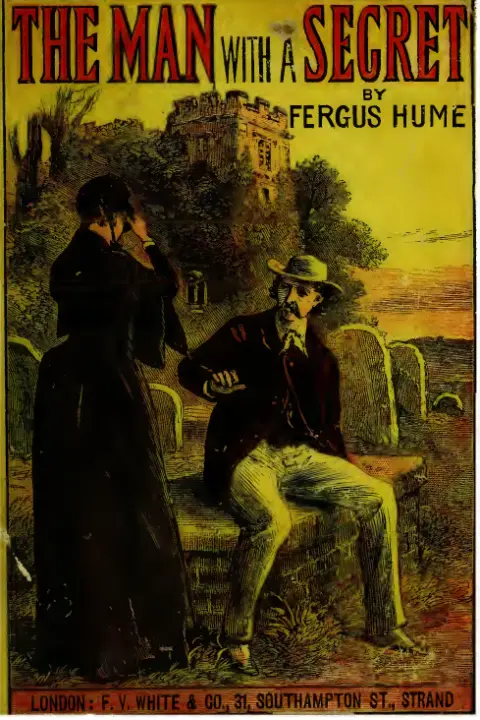
"The Man with a Secret: A Novel" by Fergus Hume is a work of fiction written in the late 19th century. The story centers on the character of Basil Beaumont, a morally ambiguous artist returning to his childhood village, Garsworth, to escape his creditors and indulge his vices. As he navigates the shadows of his past, we also meet Dr. Duncan Nestley, whose life Beaumont nearly ruined, setting up a complex relationship between the two men that embodies themes of friendship, betrayal, and the struggle for redemption. The opening of the novel introduces a grim and evocative setting, establishing the tone of melancholy and intrigue as it presents Beaumont at a scenic yet bleak location near Garsworth. Beaumont's character is fleshed out through introspective musings about his life and regrets, drawing the reader into his cynical worldview while hinting at the fragility of his current situation. An unexpected reunion with Dr. Nestley, who harbors resentment towards Beaumont for his past influence, further complicates matters, suggesting that both men are at the mercy of their intertwined fates. The narrative sets the stage for exploring the darker sides of human nature as well as the potential for change amidst moral dilemmas in this intriguing tale.
Introduction adapted from the source catalogue; source summaries may be automatically generated.
Free to read · English · 91,755 words · No account needed
MAKE TIME FOR A GOOD BOOK
On by default. Untick to stop anonymous reading totals. Each page counts after 10 seconds in view. How this works.
Anonymous counting is on unless you have switched it off.
To rule mankind is all I crave
And at my feet to see them curled,
For if you make the world your slave
You'll ne'er be slave unto the world.
Evidently Dr. Nestley had become friendly with his quondam enemy, for both gentlemen now seemed to be on the best of terms with one another. Either the doctor had succumbed to the wonderful personal fascinations of Beaumont, or the artist had convinced Nestley that he was wrong in regarding him in a hostile manner.
On recognizing Miss Challoner, the young physician came forward to greet her, while Beaumont remained in the background lost in admiration at the wonderful beauty of her face, which appealed strongly to his artistic nature.
"I didn't expect to find you here, Miss Challoner," said Nestley eagerly; "my friend and I heard the singing and came in to listen; by the way, will you permit me to introduce Mr. Beaumont?"
Una bowed a little coldly, for she remembered what Reginald had said about the artist, but, hearing his name mentioned, Beaumont came forward and was formally presented. In spite of her distrust, Una could not but admire the handsome, tired-looking face she beheld and was still further impressed by the peculiar timbre of his voice when he began to talk. Beaumont certainly possessed in no small degree that wonderful fascination of manner attributed to the ill-fated Stewarts of Scotland which atoned so much for their fickleness, treachery and ingratitude.
"It is Mr. Blake who is singing, I think," observed Basil idly, "he
has a wonderful voice."
"Yes," answered Una with a pleased smile. "I have never heard a
finer--not even in Germany."
"Ah! you have been in Germany, Miss Challoner?"
"For some years--I stayed at Munich."
"A charming city which affords great opportunities for studying art
both in music and painting."
"Did you study either, Miss Challoner?" asked Nestley, who seemed rather annoyed at the impression Beaumont had made.
"A little of both," she answered. "I was educated in Munich, but I'm afraid my learning was rather desultory--I sing a little--paint a little--and do both badly."
"That would be impossible," said Nestley desirous of paying a compliment, but Una frowned at the remark.
"Don't, please," she said coldly, "I dislike insincerity."
Nestley reddened a little at the tone of her voice and the obvious
rebuke, on seeing which Una held out her hand to him with a charming
smile.
"You must not mind what I say, Dr. Nestley," she observed, bending forward, "I'm afraid I'm dreadfully rude."
"And wonderfully charming," thought Beaumont, who, however, kept his opinion to himself, warned by the fate of his friend.
Your reading position is saved on this browser. Take it to another device with a library code. Reading pages adapt to text, rather than matching a printed edition.
Fergus Hume

Fergus Hume

Fergus Hume
Fergus Hume
BEHIND THE BOOK
This eBook is for the use of anyone anywhere in the United States and most other parts of the world at no cost and with almost no restrictions whatsoever. You may copy it, give it away or re-use it under the terms of the Project Gutenberg License included with this eBook or online at www.gutenberg.org. If you are not located in the United States, you will have to check the laws of the country where you are located before using this eBook. Read the source licence.
The original source file, including credits and licence, is retained by this library. Request an original-format copy at no charge. Please include the book title and Project Gutenberg identifier #55404.
KEEP YOUR CURIOSITY GOING
Coulson Kernahan

Maurice Baring
Frances Wright
Cécile Tormay

Frederic Jesup Stimson

W. H. P. (William Henry Pope) Jarvis