THE CLASSIC COLLECTION✦The Disappearing EyeCLASSIC FREE BOOKS
The Disappearing Eye
Fergus Hume
THE CLASSIC COLLECTION · 1890
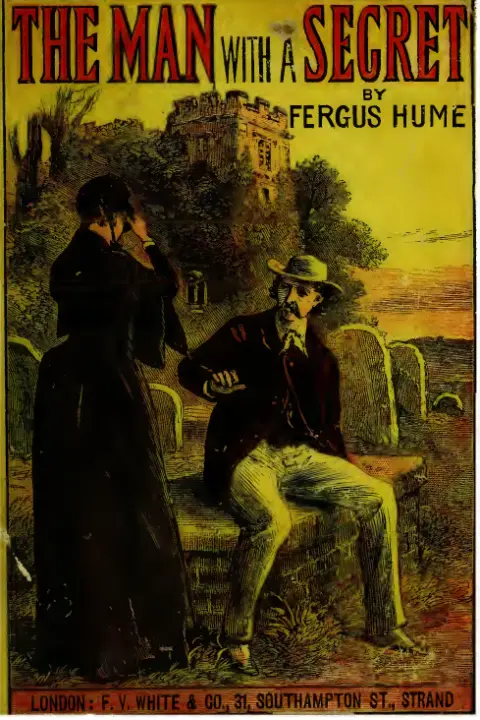
"The Man with a Secret: A Novel" by Fergus Hume is a work of fiction written in the late 19th century. The story centers on the character of Basil Beaumont, a morally ambiguous artist returning to his childhood village, Garsworth, to escape his creditors and indulge his vices. As he navigates the shadows of his past, we also meet Dr. Duncan Nestley, whose life Beaumont nearly ruined, setting up a complex relationship between the two men that embodies themes of friendship, betrayal, and the struggle for redemption. The opening of the novel introduces a grim and evocative setting, establishing the tone of melancholy and intrigue as it presents Beaumont at a scenic yet bleak location near Garsworth. Beaumont's character is fleshed out through introspective musings about his life and regrets, drawing the reader into his cynical worldview while hinting at the fragility of his current situation. An unexpected reunion with Dr. Nestley, who harbors resentment towards Beaumont for his past influence, further complicates matters, suggesting that both men are at the mercy of their intertwined fates. The narrative sets the stage for exploring the darker sides of human nature as well as the potential for change amidst moral dilemmas in this intriguing tale.
Introduction adapted from the source catalogue; source summaries may be automatically generated.
Free to read · English · 91,755 words · No account needed
MAKE TIME FOR A GOOD BOOK
On by default. Untick to stop anonymous reading totals. Each page counts after 10 seconds in view. How this works.
Anonymous counting is on unless you have switched it off.
"No doubt," assented Beaumont, rather bored by the constant flow of Mrs. Larcher's conversation, "but I hope you will soon quite recover from your illness and then you can mix with the world."
"Never, ah never," murmured Mrs. Larcher, looking up to the ceiling. "I'm a wreck--positively a wreck--I will never, never be what I was--I suffer from so many things, do I not, Eleanor Gwendoline?"
"You do, mama," replied that damsel who was seated at the piano. "But you would not object to a little music, would you, dear?"
"If it's soft, no," answered the invalid wearily, "but dear Reginald, do not sing loud songs, they are so bad for my nerves."
"All right," replied Reginald, and forthwith sang a sentimental ditty called "Loneliness," which had dreary words and equally dreary music.
"I do wish song writers and their poets would invent something new," observed Beaumont when this lachrymose ballad came to an end, "one gets so weary of broken hearts and all that rubbish."
"I quite agree with you, Mr. Beaumont," said Dr. Larcher emphatically. "I observe in the songs of the present day a tendency to effeminate bewailings which I infinitely deplore. We have, I am afraid, lost in a great measure, the manliness of Dibdin and the joyous ideas of the Jacobean lyricists."
"What about the sea songs?" asked Dick, "they are jolly enough."
"No doubt," replied Beaumont, "'Nancy Lee' and the 'Three Jolly Sailor Boys,' have a breezy ring about them, but this sugar and water sentimentality now so much in vogue is simply horrible--it's a great pity a reaction does not set in, then we would have a more healthy tone."
"Still there is a fascination about sorrow which neither poet nor musician can resist," observed Ferdinand Priggs, who was anxious to read one of his poems to the company.
"I dare say," said Beaumont quickly; "but there is a great tendency to morbidness, too much use of broken hearts and minor keys, in fact the whole tendency of the age is pessimistic--we are always regretting the past, deploring the present, and dreading the future."
"I think that has been the case in all ages of the world," observed the vicar; "man has invariably talked of the prosperity of the past, and the decadence of the present."
"The past is past, and the dead are dead," murmured the poet
thoughtfully.
"A quotation?" asked Beaumont, struck with the remark.
"From a poem of my own," said Ferdinand quickly, "which I would like
to read."
"By all means, my boy," asserted the vicar heartily. "Read on."
Your reading position is saved on this browser. Take it to another device with a library code. Reading pages adapt to text, rather than matching a printed edition.
Fergus Hume

Fergus Hume

Fergus Hume
Fergus Hume
BEHIND THE BOOK
This eBook is for the use of anyone anywhere in the United States and most other parts of the world at no cost and with almost no restrictions whatsoever. You may copy it, give it away or re-use it under the terms of the Project Gutenberg License included with this eBook or online at www.gutenberg.org. If you are not located in the United States, you will have to check the laws of the country where you are located before using this eBook. Read the source licence.
The original source file, including credits and licence, is retained by this library. Request an original-format copy at no charge. Please include the book title and Project Gutenberg identifier #55404.
KEEP YOUR CURIOSITY GOING
Coulson Kernahan

Maurice Baring
Frances Wright
Cécile Tormay

Frederic Jesup Stimson

W. H. P. (William Henry Pope) Jarvis