THE CLASSIC COLLECTION✦The Disappearing EyeCLASSIC FREE BOOKS
The Disappearing Eye
Fergus Hume
THE CLASSIC COLLECTION · 1890
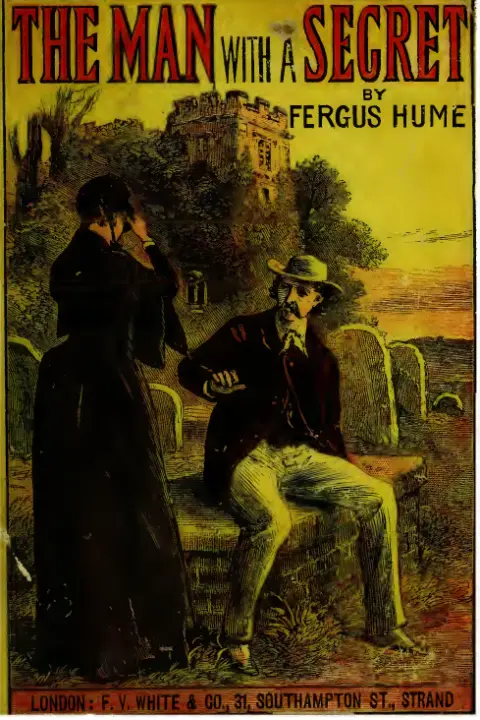
"The Man with a Secret: A Novel" by Fergus Hume is a work of fiction written in the late 19th century. The story centers on the character of Basil Beaumont, a morally ambiguous artist returning to his childhood village, Garsworth, to escape his creditors and indulge his vices. As he navigates the shadows of his past, we also meet Dr. Duncan Nestley, whose life Beaumont nearly ruined, setting up a complex relationship between the two men that embodies themes of friendship, betrayal, and the struggle for redemption. The opening of the novel introduces a grim and evocative setting, establishing the tone of melancholy and intrigue as it presents Beaumont at a scenic yet bleak location near Garsworth. Beaumont's character is fleshed out through introspective musings about his life and regrets, drawing the reader into his cynical worldview while hinting at the fragility of his current situation. An unexpected reunion with Dr. Nestley, who harbors resentment towards Beaumont for his past influence, further complicates matters, suggesting that both men are at the mercy of their intertwined fates. The narrative sets the stage for exploring the darker sides of human nature as well as the potential for change amidst moral dilemmas in this intriguing tale.
Introduction adapted from the source catalogue; source summaries may be automatically generated.
Free to read · English · 91,755 words · No account needed
MAKE TIME FOR A GOOD BOOK
On by default. Untick to stop anonymous reading totals. Each page counts after 10 seconds in view. How this works.
Anonymous counting is on unless you have switched it off.
"Certainly not. Shakespeare, like other things, is excellent--in moderation. I quite agree that we should have a national theatre, where the Elizabethan drama should be regularly acted, but our so-called National Theatre devotes itself to gingerbread melodramas, and tries to hide its poverty of thought under a brilliant mise-en-scene; but when you have Shakespeare's plays at three or four theatres and French adaptations at a dozen others, where does the local playwright come in?"
"But from what I hear there are so few good local playwrights," said
Dick quickly.
"And whose fault is that?" asked Beaumont acidly, "but the fault of the English nation. France has a strong dramatic school because she produced her own drama to the exclusion of foreign writers; if the English people, who pride themselves on their patriotism, were to refuse to countenance French and German adaptations, the managers would be forced to produce English plays written by English playwrights, and though, very likely, for a time we would have bad workmanship and crude ideas, yet in a few years a dramatic school would be formed; but such an event will never happen while one of our leading playwrights adapts Gallic comedies wholesale and another dramatises old books of the Georgian period. England has not lost her creative power but she's doing her best to stamp it out."
"How terribly severe," said Ferdinand.
"But how terribly true," retorted Beaumont carelessly. "However, I will not preach any more as I'm sure you must all be tired of my chatter--and see, there is Doctor Larcher coming."
He arose to his feet as he spoke, for the vicar came striding across the little lawn like a colossus.
"Tea and scandal, I suppose," he roared in his hearty voice as he
shook hands with the artist.
"'Hic innocentis pocula Lesbii
Duces sub umbra.'"
"Certainly innocent enough sir," observed Reginald lightly, "but the fact is we have been listening to Mr. Beaumont."
"And the discourse?" asked the vicar, taking a cup of tea from
Pumpkin.
"The decadence of Literature and the Drama in England," replied
Beaumont with a smile.
"Ah, indeed. I'm afraid, Mr. Beaumont, I know nothing of the drama,
except the Bard of Avon----"
"Whom Mr. Beaumont likes, in moderation," interrupted Pumpkin
mischievously.
"Certainly," assented Beaumont gravely. "I like all things in
moderation."
"Even Horace," whispered Dick to Reginald, who laughed loudly and then apologised for his untimely mirth.
"As to literature," said Dr. Larcher ponderously, "I'm afraid there is rather a falling off--we are frivolous--yes, decidedly frivolous."
"I wish we were anything half so pleasant," remarked Beaumont, "I'm afraid we're decidedly dull."
Your reading position is saved on this browser. Take it to another device with a library code. Reading pages adapt to text, rather than matching a printed edition.
Fergus Hume

Fergus Hume

Fergus Hume
Fergus Hume
BEHIND THE BOOK
This eBook is for the use of anyone anywhere in the United States and most other parts of the world at no cost and with almost no restrictions whatsoever. You may copy it, give it away or re-use it under the terms of the Project Gutenberg License included with this eBook or online at www.gutenberg.org. If you are not located in the United States, you will have to check the laws of the country where you are located before using this eBook. Read the source licence.
The original source file, including credits and licence, is retained by this library. Request an original-format copy at no charge. Please include the book title and Project Gutenberg identifier #55404.
KEEP YOUR CURIOSITY GOING
Coulson Kernahan

Maurice Baring
Frances Wright
Cécile Tormay

Frederic Jesup Stimson

W. H. P. (William Henry Pope) Jarvis