THE CLASSIC COLLECTION✦The Disappearing EyeCLASSIC FREE BOOKS
The Disappearing Eye
Fergus Hume
THE CLASSIC COLLECTION · 1890
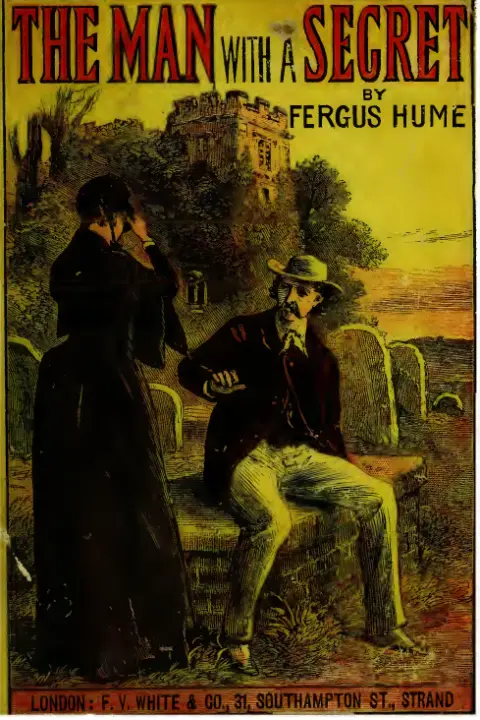
"The Man with a Secret: A Novel" by Fergus Hume is a work of fiction written in the late 19th century. The story centers on the character of Basil Beaumont, a morally ambiguous artist returning to his childhood village, Garsworth, to escape his creditors and indulge his vices. As he navigates the shadows of his past, we also meet Dr. Duncan Nestley, whose life Beaumont nearly ruined, setting up a complex relationship between the two men that embodies themes of friendship, betrayal, and the struggle for redemption. The opening of the novel introduces a grim and evocative setting, establishing the tone of melancholy and intrigue as it presents Beaumont at a scenic yet bleak location near Garsworth. Beaumont's character is fleshed out through introspective musings about his life and regrets, drawing the reader into his cynical worldview while hinting at the fragility of his current situation. An unexpected reunion with Dr. Nestley, who harbors resentment towards Beaumont for his past influence, further complicates matters, suggesting that both men are at the mercy of their intertwined fates. The narrative sets the stage for exploring the darker sides of human nature as well as the potential for change amidst moral dilemmas in this intriguing tale.
Introduction adapted from the source catalogue; source summaries may be automatically generated.
Free to read · English · 91,755 words · No account needed
MAKE TIME FOR A GOOD BOOK
On by default. Untick to stop anonymous reading totals. Each page counts after 10 seconds in view. How this works.
Anonymous counting is on unless you have switched it off.
"Very clear," replied Nestley, "but if the squire believes that the soul does not lose its memory, what about his previous existences?"
"He's got a whole stock of 'em," broke in Dick quickly, "ranging from the Pharaohs down to the middle ages, but I think the Garsworth body is the first time his soul has used any fleshly envelope in our modern days."
"Curious mania," said Nestley reflectively, "if he isn't mad he's very
near it."
"But what has all this incarnation humbug to do with his miserly habits," said Beaumont impatiently, "he doesn't want to pass his existences in being miserable."
"That's the very thing," explained Reginald calmly, "it appears that in some of his previous existences he suffered from poverty, so in order to arrest such a calamity, he is saving up all his money in this existence to spend during his next incarnation."
"Oh, he's quite mad," said Nestley decisively.
"But how does he propose to get hold of the money?" observed Beaumont disbelievingly; "he'll be in another body, 'and won't have any claim to the Garsworth estate."
"That's his secret," said Dick Pemberton, "nobody knows; queer yarn,
isn't it?"
"Very," said Nestley, deeply interested. "I should like to study the case. Does he live by himself?"
"No, his cousin, Una Challoner, lives with him," interposed Blake hurriedly, the colour flushing in his face.
"Ah," thought Beaumont, noting this, "case of love, I see. I suppose Miss Challoner does not believe in his mad theories?" he added aloud.
"Hardly," said Dick contemptuously, "she's too sensible."
At this moment Job Kossiter entered the room, and, after slowly surveying the group, addressed himself to Reginald:
"If I may make so bold, Mr. Blake, sir," he said, in his thick voice, "would you ask the vicar to go to the old squire?"
"What's up?" asked Blake, rising.
"He's very ill, sir, as Munks says," said Kossiter, scratching his head, "and Doctor Bland, sir, he's ill, too, sir, and can't go, so as there ain't a doctor to see him, I thought the vicar----"
"Not a doctor?" interposed Beaumont, quickly. "Nonsense! This gentleman," indicating Nestley, "is a doctor, so he can go at once."
"Oh, I'll go," said Nestley, rising, rather glad of the opportunity to
study the case.
"Then, sir, Munks is waiting outside with the cart," observed
Kossiter, moving to the door.
"Who on earth is Munks?" asked Nestley, following the landlord.
"The squire's servant," cried Dick, "and a cross-grained old ass he
is."
"I don't suppose as you need tell the vicar now, sir," said Mr.
Kossiter to Reginald.
"No, of course not," replied Blake, "this gentleman will do more good; it's the doctor he needs--not the clergyman."
Your reading position is saved on this browser. Take it to another device with a library code. Reading pages adapt to text, rather than matching a printed edition.
Fergus Hume

Fergus Hume

Fergus Hume
Fergus Hume
BEHIND THE BOOK
This eBook is for the use of anyone anywhere in the United States and most other parts of the world at no cost and with almost no restrictions whatsoever. You may copy it, give it away or re-use it under the terms of the Project Gutenberg License included with this eBook or online at www.gutenberg.org. If you are not located in the United States, you will have to check the laws of the country where you are located before using this eBook. Read the source licence.
The original source file, including credits and licence, is retained by this library. Request an original-format copy at no charge. Please include the book title and Project Gutenberg identifier #55404.
KEEP YOUR CURIOSITY GOING
Coulson Kernahan

Maurice Baring
Frances Wright
Cécile Tormay

Frederic Jesup Stimson

W. H. P. (William Henry Pope) Jarvis