THE CLASSIC COLLECTION✦The Disappearing EyeCLASSIC FREE BOOKS
The Disappearing Eye
Fergus Hume
THE CLASSIC COLLECTION · 1890
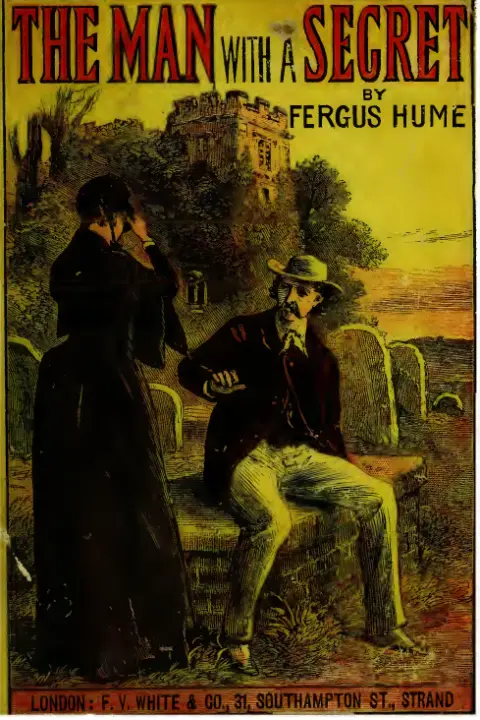
"The Man with a Secret: A Novel" by Fergus Hume is a work of fiction written in the late 19th century. The story centers on the character of Basil Beaumont, a morally ambiguous artist returning to his childhood village, Garsworth, to escape his creditors and indulge his vices. As he navigates the shadows of his past, we also meet Dr. Duncan Nestley, whose life Beaumont nearly ruined, setting up a complex relationship between the two men that embodies themes of friendship, betrayal, and the struggle for redemption. The opening of the novel introduces a grim and evocative setting, establishing the tone of melancholy and intrigue as it presents Beaumont at a scenic yet bleak location near Garsworth. Beaumont's character is fleshed out through introspective musings about his life and regrets, drawing the reader into his cynical worldview while hinting at the fragility of his current situation. An unexpected reunion with Dr. Nestley, who harbors resentment towards Beaumont for his past influence, further complicates matters, suggesting that both men are at the mercy of their intertwined fates. The narrative sets the stage for exploring the darker sides of human nature as well as the potential for change amidst moral dilemmas in this intriguing tale.
Introduction adapted from the source catalogue; source summaries may be automatically generated.
Free to read · English · 91,755 words · No account needed
MAKE TIME FOR A GOOD BOOK
On by default. Untick to stop anonymous reading totals. Each page counts after 10 seconds in view. How this works.
Anonymous counting is on unless you have switched it off.
A tenor voice, pure, rich and silvery as a bell, not cultured in the least, but with rare natural power and an intensity of dramatic expression. One of those sympathetic voices which find their way straight to the heart, and as Blake sang the appealing words of the song, with their haunting, pathetic tenderness, Nestley felt strangely stirred. Even the rustics, dull as they were, fell under the spell of those resonant notes, and when the last word died away like a long-drawn sigh, sat silently pondering, not daring to break the charm with applause.
"You have a great gift," said Nestley, when the singer ceased. "A
wonderful voice."
Blake flushed with pleasure at this word of praise from a stranger, and Dick delighted with the eulogy of his friend's talent chimed in delightedly.
"'Tis--isn't it jolly? and he sings comic songs--give us one old
chap."
Blake would have consented, particularly as the rustics seemed anxious to hear something more suited to their comprehension than the preceding ballad, but Nestley hastily intervened.
"No, no," he said quickly, unwilling to spoil his first impression of that charming voice by hearing it lowered to the level of music hall singing, "don't do that, it will spoil everything."
The young man looked at him in surprise.
"I don't care much about them myself," said Reginald frankly, "but people down here like them better than sentimental ditties."
At this moment, Job Kossiter announced to the assembled company that it was time to close the bar, so in a few moments the room was empty of all save Nestley and his two companions. Dick asked him to have a glass of ale but he refused.
"I never drink," he said bluntly, "I'm teetotal."
They both opened their eyes at this, but were too polite to make any comments, so in order to relieve the awkwardness of the situation, Dr. Nestley began to speak.
"I suppose you've got some queer characters down here," he said, filling a fresh pipe of tobacco.
"Rather," said Dick, promptly, "old Garsworth for instance."
"Is that the squire you're talking of?" said a drawling voice at the door, and on looking towards it, the trio saw Mr. Basil Beaumont strolling into the room. Nestley grew a shade stiffer in his manner as his enemy came towards them, but Dick Pemberton turned his merry face to the new comer and nodded an answer.
"Do you know him?" he asked.
Beaumont took up his favourite position in front of the fire and
smoked complacently.
"Yes. When I left this place twenty-three years ago, I heard a lot
about him."
"He's a miser," said Blake meditatively.
Your reading position is saved on this browser. Take it to another device with a library code. Reading pages adapt to text, rather than matching a printed edition.
Fergus Hume

Fergus Hume

Fergus Hume
Fergus Hume
BEHIND THE BOOK
This eBook is for the use of anyone anywhere in the United States and most other parts of the world at no cost and with almost no restrictions whatsoever. You may copy it, give it away or re-use it under the terms of the Project Gutenberg License included with this eBook or online at www.gutenberg.org. If you are not located in the United States, you will have to check the laws of the country where you are located before using this eBook. Read the source licence.
The original source file, including credits and licence, is retained by this library. Request an original-format copy at no charge. Please include the book title and Project Gutenberg identifier #55404.
KEEP YOUR CURIOSITY GOING
Coulson Kernahan

Maurice Baring
Frances Wright
Cécile Tormay

Frederic Jesup Stimson

W. H. P. (William Henry Pope) Jarvis