THE CLASSIC COLLECTION✦The Disappearing EyeCLASSIC FREE BOOKS
The Disappearing Eye
Fergus Hume
THE CLASSIC COLLECTION · 1890
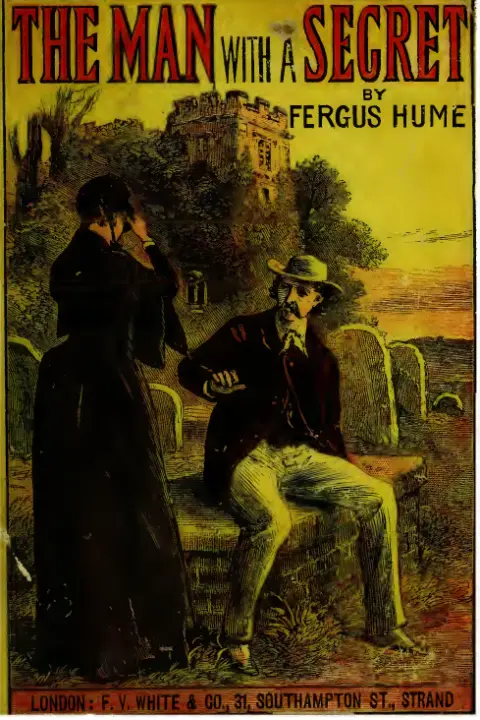
"The Man with a Secret: A Novel" by Fergus Hume is a work of fiction written in the late 19th century. The story centers on the character of Basil Beaumont, a morally ambiguous artist returning to his childhood village, Garsworth, to escape his creditors and indulge his vices. As he navigates the shadows of his past, we also meet Dr. Duncan Nestley, whose life Beaumont nearly ruined, setting up a complex relationship between the two men that embodies themes of friendship, betrayal, and the struggle for redemption. The opening of the novel introduces a grim and evocative setting, establishing the tone of melancholy and intrigue as it presents Beaumont at a scenic yet bleak location near Garsworth. Beaumont's character is fleshed out through introspective musings about his life and regrets, drawing the reader into his cynical worldview while hinting at the fragility of his current situation. An unexpected reunion with Dr. Nestley, who harbors resentment towards Beaumont for his past influence, further complicates matters, suggesting that both men are at the mercy of their intertwined fates. The narrative sets the stage for exploring the darker sides of human nature as well as the potential for change amidst moral dilemmas in this intriguing tale.
Introduction adapted from the source catalogue; source summaries may be automatically generated.
Free to read · English · 91,755 words · No account needed
MAKE TIME FOR A GOOD BOOK
On by default. Untick to stop anonymous reading totals. Each page counts after 10 seconds in view. How this works.
Anonymous counting is on unless you have switched it off.
The doctor's eyes smarted somewhat with the pungent tobacco-smoke, but when he became more accustomed to the cloudy atmosphere, he found himself in a long low-ceilinged room round which about fifteen men were seated on benches, smoking vigorously. On a long, deal table in the centre stood a number of pewter tankards containing beer and a large jug filled with the same generous beverage stood at the end. A kerosine lamp hung from the ceiling, diffusing a dull yellow light, and the floor was covered with saw-dust, with spittoons placed about.
On the end of the table sat Reginald Blake, who was as dark as Pemberton was fair. A somewhat mournful countenance when in repose, but now sparkling with life and animation. Decidedly handsome, with an olive complexion, closely-cropped black hair and a small moustache of the same colour. As he sat there swinging his legs and showing his white teeth with every laugh, Nestley thought he was a very striking figure, although somewhat out of place in that homely room.
"Looks like an Italian," he thought, looking at the tall, lithe figure as Reginald Blake slipped off the table to greet him. "Must have been born in the South, or perhaps he's a Greek born in England, like Keats."
Dick Pemberton lost no time, but then and there introduced Nestley to
his friend.
"This is Dr. Nestley, Reggy--stranger here--got the blues, so I brought him here to see the fun."
"Rather homely fun I'm afraid," said Blake holding out his hand with a frank smile. "I'm very pleased to see you, Dr. Nestley. You'll find this noisy but it's amusing."
"What would the vicar say if he knew two of his pupils were here?"
asked Nestley mischievously.
Both the young men laughed heartily.
"Oh, the dear old boy wouldn't mind," said Pemberton producing a cigar case, "he trusts us, besides, we work hard all the week and only get off the chain on Saturday nights."
"Then," observed Reggy, helping himself to a cigar from his friend's case, "we study mankind----"
"As seen in the public-house," finished the doctor smiling.
"As seen in the public-house," assented Mr. Blake gravely, lighting his cigar. "Dick and myself are students of human nature."
"It's great fun," observed Dick confidentially. "If we were in Town I've no doubt we'd go to a music hall, but here we amuse ourselves with rustic simplicity."
"Said simplicity being mythical," said Blake satirically, "but the singing is amusing--I say Jarx," he added, raising his voice, "sing us that ditty of yours."
Your reading position is saved on this browser. Take it to another device with a library code. Reading pages adapt to text, rather than matching a printed edition.
Fergus Hume

Fergus Hume

Fergus Hume
Fergus Hume
BEHIND THE BOOK
This eBook is for the use of anyone anywhere in the United States and most other parts of the world at no cost and with almost no restrictions whatsoever. You may copy it, give it away or re-use it under the terms of the Project Gutenberg License included with this eBook or online at www.gutenberg.org. If you are not located in the United States, you will have to check the laws of the country where you are located before using this eBook. Read the source licence.
The original source file, including credits and licence, is retained by this library. Request an original-format copy at no charge. Please include the book title and Project Gutenberg identifier #55404.
KEEP YOUR CURIOSITY GOING
Coulson Kernahan

Maurice Baring
Frances Wright
Cécile Tormay

Frederic Jesup Stimson

W. H. P. (William Henry Pope) Jarvis