THE CLASSIC COLLECTION✦The Disappearing EyeCLASSIC FREE BOOKS
The Disappearing Eye
Fergus Hume
THE CLASSIC COLLECTION · 1890
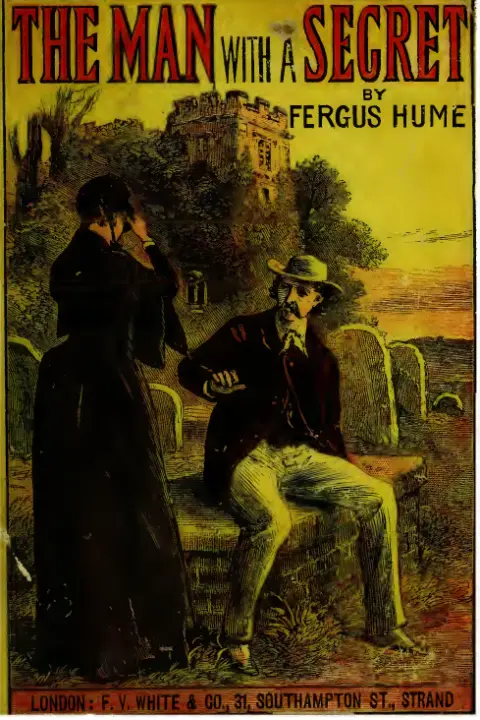
"The Man with a Secret: A Novel" by Fergus Hume is a work of fiction written in the late 19th century. The story centers on the character of Basil Beaumont, a morally ambiguous artist returning to his childhood village, Garsworth, to escape his creditors and indulge his vices. As he navigates the shadows of his past, we also meet Dr. Duncan Nestley, whose life Beaumont nearly ruined, setting up a complex relationship between the two men that embodies themes of friendship, betrayal, and the struggle for redemption. The opening of the novel introduces a grim and evocative setting, establishing the tone of melancholy and intrigue as it presents Beaumont at a scenic yet bleak location near Garsworth. Beaumont's character is fleshed out through introspective musings about his life and regrets, drawing the reader into his cynical worldview while hinting at the fragility of his current situation. An unexpected reunion with Dr. Nestley, who harbors resentment towards Beaumont for his past influence, further complicates matters, suggesting that both men are at the mercy of their intertwined fates. The narrative sets the stage for exploring the darker sides of human nature as well as the potential for change amidst moral dilemmas in this intriguing tale.
Introduction adapted from the source catalogue; source summaries may be automatically generated.
Free to read · English · 91,755 words · No account needed
MAKE TIME FOR A GOOD BOOK
On by default. Untick to stop anonymous reading totals. Each page counts after 10 seconds in view. How this works.
Anonymous counting is on unless you have switched it off.
"It's easily seen; her manner is quite sufficient--besides, by persuading me to give way to this again," he added vehemently, touching his glass, "you have caused me to lose all hope and self-respect; every person who looks at me seems to be pitying my downfall."
"Well then, give up the drink."
"What's the good?" said Nestley despairingly. "I left it off for five years, yet such is my weak nature that I yielded to your persuasions, and now it has got complete mastery of me again."
"You seem determined to regard me as your evil genius," said the artist deliberately. "Why I do not know. I suggested a little wine on that evening, in order to cheer you up--that is all."
"All! and quite enough too. You knew, in the old days, when I took one
glass it meant more."
"I am not to blame for your weakness."
"No doubt--but knowing that weakness you might have left me alone."
"Well, well," said Beaumont impatiently, "my back is broad enough to bear your sins as well as my own. What are you going to do now?"
"Stay here for two or three days, and then go away," replied Nestley. "I've risked my all on the cast of a die--and lost, so I'm going back to my own town, and live out the remainder of my life as best I can."
"Have you said good-bye to Miss Challoner?"
"No, nor do not intend to; she knows my degradation. I can see it in her eyes, in her manner, in the way she shrinks from me. I have lost the best part of myself--my self-respect."
Beaumont was hard and callous as a rule, but he could not help feeling a pang of pity for the abject misery of the man whom he had brought so low.
"Come, come, Nestley," he said cheerily, patting the doctor on the back, "I'm truly sorry I ever persuaded you to touch the wine, but you'd better leave this place at once. When you are back again, in your own home, you will once more take up your old life of temperance and hard work."
"It is too late--the evil is done."
"Rubbish! it's never too late to mend; leave Garsworth without delay."
"And leave you to make love to Miss Challoner!"
"I," said Beaumont, with an enigmatic smile, "nonsense--I'm past the age of love--you can make your mind easy on that score; but, as I will probably see Miss Challoner, shall I make your adieux to her?"
"If you like," returned Nestley gloomily, "and give her these
keys--they belonged to the Squire, and I forgot to give them into her
possession."
Your reading position is saved on this browser. Take it to another device with a library code. Reading pages adapt to text, rather than matching a printed edition.
Fergus Hume

Fergus Hume

Fergus Hume
Fergus Hume
BEHIND THE BOOK
This eBook is for the use of anyone anywhere in the United States and most other parts of the world at no cost and with almost no restrictions whatsoever. You may copy it, give it away or re-use it under the terms of the Project Gutenberg License included with this eBook or online at www.gutenberg.org. If you are not located in the United States, you will have to check the laws of the country where you are located before using this eBook. Read the source licence.
The original source file, including credits and licence, is retained by this library. Request an original-format copy at no charge. Please include the book title and Project Gutenberg identifier #55404.
KEEP YOUR CURIOSITY GOING
Coulson Kernahan

Maurice Baring
Frances Wright
Cécile Tormay

Frederic Jesup Stimson

W. H. P. (William Henry Pope) Jarvis