THE CLASSIC COLLECTION✦The Disappearing EyeCLASSIC FREE BOOKS
The Disappearing Eye
Fergus Hume
THE CLASSIC COLLECTION · 1890
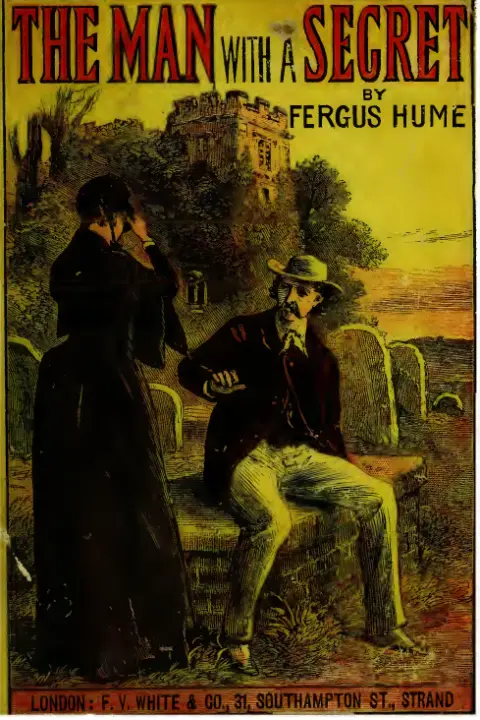
"The Man with a Secret: A Novel" by Fergus Hume is a work of fiction written in the late 19th century. The story centers on the character of Basil Beaumont, a morally ambiguous artist returning to his childhood village, Garsworth, to escape his creditors and indulge his vices. As he navigates the shadows of his past, we also meet Dr. Duncan Nestley, whose life Beaumont nearly ruined, setting up a complex relationship between the two men that embodies themes of friendship, betrayal, and the struggle for redemption. The opening of the novel introduces a grim and evocative setting, establishing the tone of melancholy and intrigue as it presents Beaumont at a scenic yet bleak location near Garsworth. Beaumont's character is fleshed out through introspective musings about his life and regrets, drawing the reader into his cynical worldview while hinting at the fragility of his current situation. An unexpected reunion with Dr. Nestley, who harbors resentment towards Beaumont for his past influence, further complicates matters, suggesting that both men are at the mercy of their intertwined fates. The narrative sets the stage for exploring the darker sides of human nature as well as the potential for change amidst moral dilemmas in this intriguing tale.
Introduction adapted from the source catalogue; source summaries may be automatically generated.
Free to read · English · 91,755 words · No account needed
MAKE TIME FOR A GOOD BOOK
On by default. Untick to stop anonymous reading totals. Each page counts after 10 seconds in view. How this works.
Anonymous counting is on unless you have switched it off.
"I prefer the sweet harmony of the spinet to the lyre," said Beaumont,
smiling.
"Dear me, vicar," observed Mrs. Larcher angrily. "I wish you wouldn't be always talking Latin. No one understands it."
"That's hardly a compliment to the gentlemen present, my dear," said Dr. Larcher in his most stately manner, "but, as Horace says, 'Oh, mater pulchra'----I beg your pardon, I will refrain from the bard."
"Now, Mr. Blake, I want you to sing something," said Una, crossing
over to Pumpkin.
"Certainly--some old English melody, I suppose, to match the spinet. 'Phyllida flouts me,' or 'Mistress mine where are you roaming?'"
"Let us have them both," said Beaumont, lazily. "Very likely the ghosts of the old Elizabethan lyrists will come and listen."
"You'll see a real ghost shortly," said Una mysteriously, as she and Pumpkin, after a whispered consultation, moved to the door.
"The ghost of whom?" asked Reginald, who was standing by the spinet.
"Lady Betty Modish or Sophia Western--which ever you like--town or
country," replied Una, laughing, and thereupon vanished with Miss
Larcher.
"What does she mean?" demanded the vicar in astonishment.
"Something very odd," said Miss Cassy, shaking her girlish head. "Yes, quite like a play. The School for what's-it's-name. Sheridan, you know--quite lovely."
And now Reginald began to sing the quaint old song "Phyllida flouts me," while Cecilia, who knew the music off by heart, played the accompaniment. The night was beginning to close in, and the room was full of shadows, lighted in a fantastic manner by the red glare of the fire, which flashed on the tarnished gilded frames of the pictures and the sombre faces looking from the walls. Beaumont, leaning his elbow on the mantelpiece, listened quietly, while opposite to him the vicar, ensconced in a great arm-chair, crossed his legs and kept time to the music with his spectacles.
So gay and charming the old song sounded. Nothing of the sickly sentimentality of the modern drawing-room ballad--nothing of the florid passion of the Italian school--but all fresh and wholesome, like a gentle wind blowing freely over an English meadow, white with daisies. Reginald sang the complaint of the unhappy lover charmingly, and ended amid a subdued murmur of satisfaction, even Mrs. Larcher being pleased.
"So simple," she said, nodding her head. "Quite soothing, like a cradle. Ah, there are no songs now-a-days like the old ones."
"My dear, we are past the age of Corydon and Chloe," replied the vicar. "Virgil and Horace would find no Arcady to sing about now."
"Well, I don't suppose that Imperial Rome was more Arcadian than London," said Beaumont, lazily, "but I'm afraid we've lost the charm of simplicity."
Your reading position is saved on this browser. Take it to another device with a library code. Reading pages adapt to text, rather than matching a printed edition.
Fergus Hume

Fergus Hume

Fergus Hume
Fergus Hume
BEHIND THE BOOK
This eBook is for the use of anyone anywhere in the United States and most other parts of the world at no cost and with almost no restrictions whatsoever. You may copy it, give it away or re-use it under the terms of the Project Gutenberg License included with this eBook or online at www.gutenberg.org. If you are not located in the United States, you will have to check the laws of the country where you are located before using this eBook. Read the source licence.
The original source file, including credits and licence, is retained by this library. Request an original-format copy at no charge. Please include the book title and Project Gutenberg identifier #55404.
KEEP YOUR CURIOSITY GOING
Coulson Kernahan

Maurice Baring
Frances Wright
Cécile Tormay

Frederic Jesup Stimson

W. H. P. (William Henry Pope) Jarvis