THE CLASSIC COLLECTION✦The Disappearing EyeCLASSIC FREE BOOKS
The Disappearing Eye
Fergus Hume
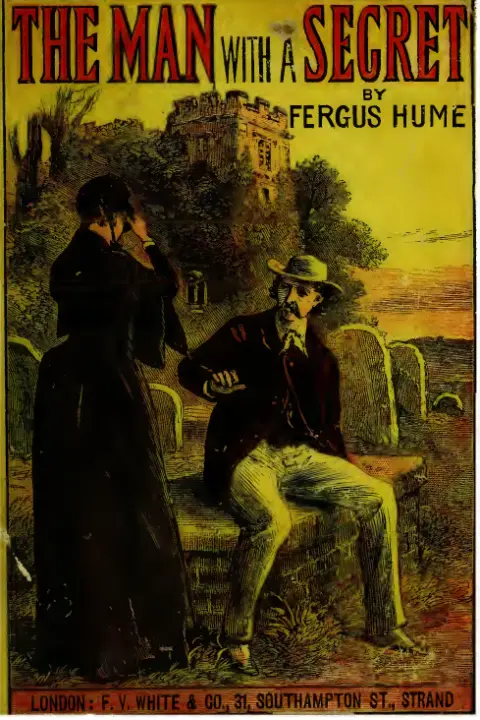
THE CLASSIC COLLECTION · 1890
"The Man with a Secret: A Novel" by Fergus Hume is a work of fiction written in the late 19th century. The story centers on the character of Basil Beaumont, a morally ambiguous artist returning to his childhood village, Garsworth, to escape his creditors and indulge his vices. As he navigates the shadows of his past, we also meet Dr. Duncan Nestley, whose life Beaumont nearly ruined, setting up a complex relationship between the two men that embodies themes of friendship, betrayal, and the struggle for redemption. The opening of the novel introduces a grim and evocative setting, establishing the tone of melancholy and intrigue as it presents Beaumont at a scenic yet bleak location near Garsworth. Beaumont's character is fleshed out through introspective musings about his life and regrets, drawing the reader into his cynical worldview while hinting at the fragility of his current situation. An unexpected reunion with Dr. Nestley, who harbors resentment towards Beaumont for his past influence, further complicates matters, suggesting that both men are at the mercy of their intertwined fates. The narrative sets the stage for exploring the darker sides of human nature as well as the potential for change amidst moral dilemmas in this intriguing tale.
Introduction adapted from the source catalogue; source summaries may be automatically generated.
Free to read · English · 91,755 words · No account needed
MAKE TIME FOR A GOOD BOOK
On by default. Untick to stop anonymous reading totals. Each page counts after 10 seconds in view. How this works.
Anonymous counting is on unless you have switched it off.
"I hope you don't mind my cigarette," he said, languidly, "but I can't
exist without smoking."
"You can't exist without all sorts of luxuries," replied Patience, bitterly, "you're not the man to deny yourself anything."
"I had to deny myself a good many things when we were starving in London," said Mr. Beaumont, leisurely. "By the way, I want to speak to you about London."
"And I want to speak to you about the squire," she retorted, quickly. "What were you doing following him upstairs?"
"Don't distress yourself, my good soul," said the artist, in a coolly aggravating manner. "I'll tell you that later on; meantime, we will talk of Chelsea."
"No."
"Pardon me--yes. Do you remember how we lived there, you and I, and the visions we used to indulge in? I haven't forgotten it, I assure you, and then Fanny Blake--poor Fanny! she is dead now. I see you gave the boy her surname."
"And what if I did?" she flashed out fiercely, with a deep frown on her face. "Could I give him yours--the father who had deserted him? Could I give him mine--the mother to whom his birth was a disgrace?"
"A disgrace! I thought you loved him?"
"So I do--I love him more than my life; but his birth was a disgrace, and I wish to keep the knowledge from him, please God."
"Was the boy you call Reginald Blake ever christened?"
"No."
"Why not?"
"Because I could not tell the truth about his birth, and I refused to tell a lie. He was neither christened, nor was his birth registered."
"Then he has no right to the name he bears."
"I know that. Whose fault is it, Basil Beaumont--yours or mine? Why didn't you make an honest woman of me?"
"Because I did not choose to," he replied, coolly; "by the way, has
our son been confirmed?"
"No."
"Oh," he said, sneering, "I'm sorry he's not got some religious flavour about him. I wonder, Patience, when you called him Blake, you did not pass him off as Fanny's son."
She arose from her seat in a fury.
"Do you think I was going to place my sin on Fanny's shoulders?"
"I don't see why not--Fanny and yourself both came up to London at the same time--the child was born six months after you arrived there--why not call it Fanny's child?"
"There was no reason."
"Not then; but there is now, and a very excellent reason--ten thousand
a year."
"What do you mean?"
"Simply this, that Reginald Blake, from this time forward, is the son of Fanny Blake and Randal Garsworth."
Your reading position is saved on this browser. Take it to another device with a library code. Reading pages adapt to text, rather than matching a printed edition.
Fergus Hume

Fergus Hume

Fergus Hume
Fergus Hume
BEHIND THE BOOK
This eBook is for the use of anyone anywhere in the United States and most other parts of the world at no cost and with almost no restrictions whatsoever. You may copy it, give it away or re-use it under the terms of the Project Gutenberg License included with this eBook or online at www.gutenberg.org. If you are not located in the United States, you will have to check the laws of the country where you are located before using this eBook. Read the source licence.
The original source file, including credits and licence, is retained by this library. Request an original-format copy at no charge. Please include the book title and Project Gutenberg identifier #55404.
KEEP YOUR CURIOSITY GOING
Coulson Kernahan

Maurice Baring
Frances Wright
Cécile Tormay

Frederic Jesup Stimson

W. H. P. (William Henry Pope) Jarvis