THE CLASSIC COLLECTION✦The Disappearing EyeCLASSIC FREE BOOKS
The Disappearing Eye
Fergus Hume
THE CLASSIC COLLECTION · 1890
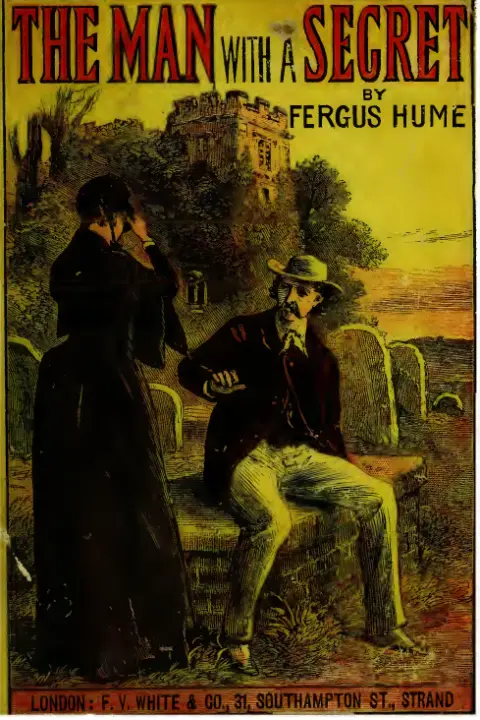
"The Man with a Secret: A Novel" by Fergus Hume is a work of fiction written in the late 19th century. The story centers on the character of Basil Beaumont, a morally ambiguous artist returning to his childhood village, Garsworth, to escape his creditors and indulge his vices. As he navigates the shadows of his past, we also meet Dr. Duncan Nestley, whose life Beaumont nearly ruined, setting up a complex relationship between the two men that embodies themes of friendship, betrayal, and the struggle for redemption. The opening of the novel introduces a grim and evocative setting, establishing the tone of melancholy and intrigue as it presents Beaumont at a scenic yet bleak location near Garsworth. Beaumont's character is fleshed out through introspective musings about his life and regrets, drawing the reader into his cynical worldview while hinting at the fragility of his current situation. An unexpected reunion with Dr. Nestley, who harbors resentment towards Beaumont for his past influence, further complicates matters, suggesting that both men are at the mercy of their intertwined fates. The narrative sets the stage for exploring the darker sides of human nature as well as the potential for change amidst moral dilemmas in this intriguing tale.
Introduction adapted from the source catalogue; source summaries may be automatically generated.
Free to read · English · 91,755 words · No account needed
MAKE TIME FOR A GOOD BOOK
On by default. Untick to stop anonymous reading totals. Each page counts after 10 seconds in view. How this works.
Anonymous counting is on unless you have switched it off.
The insidious wine mounted rapidly to the excitable brain of the young man, and he no longer felt regret at breaking the pledge he had made five years before. The humdrum past of struggle and respectability was done with. Wine would solace him. Drink! Who cared for such a thing? Anacreon was the head of a glorious band of poets, and praised the wine. Wise Anacreon, he knew the true virtues of the grape. The past is dead, the future is uncertain. Live--live only in the present, with wine to make us as gods--Evohé Bacchus.
The stimulating wine had performed its work excellently, and the world hitherto so gloomy now appeared of a roseate tint.
"A broken heart!" he repeated, with a gay laugh. "Pish! hearts don't break so easily. A woman's no means yes. I'll ask again."
"Nothing like perseverance," said Basil, observing with infinite joy
the flushed face and bright eyes of the young man. "Have some more
wine?"
"Rather!" replied Nestley, holding out his glass, which Beaumont filled. "I was a fool to give up this for water. I'm sick of total abstainers--thin-blooded croakers. Here's confusion to them!" and he drank off the second glass.
Beaumont now saw that his victim was in that obstinate stage of
recklessness which could not brook contradiction, so knew well how to
proceed.
"Well, we've finished the bottle," he said brightly. "Suppose we go
out for a walk."
"No--no walk," returned Nestley, with an imbecile grin. "You've stood me a bottle. Now it's my turn."
"I don't want any more," said Beaumont indifferently, "and I think
you've had enough also."
"I haven't," retorted Nestley defiantly. "I'm as straight as a die. I suppose you won't drink with me?"
"Oh yes, I will, if you insist upon it."
"I do insist," cried the doctor, bringing his fist down on the table with a bang. "You must drink to show there is no ill-will. We were once friends, Basil."
"And are so still, I trust," said the artist, cordially.
"Your hand," said Nestley, with an outburst of maudlin affection.
"Give me your hand."
Beaumont suffered his hand to be shaken violently by the doctor, and then that gentleman, now in a hilarious state of excitement, walked to the bell, ringing it with unnecessary violence.
Margery appeared in answer, and seemed somewhat astonished at
Nestley's state, as he had always been so reserved and quiet in his
demeanour.
"Another bottle of champagne," said Nestley in a thick voice, coming close to her. "You are a pretty girl."
Your reading position is saved on this browser. Take it to another device with a library code. Reading pages adapt to text, rather than matching a printed edition.
Fergus Hume

Fergus Hume

Fergus Hume
Fergus Hume
BEHIND THE BOOK
This eBook is for the use of anyone anywhere in the United States and most other parts of the world at no cost and with almost no restrictions whatsoever. You may copy it, give it away or re-use it under the terms of the Project Gutenberg License included with this eBook or online at www.gutenberg.org. If you are not located in the United States, you will have to check the laws of the country where you are located before using this eBook. Read the source licence.
The original source file, including credits and licence, is retained by this library. Request an original-format copy at no charge. Please include the book title and Project Gutenberg identifier #55404.
KEEP YOUR CURIOSITY GOING
Coulson Kernahan

Maurice Baring
Frances Wright
Cécile Tormay

Frederic Jesup Stimson

W. H. P. (William Henry Pope) Jarvis