THE CLASSIC COLLECTION✦The Disappearing EyeCLASSIC FREE BOOKS
The Disappearing Eye
Fergus Hume
THE CLASSIC COLLECTION · 1890
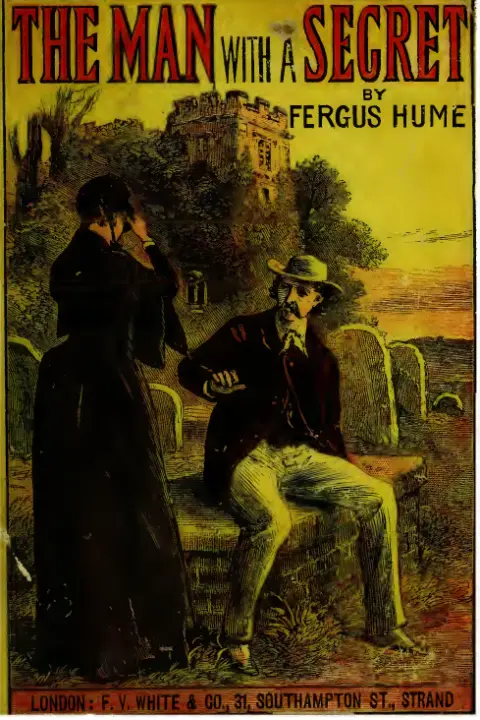
"The Man with a Secret: A Novel" by Fergus Hume is a work of fiction written in the late 19th century. The story centers on the character of Basil Beaumont, a morally ambiguous artist returning to his childhood village, Garsworth, to escape his creditors and indulge his vices. As he navigates the shadows of his past, we also meet Dr. Duncan Nestley, whose life Beaumont nearly ruined, setting up a complex relationship between the two men that embodies themes of friendship, betrayal, and the struggle for redemption. The opening of the novel introduces a grim and evocative setting, establishing the tone of melancholy and intrigue as it presents Beaumont at a scenic yet bleak location near Garsworth. Beaumont's character is fleshed out through introspective musings about his life and regrets, drawing the reader into his cynical worldview while hinting at the fragility of his current situation. An unexpected reunion with Dr. Nestley, who harbors resentment towards Beaumont for his past influence, further complicates matters, suggesting that both men are at the mercy of their intertwined fates. The narrative sets the stage for exploring the darker sides of human nature as well as the potential for change amidst moral dilemmas in this intriguing tale.
Introduction adapted from the source catalogue; source summaries may be automatically generated.
Free to read · English · 91,755 words · No account needed
MAKE TIME FOR A GOOD BOOK
On by default. Untick to stop anonymous reading totals. Each page counts after 10 seconds in view. How this works.
Anonymous counting is on unless you have switched it off.
"Oh, dear no," said Miss Cassy lightly, "though he has got nerves--so very odd, isn't it? but this time the dear doctor says it's lungs--something gone wrong--a kind of what's-his-name thing, you know--if he doesn't take care he'll get that disease--so odd--something about a moan."
"Oh, pneumonia," observed Beaumont gravely. "I hope not, it's very dangerous, and to an old man like the squire, doubly so."
"I have had it," said Mrs. Larcher, who by her own showing possessed every disease under the sun. "Acute inflammation of the lungs, it left me a wreck--a prostrate wreck--did it not, Eleanora Gwendoline?"
"It did, mama," replied the dutiful Pumpkin.
"It might come on again," said Mrs. Larcher, opening her smelling-bottle. "I'll have a cup of hot tea when I go home, and a hot bottle to my feet."
"I wonder she doesn't have a mustard plaster and a fly blister," whispered Dick to Una, "might draw some of the bosh out of her."
Una laughed, and the great lumbering barouche of the Grange having arrived, driven by the stony Munks, she preferred to enter it, followed by the chattering Cassy.
"So cold, isn't it?" said that lady, "quite like the North Pole. Captain what's-his-name, you know, Parry, puts me in mind of Paris--French style--so odd. I'll see you to-morrow, Mr. Beaumont, and oh, Mrs. Larcher, will you come to tea next week--Thursday--what do you say, Una? Friday, oh yes--Friday."
"If my affliction permits me," said Mrs. Larcher in a stately tone, "I
will try."
"So glad," replied the volatile Cassy, "and you come also Mr. Blake, and of course Mr. Pemberton, not forgetting Mr. Beaumont; so very nice to see one's friends. Oh, yes, Munks, we're quite ready, good-night--so pleased--delightful concert--odd--very odd."
Further talk on the part of Miss Cassandra was checked by the sudden start of the barouche, and what with the uneven road and the worn-out springs of the coach, Miss Cassy had enough to do to look after herself without talking.
Mrs. Larcher, leaning on the vicar's arm, walked home, followed by Pumpkin and the three pupils, Dick chaffing Ferdinand over his poem till that poetic soul was nearly out of his mind with anger.
Beaumont, left alone at the school-room door, lit a cigarette, and was about to go when he heard a faint sigh behind him, and on turning saw Cecilia and the lively Busky.
"I enjoyed the concert very much, Miss Mosser," he said gracefully as
they passed him.
"I'm glad of that, sir," said Cecilia, who looked tired, "it went off very well. Was--was Doctor Nestley here?"
"No, he had to stay with Squire Garsworth."
Your reading position is saved on this browser. Take it to another device with a library code. Reading pages adapt to text, rather than matching a printed edition.
Fergus Hume

Fergus Hume

Fergus Hume
Fergus Hume
BEHIND THE BOOK
This eBook is for the use of anyone anywhere in the United States and most other parts of the world at no cost and with almost no restrictions whatsoever. You may copy it, give it away or re-use it under the terms of the Project Gutenberg License included with this eBook or online at www.gutenberg.org. If you are not located in the United States, you will have to check the laws of the country where you are located before using this eBook. Read the source licence.
The original source file, including credits and licence, is retained by this library. Request an original-format copy at no charge. Please include the book title and Project Gutenberg identifier #55404.
KEEP YOUR CURIOSITY GOING
Coulson Kernahan

Maurice Baring
Frances Wright
Cécile Tormay

Frederic Jesup Stimson

W. H. P. (William Henry Pope) Jarvis