
Last letters from the living dead man
David Patterson (Spirit) Hatch
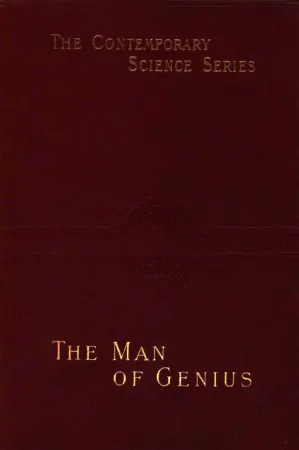
THE CLASSIC COLLECTION · 1891
"The Man of Genius" by Cesare Lombroso is a scientific publication written in the late 19th century. The book delves into the complex relationship between genius and madness, exploring the characteristics of individuals considered genius and how these traits intersect with patterns of mental illness. Lombroso examines historical figures and provides a foundational analysis of genius through a lens of physiological and psychological phenomena. The opening of the work sets the stage for an exploration of genius by referencing significant historical thoughts on the topic, from Aristotle to more contemporary thinkers. Lombroso reflects on his evolving views about genius relating to degradation and neurosis, suggesting that exceptional intellectual capabilities often stem from psychological anomalies. He lays out an argument that associates genius with various signs of degeneration, prompting readers to reconsider what defines genius and how societal perceptions may have historically conflated brilliance with madness. This thought-provoking introduction invites further examination of the intertwining nature of genius, mental health, and societal recognition.
Introduction adapted from the source catalogue; source summaries may be automatically generated.
Free to read · English · 130,716 words · No account needed
MAKE TIME FOR A GOOD BOOK
On by default. Untick to stop anonymous reading totals. Each page counts after 10 seconds in view. How this works.
Anonymous counting is on unless you have switched it off.
Dante, Goethe, Leopardi, Byron, and Heine were reproached with hating their country. Tolstoi disapproves of patriotism. Schopenhauer said, “In the face of death I confess that I despise the Germans for their unspeakable bestiality, and am ashamed to belong to them.”
Longevity.--This diseased apathy, this diminution of affection, which furnishes genius with a breastplate against so many assaults, and which rapidly destroys fibres at once so delicate and so strong, explains the remarkable longevity of men of genius, in spite of their hyperæsthesia in other directions. I have noted this character in 134 cases out of 143.
Sophocles, Humboldt, Fontenelle, Brougham, Xenophon, Cato the Elder, Michelangelo, Petrarch, Bettinelli, died at 90; Passeroni, Auber, Manzoni, Xavier de Maistre at 89; Hobbes at 92; Dandolo at 97; Titian at 99; Cassiodorus and Mlle. Scudéry at 94; Viennet and Diogenes at 91; Voltaire, Franklin, Watt, John of Bologna, Vincent de Paul, Baroccio, Young, Talleyrand, Raspail, Grimm, Herschel, Metastasio at 84; Victor Hugo, Donatello, Goethe, Wellington at 83; Zingarelli, Metternich, Theodore de Beza, Lamarck, Halley at 86; Bentham, Newton, St. Bernard de Menthon, Bodmer, Luini, Scarpa, Bonpland, Chiabrera, Carafa, Goldoni at 85; Thiers, Kant, Maffei, Amyot, Villemain, Wieland, Littré at 80; Anacreon, Mercatori, Viviani, Buffon, Palmerston, Casti, J. Bernouilli, Pinel at 81; Galileo, Euler, Schlegel, Béranger, Louis XIV., Corneille, Cesarotti at 78; Herodotus, Rossini, Cardan, Michelet, Boileau, Garibaldi, Archimedes, Paisiello, Saint Augustine at 75; Tacitus and B. Disraeli at 76; Pericles at 70; Thucydides at 69; Hippocrates at 103; and Saint Anthony at 105.
According to Beard the average life of 500 men of genius is 54, and that of 100 modern men of genius is 70. The average duration of life of 35 men of musical genius was 63 years, and 8 months.[147] But this fact does not exclude degeneration when, as among persons with moral insanity, it is united with an apathy which renders temperaments otherwise mobile, insensible to the strongest griefs, and I have shown in another book[148] that instinctive criminals, living out of prison, enjoy great longevity. It should be added that longevity is not always found in genius; many great men of genius, such as Raphael, Pascal, Burns, Keats, Byron, Mozart, Felix Mendelssohn, Bellini, Bichat, Pico de la Mirandola died before the age of forty.
Your reading position is saved on this browser. Take it to another device with a library code. Reading pages adapt to text, rather than matching a printed edition.
BEHIND THE BOOK
This eBook is for the use of anyone anywhere in the United States and most other parts of the world at no cost and with almost no restrictions whatsoever. You may copy it, give it away or re-use it under the terms of the Project Gutenberg License included with this eBook or online at www.gutenberg.org. If you are not located in the United States, you will have to check the laws of the country where you are located before using this eBook. Read the source licence.
The original source file, including credits and licence, is retained by this library. Request an original-format copy at no charge. Please include the book title and Project Gutenberg identifier #50539.
KEEP YOUR CURIOSITY GOING
David Patterson (Spirit) Hatch
Coulson Kernahan

Ralph Waldo Emerson
Frances Wright

Edwin Abbott Abbott

Joseph Droz