
Last letters from the living dead man
David Patterson (Spirit) Hatch
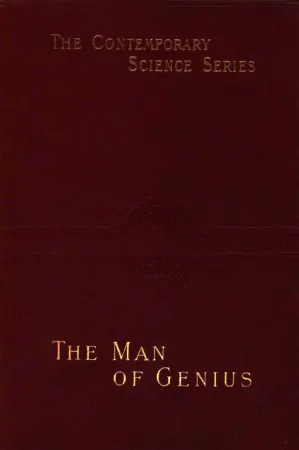
THE CLASSIC COLLECTION · 1891
"The Man of Genius" by Cesare Lombroso is a scientific publication written in the late 19th century. The book delves into the complex relationship between genius and madness, exploring the characteristics of individuals considered genius and how these traits intersect with patterns of mental illness. Lombroso examines historical figures and provides a foundational analysis of genius through a lens of physiological and psychological phenomena. The opening of the work sets the stage for an exploration of genius by referencing significant historical thoughts on the topic, from Aristotle to more contemporary thinkers. Lombroso reflects on his evolving views about genius relating to degradation and neurosis, suggesting that exceptional intellectual capabilities often stem from psychological anomalies. He lays out an argument that associates genius with various signs of degeneration, prompting readers to reconsider what defines genius and how societal perceptions may have historically conflated brilliance with madness. This thought-provoking introduction invites further examination of the intertwining nature of genius, mental health, and societal recognition.
Introduction adapted from the source catalogue; source summaries may be automatically generated.
Free to read · English · 130,716 words · No account needed
MAKE TIME FOR A GOOD BOOK
On by default. Untick to stop anonymous reading totals. Each page counts after 10 seconds in view. How this works.
Anonymous counting is on unless you have switched it off.
“‘Son nom? Je me souviens qu’il est doux et sonore, Comme ceux des aimés que la vie exila.
Son regard est pareil au regard des statues, Et pour sa voix lointaine, et calme, et grave, elle a L’inflexion des voix chères qui se sont tues.’
“I am also very fond of the Chanson d’Automne, though certain words (blême and suffocant) are not perhaps used with entire accuracy, and scarcely correspond with the “languor” described just before.
“Les sanglots longs
Des violons
De l’automne
Blessent mon cœur
D’une langueur
Monotone.
Tout suffocant
Et blême, quand
Sonne l’heure,
Je me souviens
Des jours anciens,
Et je pleure.
Et je m’en vais
Au voit mauvais
Qui m’emporte
De ça, de là,
Pareil à la
Feuille morte.’
“He celebrates the Virgin in an exceedingly fine hymn:--
“‘Je ne veux plus aimer que ma mère Marie.
Et, comme j’étais faible et bien méchant encore, Aux mains lâches, les yeux éblouis des chemins, Elle baissa mes yeux, et me joignit les mains Et m’enseigna les mots par lesquels on adore.
Et tous ces bons efforts vers les croix et les claies, Comme je l’invoquais, Elle en ceignit mes reins.’
“His piety inspires him with some very sweet lines:--
“‘Écoutez la chanson bien douce
Qui ne pleure que pour vous plaire.
Elle est discrète, elle est légère:
Un frisson d’eau sur de la mousse!...
Elle dit, la voix reconnue,
Que la bonté c’est notre vie,
Que de la haine et de l’envie
Rien ne reste, la mort venue....
Accueillez la voix qui persiste
Dans son naïf épithalame.
Allez, rien n’est meilleur à l’âme
Que de faire une âme moins triste!...
Je ne me souviens plus que du mal que j’ai fait.
Dans tous les mouvements bizarres de ma vie, De mes “malheurs,” selon le moment et le lieu, Des autres et de moi, de la route suivie, Je n’ai rien retenu que la grâce de Dieu.’
“But, even in the Poëmes Saturniens, we already meet with pieces of an oddity difficult to define--pieces which seem to belong to a poet who is slightly mad, or perhaps to one who is only half awake, and whose brain is darkened by the fumes of his dreams, or of drink; so that external objects only appear to him through a mist, and the indolence of his memory prevents him from getting hold of the right words. Take this for an example:--
Your reading position is saved on this browser. Take it to another device with a library code. Reading pages adapt to text, rather than matching a printed edition.
BEHIND THE BOOK
This eBook is for the use of anyone anywhere in the United States and most other parts of the world at no cost and with almost no restrictions whatsoever. You may copy it, give it away or re-use it under the terms of the Project Gutenberg License included with this eBook or online at www.gutenberg.org. If you are not located in the United States, you will have to check the laws of the country where you are located before using this eBook. Read the source licence.
The original source file, including credits and licence, is retained by this library. Request an original-format copy at no charge. Please include the book title and Project Gutenberg identifier #50539.
KEEP YOUR CURIOSITY GOING
David Patterson (Spirit) Hatch
Coulson Kernahan

Ralph Waldo Emerson
Frances Wright

Edwin Abbott Abbott

Joseph Droz