THE CLASSIC COLLECTION✦A dead man’s diaryCLASSIC FREE BOOKS
A dead man’s diary
Coulson Kernahan
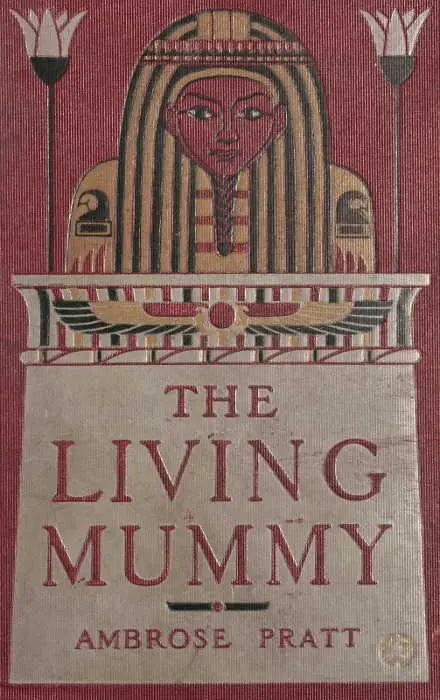
THE CLASSIC COLLECTION · 1910
"The Living Mummy" by Ambrose Pratt is a fiction novel written in the early 20th century. The story is set in the Libyan desert, where the main character, Dr. Pinsent, is an Egyptologist who becomes embroiled in a mysterious and thrilling adventure involving the famous explorer Sir Robert Ottley and his daughter, Miss Ottley. The narrative introduces a fascinating premise centered around ancient Egyptian history, particularly revolving around the discovery of a tomb belonging to a powerful priest named Ptahmes, and explores themes of curiosity, ambition, and the supernatural. The opening of the narrative sets the stage with Dr. Pinsent intensely focused on his academic work when he is unexpectedly interrupted by the arrival of Sir Robert Ottley and his daughter. The excitement builds as they embark on a journey to explore a tomb that Ottley has searched for years. However, mysterious and ominous elements start to surface, including the enigmatic allure of the sarcophagus and the supernatural presence that seems to haunt the characters. Through tense interactions and the introduction of a shadowy figure that appears to threaten their safety, the opening hints at a deeper connection between the ancient past and the unfolding drama, enticing the reader to delve further into the book's mysteries and character dynamics.
Introduction adapted from the source catalogue; source summaries may be automatically generated.
Free to read · English · 72,228 words · No account needed
MAKE TIME FOR A GOOD BOOK
On by default. Untick to stop anonymous reading totals. Each page counts after 10 seconds in view. How this works.
Anonymous counting is on unless you have switched it off.
Next morning early I picked a quarrel with Hubbard, and left him biting his finger nails. I went straight to Jermyn Street with my valise. Weldon was in bed. I told him I had had a fight with Hubbard and asked to be put up for a few days. He agreed with acclamation, though I am sure he was perfectly astounded at my strange request. I proceeded to astound him further. I mendaciously informed him that my nerves were in rags and that I was obsessed with a horrible hallucination of a mysteriously threatened life at night. Would, then, he give me a shakedown in his own bedroom, just for a week? It is wonderful how easy lying comes to one after the first plunge. I did the thing thoroughly. Mind you, I felt all along the utmost scorn for Dr. Belleville's threats against young Weldon's life. But Miss Ottley had asked me to look after him, and I was determined to fulfil the trust to the very foot of the letter. He was a splendid fellow to live with. It gives me a heartache to remember the anxiety to make me comfortable, the almost absurd cordiality of his welcome, the unselfish sincerity of his desire to please. One would have thought me a superior creation, a sort of divinity in disguise, the way he treated me. I had never awakened such affection in any living thing before, except in a mongrel retriever which once upon a time followed me home and which I had to turn away after it had licked my hand. And the amazing thing was, I had done nothing in the world to deserve it. I had never put myself out of my way in the smallest particular to serve the Captain. When we first met I had treated him with the scantest courtesy and afterwards with a sort of good-natured contempt. Even now I cannot understand it properly. It may have arisen from a secret disposition to hero-worship. Some men are like that. They are fond of investing a sentient figure-head with exaggerated attributes of majesty and bowing down before it. It is the survival of an aboriginal instinct to glorify the insubordinate. Weldon admired two things above all others: strength of body and strength of mind. In both these gifts he felt himself inferior to me, therefore he must needs put me on a pedestal. His gratitude in finding me willing to stoop to ask a favour of him was unbounded. It resembled that of an Eton fag to a monitor kind enough to take an interest in his doings. I have said before that he was essentially a boy at heart. But what an honest, clean-minded, fresh, wholehearted boy! I found myself liking and admiring him more and more each day. He taught me one of the greatest truths a man may learn. It is this--there is a more admirable thing in the world than intellect. Weldon's intellect was not of the first order. That is why I began by very nearly despising him. But he was the straightest, truest, manliest and simplest-minded man I have ever met. And I ended by half-humorously but none the less sincerely, reverencing him. If it were only for his sake I shall while I live regard the highest type of brain as incomplete without a paramount ideal of morality. And the best thing about Weldon was that he was utterly unconscious of his goodness. He was perfectly incapable of posing, but he had a fine, robust vanity of sorts, and he liked to regard himself as a bit of a "sad dog!" Romance was at the bottom of this. He envied the more than questionable experience of some of his acquaintances. It was because of the glamour of their perfumed wickedness. But their callous self-extrication from entanglements after growing weary of their chains made him long to wring their necks. For his own part, a certain shop girl had once fallen in love with him. He twirled his moustache and cast furtive glances at the mirror near him. It appears he had dallied with the temptation for a while--the "sad dog"--but Miss Ottley's portrait had saved him. He had kissed the shop girl once--horror of horrors!--in the Park after dark. He apologised to her father with a thousand pounds and fled to South America. When he came back she was married. He had confessed the whole of his truly dreadful criminality to Miss Ottley in a letter--and she had kept him waiting three miserable days for a reply. He believed he would have gone to the dogs headlong if she had refused to pardon him. But she did not. Vanity told him the reason. But it was beautiful to see the colour flush his cheeks and his eyes sparkle as he protested that he couldn't understand why she ever brought herself to speak to him again. I believe that was as far as Weldon ever got to telling a downright falsehood; the dear, great gander.
Your reading position is saved on this browser. Take it to another device with a library code. Reading pages adapt to text, rather than matching a printed edition.
BEHIND THE BOOK
This eBook is for the use of anyone anywhere in the United States and most other parts of the world at no cost and with almost no restrictions whatsoever. You may copy it, give it away or re-use it under the terms of the Project Gutenberg License included with this eBook or online at www.gutenberg.org. If you are not located in the United States, you will have to check the laws of the country where you are located before using this eBook. Read the source licence.
The original source file, including credits and licence, is retained by this library. Request an original-format copy at no charge. Please include the book title and Project Gutenberg identifier #58944.
KEEP YOUR CURIOSITY GOING
Coulson Kernahan

Maurice Baring
Frances Wright
Cécile Tormay
Francis Greenleaf Allinson & Anne C. E. (Anne Crosby Emery) Allinson

Frederic Jesup Stimson