THE CLASSIC COLLECTION✦A dead man’s diaryCLASSIC FREE BOOKS
A dead man’s diary
Coulson Kernahan
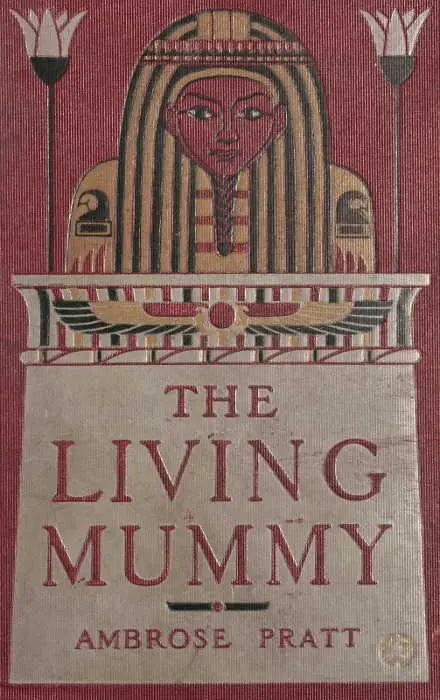
THE CLASSIC COLLECTION · 1910
"The Living Mummy" by Ambrose Pratt is a fiction novel written in the early 20th century. The story is set in the Libyan desert, where the main character, Dr. Pinsent, is an Egyptologist who becomes embroiled in a mysterious and thrilling adventure involving the famous explorer Sir Robert Ottley and his daughter, Miss Ottley. The narrative introduces a fascinating premise centered around ancient Egyptian history, particularly revolving around the discovery of a tomb belonging to a powerful priest named Ptahmes, and explores themes of curiosity, ambition, and the supernatural. The opening of the narrative sets the stage with Dr. Pinsent intensely focused on his academic work when he is unexpectedly interrupted by the arrival of Sir Robert Ottley and his daughter. The excitement builds as they embark on a journey to explore a tomb that Ottley has searched for years. However, mysterious and ominous elements start to surface, including the enigmatic allure of the sarcophagus and the supernatural presence that seems to haunt the characters. Through tense interactions and the introduction of a shadowy figure that appears to threaten their safety, the opening hints at a deeper connection between the ancient past and the unfolding drama, enticing the reader to delve further into the book's mysteries and character dynamics.
Introduction adapted from the source catalogue; source summaries may be automatically generated.
Free to read · English · 72,228 words · No account needed
MAKE TIME FOR A GOOD BOOK
On by default. Untick to stop anonymous reading totals. Each page counts after 10 seconds in view. How this works.
Anonymous counting is on unless you have switched it off.
Towards morning my mind grew much easier. Sir Robert awoke and took a few mouthfuls of liquid nourishment. But although too weak to speak, he was sensible and the fever had left him. He fell asleep again immediately. Soon afterwards my eyes fell on the sarcophagus. Its great size affected me with wonder--and its construction. Why should imperishable treasures, gold, silver, and precious stones be enclosed in lead? Why not in stone? And the sarcophagus had been hermetically sealed too, witness the chisel and saw marks on the lid, of Ottley's making. I examined them attentively, then sat down and stared at the sarcophagus again. It was coffin shaped. Why? If it had been intended for a mere treasure chest surely--I was struck suddenly by a fact and a remembrance. The sarcophagus manifestly measured four feet high at least. And I remembered that in filling it with water for Sir Robert's bath I had only had to fill eighteen inches in depth. What if underneath the treasure it contained another chamber overlaid with lead? There was room. I got afoot and measured the depth of water on my arm. Eighteen, well, certainly not more than nineteen inches. I seized a bucket and began to bail the water out, having need to be noiseless for the sleepers' sake. The task occupied the better part of half an hour. By then morning had begun to pale the lamplight, and I was weary. But I kept on, and finally mopped the interior of the huge basin dry with a towel. Thereupon I examined the bottom with the lamp. It did not show a single crevice. The lead was in a solid and impervious sheet. Curious. But the difference between the eighteen inches and the four feet remained to be accounted for. Was the interspace filled with lead? If so--why such uneconomic expenditure of a valuable mineral? The mystery interested me so much that my weariness was forgotten. I felt that at any cost it must be solved forthwith. Casting about, I found a fine-pointed and razor-sharp chisel in the drawer of Sir Robert Ottley's camp table. With this, I set to work. Climbing into the sarcophagus, I selected a spot, and using the weight of my body in place of a hammer, I forced the chisel into the lead. It bit into the metal slowly but surely. One inch. One inch and a half. Suddenly it slipped. I fell forward and was brought up by the handle. The mystery was solved. I recovered my position and wiped my forehead. Instantly a thin but strangely overpowering perfume filled my nostrils. It resembled camphor, and violets, and lavender, and oil of almonds, and a hundred other scents, but was truly like none of them. It created and compelled, however, a confused train of untranslatable reflections which might have been memories. But God knows what they were. I experienced a mysterious sensation of immeasurable antiquity. And wildly absurd as the idea appears set forth in sober language, something assured me that I was thousands of years old or had lived before--so long--so very long ago. I saw lights--the sound of chanting voices and of rushing waters filled my ears. I seemed to be assisting at a solemn ritual. Ghostly forces and dim spirit figures filled the cave. The air was thick with incense fumes. My reason rocked and swung. Just in time I realised that I was becoming mysteriously anæsthetised. I held my breath and with a powerful effort leaped to the floor. Then I carefully blocked up the chisel hole with my kerchief and staggered into the open air. Very soon I was my own man again. Returning filled with apprehension for the patient, I found nothing to alarm me. The perfume had absolutely disappeared. Sir Robert was sleeping like a babe. I took a nip of brandy and sitting down, gave myself to dreams watching the sarcophagus. What was its secret? And what the secret of Sir Robert Ottley's passionate interest in the corpse of Ptahmes that had been potent enough to call him back to life from the very brink of dissolution? But plainly I must wait to learn. For it would not do to trifle with the perfume in the cavern. In that confined space it might bring about the destruction of us all. Already it had affected me. My head ached fearfully, and I knew that my blood vessels were distended, and that my heart was still violently excited. My agitation was not all painful. There was an insidious pleasure mingled with it, an intangible titillation of the nerves; but that only alarmed me the more. The poisons that are most to be feared are those which captivate the senses; they convey no warning to the body, and betray the mind, however watchful, by effecting a paralysis of will. Perhaps--unwittingly--I had been very near death. The notion was disturbing. I began to regard the sarcophagus much in the light of an infernal machine possessing dangerous potentialities for ill. I determined as soon as possible--that is to say, as soon as help arrived--to have it removed from the sick room to the pylon. There at least it would be less manifestly perilous; having the play of the whole wide desert atmosphere in which to dissipate its noxious energies.
Your reading position is saved on this browser. Take it to another device with a library code. Reading pages adapt to text, rather than matching a printed edition.
BEHIND THE BOOK
This eBook is for the use of anyone anywhere in the United States and most other parts of the world at no cost and with almost no restrictions whatsoever. You may copy it, give it away or re-use it under the terms of the Project Gutenberg License included with this eBook or online at www.gutenberg.org. If you are not located in the United States, you will have to check the laws of the country where you are located before using this eBook. Read the source licence.
The original source file, including credits and licence, is retained by this library. Request an original-format copy at no charge. Please include the book title and Project Gutenberg identifier #58944.
KEEP YOUR CURIOSITY GOING
Coulson Kernahan

Maurice Baring
Frances Wright
Cécile Tormay
Francis Greenleaf Allinson & Anne C. E. (Anne Crosby Emery) Allinson

Frederic Jesup Stimson