THE CLASSIC COLLECTION✦A dead man’s diaryCLASSIC FREE BOOKS
A dead man’s diary
Coulson Kernahan
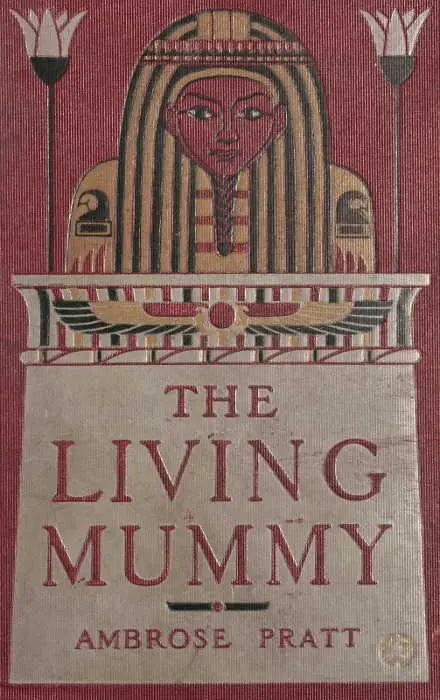
THE CLASSIC COLLECTION · 1910
"The Living Mummy" by Ambrose Pratt is a fiction novel written in the early 20th century. The story is set in the Libyan desert, where the main character, Dr. Pinsent, is an Egyptologist who becomes embroiled in a mysterious and thrilling adventure involving the famous explorer Sir Robert Ottley and his daughter, Miss Ottley. The narrative introduces a fascinating premise centered around ancient Egyptian history, particularly revolving around the discovery of a tomb belonging to a powerful priest named Ptahmes, and explores themes of curiosity, ambition, and the supernatural. The opening of the narrative sets the stage with Dr. Pinsent intensely focused on his academic work when he is unexpectedly interrupted by the arrival of Sir Robert Ottley and his daughter. The excitement builds as they embark on a journey to explore a tomb that Ottley has searched for years. However, mysterious and ominous elements start to surface, including the enigmatic allure of the sarcophagus and the supernatural presence that seems to haunt the characters. Through tense interactions and the introduction of a shadowy figure that appears to threaten their safety, the opening hints at a deeper connection between the ancient past and the unfolding drama, enticing the reader to delve further into the book's mysteries and character dynamics.
Introduction adapted from the source catalogue; source summaries may be automatically generated.
Free to read · English · 72,228 words · No account needed
MAKE TIME FOR A GOOD BOOK
On by default. Untick to stop anonymous reading totals. Each page counts after 10 seconds in view. How this works.
Anonymous counting is on unless you have switched it off.
I explained my examination of the sarcophagus and the result in detail. She sat gazing at me like a graven image. When she had finished she arose and vanished--without a word. I followed and found her standing beside the great lead coffin, my kerchief in her hand. She had reopened the chisel hole, and the cavern was already saturated with the infernal gas. I snatched my handkerchief away and once more blocked the vent. Then I exerted all my strength and with a prodigious effort placed the lid on the sarcophagus. With a woman's curiosity to reckon with, such a precaution seemed a vital safeguard. I found her standing in the pylon, breathing like a spent runner.
"You might have taken my word," I said coldly. "You'd have saved yourself an ugly headache at the least."
Her face was crimson; her eyes burned like stars. The fumes of that uncanny perfume had made her drunk. She swayed and leaned dizzily against a pillar. I went up and took her hand. The pulse was beating like a miniature steam hammer.
"Sit down," I said.
She laughed and sank at my feet in a heap. "Oh! Oh!" she cried and fell to sobbing half hysterically though tearlessly.
"Lord!" I said aloud. "What a bundle of hysterical humours it is, and how plain to look on when its resolution takes a holiday."
That is the way to treat hysteria.
Miss Ottley sat up and withered me with a glance. "I--I am. It--it's not hysteria," she stammered, between gasps. "Besides--you--confessed--it--overcame--you, too."
Then she fainted. I sprang up, but even as I moved I heard a loud sigh in the cavern. "The sick man first," I muttered, and let the girl lie. But at the door of the cavern chamber I stood transfixed. A dark shape bent over the patient's cot, hiding Sir Robert Ottley's face from view. It seemed to be a man, but its back was presented to my gaze. "What the deuce are you doing here, whoever you are?" I cried out, and started forward. The shape melted on the instant into thinnest air. "Nothing but a shadow," I said to myself. It was necessary to say something. I was shocked to my soul. I stood for a moment shaking and dismayed. The shadow had been so thick and bodily and had fled so like a spirit that I had work to do to readjust my scattered faculties. Of course a shadow--and my eyes, dazzled by the sunlight without, had momentarily failed to pierce it. A reasonable and quite ample scientific explanation. But what had cast the shadow? Pish--what but myself? And yet: and yet: I was shivering like a blancmange. Never had my nerves used me so ill. Perhaps, however, that accursed perfume had affected them. Ah! there was a reassuring solution of the puzzle. Reassuring to my reason, be it understood, for the fleshy part of me was taken with an ague and refused for many seconds to return to its subjection to my will. Sometimes now I doubt but that the flesh has an intelligence apart from the brain cells and nerve structures that usually control it. Indeed, I have never met a man of intellect whose memory does not register experience of some occasion in which his flesh took independent fright--like a startled hare--at some bogie which made his sober reason subsequently smile; nay, contemptuously at times. "Well, well," I said at length and pushed forward--to receive another shock. Sir Robert Ottley was almost nude. The bed clothes had been pushed down past his waist. His fingers convulsively gripped the paillasse. His face was livid. His eyes were open and upturned. His whole form was stiff and rigid. A fit? It seemed so. His pulse was still. He did not breathe. But a cataleptic fit then, for at a lance prick the blood flowed. I forced him to his right side and tried massage. No use. Strychnine and nitro-glycerine equally refused to act. Finally I saturated a cloth with amyl nitrate, placed it over his open mouth and tried artificial respiration. A whole hour had passed already, but I refused to give in. It was well. In another twenty minutes my efforts were rewarded with a sigh. I kept on and the man began to breathe. When it seemed safe to leave off, I disposed him easily and watched events. First his normal colouring returned. Then his mouth closed. Finally his eyes revolved. The lids closed and opened several times, then rested closed. His pulse beat feverishly, but in spite of that he slept. I walked to the door. Miss Ottley--whom I had completely forgotten--still lay insensible where she had fallen. I picked her up and brought her into the cavern. She awoke to consciousness in transit. I forced her to drink a stiff nobbler of brandy, and very soon she was in her old, cold, bright, proud, self-reliant state--armed cap-a-pie with insolence and egotism.
Your reading position is saved on this browser. Take it to another device with a library code. Reading pages adapt to text, rather than matching a printed edition.
BEHIND THE BOOK
This eBook is for the use of anyone anywhere in the United States and most other parts of the world at no cost and with almost no restrictions whatsoever. You may copy it, give it away or re-use it under the terms of the Project Gutenberg License included with this eBook or online at www.gutenberg.org. If you are not located in the United States, you will have to check the laws of the country where you are located before using this eBook. Read the source licence.
The original source file, including credits and licence, is retained by this library. Request an original-format copy at no charge. Please include the book title and Project Gutenberg identifier #58944.
KEEP YOUR CURIOSITY GOING
Coulson Kernahan

Maurice Baring
Frances Wright
Cécile Tormay
Francis Greenleaf Allinson & Anne C. E. (Anne Crosby Emery) Allinson

Frederic Jesup Stimson