
A Son of Ishmael: A Novel
L. T. Meade
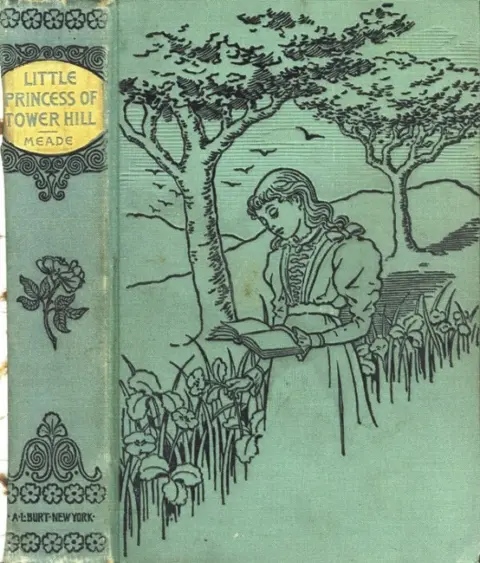
THE CLASSIC COLLECTION · 1889
"The Little Princess of Tower Hill" by L. T. Meade is a children's novel written in the late 19th century. The story revolves around a young girl named Maggie Ascot, who is affectionately called the "Little Princess of Tower Hill." The book explores themes of privilege, childhood innocence, and the challenges of growing up as Maggie interacts with her family and other children, particularly in the context of her relationships with her new cousin Ralph and her longing to be liked by others. At the start of the narrative, readers are introduced to Maggie, a precocious almost eight-year-old girl who enjoys a life of luxury and attention as the only child of her affluent parents, Sir John and Lady Ascot. Her spoiled nature becomes apparent as she grapples with the arrival of her cousin Ralph, who challenges her perceptions of happiness and worth. Maggie's experiences shift from being carefree to learning lessons about responsibility, friendship, and the consequences of her actions, especially after losing her father's prized rabbits. This opening sets the stage for Maggie's growth as she navigates her relationships and begins to understand the broader implications of her privileged lifestyle within her social circle.
Introduction adapted from the source catalogue; source summaries may be automatically generated.
Free to read · English · 53,769 words · No account needed
MAKE TIME FOR A GOOD BOOK
On by default. Untick to stop anonymous reading totals. Each page counts after 10 seconds in view. How this works.
Anonymous counting is on unless you have switched it off.
Perhaps on this dark evening there could scarcely be found in all London three more unhappy creatures than those who crouched round the empty grate in Tom's attic. In truth, over this poor attic rested a cloud too heavy for man to lift, and good and bad angels were drawing near to witness the issues of victory or defeat.
"We'll get into bed," said Tom, looking drearily round the supperless, fireless room. "Pepper," he continued as he pressed his arms round his little brother, "should yer mind werry much going to the work'us arter h'all?"
"Oh, yes, yes, Tom! Oh, Tom! ef they took me from yer, I'd die."
"But ef we both went, Pepper?"
"What 'ud come o' Trusty?" asked Pepper.
"I doesn't know the ways of work'uses," said Tom, speaking half to himself. "Maybe they'll take h'in the h'old dog. Ef you and I were to beg of 'em a little 'ard, they might take h'in old Trusty, Pepper."
"But I doesn't want to go to no work'us," whispered Pepper.
"I only says perhaps, Pepper," answered poor Tom. "I'd 'ate to go."
"Well, don't let's think of it," said Pepper, putting up his lips to kiss Tom. "Yer'll be better in the morning, Tom; and, Tom," he added, half-timidly, half-exultantly, "I've been real sperrited h'all day. Pat came in and began to talk 'bout dear Trusty, but I flew at him, I boxed im right up h'in the ear, Tom."
"Did yer really?" answered Tom, laughing, and forgetting the pain in his
ankle for the moment.
"Yes, and 'e's nothink but a coward, Tom, fur 'e just runned away. I'll never be a Hen-e-ry to him no more," added the little boy with strong emphasis.
"No; yer a real nice, peppery young 'un," said Tom, "and I'm proud o' yer; but now go to sleep, young 'un, for I 'as a deal to think about."
"'Ow's the pain, Tom?"
"Werry 'ot and fiery like; but maybe 'twill be better in the morning."
"Good-night, Tom," said Pepper, creeping closer into his arms.
Under the sweet influence of Tom's praise, resting in peace in the delicious words that Tom was proud of him, poor hungry little Pepper was soon enjoying dreamless slumber. But not so Tom himself.
Tom had gone through a hard day's work. He was tired, aching in every limb, but no kind sleep would visit that weary little body or troubled mind. His sprained ankle hurt him sadly, but his mental anxiety made him almost forget his bodily suffering. Dark indeed was the cloud that rested on Tom.
Your reading position is saved on this browser. Take it to another device with a library code. Reading pages adapt to text, rather than matching a printed edition.
BEHIND THE BOOK
This eBook is for the use of anyone anywhere in the United States and most other parts of the world at no cost and with almost no restrictions whatsoever. You may copy it, give it away or re-use it under the terms of the Project Gutenberg License included with this eBook or online at www.gutenberg.org. If you are not located in the United States, you will have to check the laws of the country where you are located before using this eBook. Read the source licence.
The original source file, including credits and licence, is retained by this library. Request an original-format copy at no charge. Please include the book title and Project Gutenberg identifier #38771.
KEEP YOUR CURIOSITY GOING
Coulson Kernahan

Maurice Baring
Frances Wright
Cécile Tormay

Frederic Jesup Stimson

W. H. P. (William Henry Pope) Jarvis


