
A Son of Ishmael: A Novel
L. T. Meade
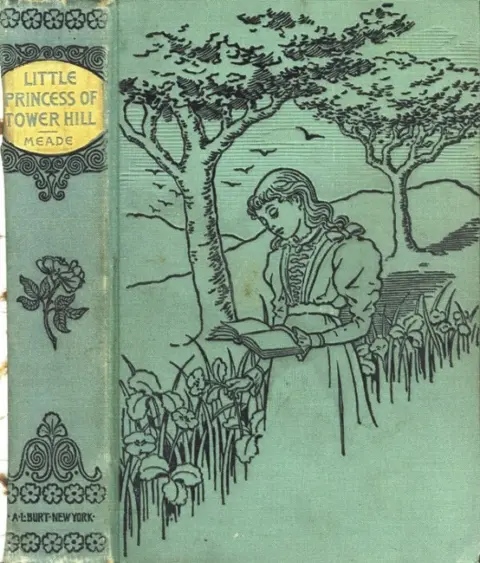
THE CLASSIC COLLECTION · 1889
"The Little Princess of Tower Hill" by L. T. Meade is a children's novel written in the late 19th century. The story revolves around a young girl named Maggie Ascot, who is affectionately called the "Little Princess of Tower Hill." The book explores themes of privilege, childhood innocence, and the challenges of growing up as Maggie interacts with her family and other children, particularly in the context of her relationships with her new cousin Ralph and her longing to be liked by others. At the start of the narrative, readers are introduced to Maggie, a precocious almost eight-year-old girl who enjoys a life of luxury and attention as the only child of her affluent parents, Sir John and Lady Ascot. Her spoiled nature becomes apparent as she grapples with the arrival of her cousin Ralph, who challenges her perceptions of happiness and worth. Maggie's experiences shift from being carefree to learning lessons about responsibility, friendship, and the consequences of her actions, especially after losing her father's prized rabbits. This opening sets the stage for Maggie's growth as she navigates her relationships and begins to understand the broader implications of her privileged lifestyle within her social circle.
Introduction adapted from the source catalogue; source summaries may be automatically generated.
Free to read · English · 53,769 words · No account needed
MAKE TIME FOR A GOOD BOOK
On by default. Untick to stop anonymous reading totals. Each page counts after 10 seconds in view. How this works.
Anonymous counting is on unless you have switched it off.
When Tom returned home that night, he had not only the old gentleman's shilling unbroken in his pocket, but three pennies which had been given to him since then, and which jingled and made a very nice sound against the shilling. But though this was a pleasant state of affairs, there was nothing pleasant in poor little Tom's face; its bright look had left it, it was white and drawn, and he limped along in evident pain and difficulty. The fact was, Tom had fallen in the snow, and had sprained his ankle very badly. When he entered the house his pain was so great that he could scarcely hobble upstairs.
On the first landing he was greeted by the rough, rude tones of Pat Finnahan, who stopped him with a loud exclamation, then shouted to his mother that Tom had arrived.
Mrs. Finnahan was Tom's Irish landlady, but as he did not owe her any rent he was not afraid of her.
She called to him now, however, and he stood still to listen to what she
had to say.
"Ah, then, wisha, Tom, and when am I to see me own agen?" she demanded, with a very strong Irish brogue.
"Wot does yer mean?" asked Tom, staring at her. "I pays my rent reg'lar. I
owes yer nothink."
"Oh, glory!" said Mrs. Finnahan, throwing up her hands, "the boy have the imperence to ax me to my face what I manes. I manes the shilling as I lent to yer mother, young man, and that I wants back agen; that's what I manes."
At these words Tom felt himself turning very pale. He remembered perfectly how, in a moment of generosity, Mrs. Finnahan had once lent his mother a shilling, but he was quite under the impression that it had been paid back some time ago.
"I thought as my mother give it back to yer afore she died," he said, but a great fear took possession of his heart while he spoke.
Mrs. Finnahan pushed him from her, her red face growing purple.
"Listen to the likes of him," she said; "he tells me to me face as 'tis lies I'm afther telling. Oh, musha! but he's a black-hearted schoundrel. I must have me shilling to-morrow, young man, or out you goes."
With these words Mrs. Finnahan retired into her private apartment, slamming
the door behind her.
"Tom," whispered Pat, who during this colloquy had stood by his side, "can yer give mother that 'ere shilling to-morrer?"
"Yer knows I can't," answered Tom.
"Well, she'll turn yer h'out, as sure as I'm Pat Finnahan."
Your reading position is saved on this browser. Take it to another device with a library code. Reading pages adapt to text, rather than matching a printed edition.
BEHIND THE BOOK
This eBook is for the use of anyone anywhere in the United States and most other parts of the world at no cost and with almost no restrictions whatsoever. You may copy it, give it away or re-use it under the terms of the Project Gutenberg License included with this eBook or online at www.gutenberg.org. If you are not located in the United States, you will have to check the laws of the country where you are located before using this eBook. Read the source licence.
The original source file, including credits and licence, is retained by this library. Request an original-format copy at no charge. Please include the book title and Project Gutenberg identifier #38771.
KEEP YOUR CURIOSITY GOING
Coulson Kernahan

Maurice Baring
Frances Wright
Cécile Tormay

Frederic Jesup Stimson

W. H. P. (William Henry Pope) Jarvis


