THE CLASSIC COLLECTION✦Wedded by fateCLASSIC FREE BOOKS
Wedded by fate
Georgie, Mrs. Sheldon
THE CLASSIC COLLECTION · 1884
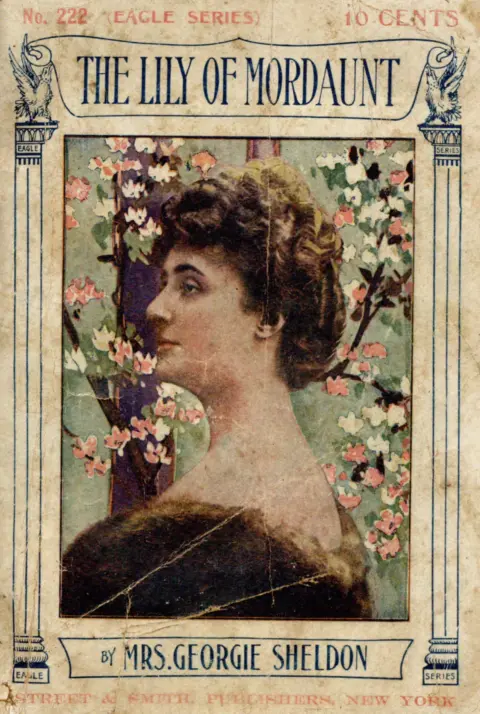
"The lily of Mordaunt" by Mrs. Georgie Sheldon is a novel written in the late 19th century. It appears to be a romantic society drama set in the English countryside, centering on Lady Elaine Warburton—an heiress nicknamed the “Lily of Mordaunt”—her devoted admirer Wil Hamilton, the witty heiress Arley Wentworth, and the ambitious barrister Philip Paxton. Expect a tale of courtship, jealousy, and social maneuvering where friendship and ambition collide against questions of love and fortune.
The opening of the novel introduces the country-house world of Hazelmere through Wil Hamilton’s exuberant letter inviting his friend Philip to meet the household: Lady Elaine, Arley, Annie Hamilton, and Fred Vane. Philip arrives skeptical of “Elaine” but is instantly captivated by her beauty, while Arley deftly thwarts his efforts to monopolize the heiress, giving Wil chances to be near her. At a grand dinner, Wil’s jealousy flares; a moonlit row and a rare night-blooming lily steady him, and the flower becomes a tender token between him and Elaine. Philip seizes a private moment to propose; Elaine refuses him, and Wil, misreading a brief handshake, plunges into despair until Elaine finds him in the woods and they clear the misunderstanding, confessing mutual love. Their engagement is announced the next morning, prompting Philip’s anger, a private financial setback, and a resolve to mask his feelings while recalibrating his ambitions.
Introduction adapted from the source catalogue; source summaries may be automatically generated.
Free to read · English · 124,077 words · No account needed
MAKE TIME FOR A GOOD BOOK
On by default. Untick to stop anonymous reading totals. Each page counts after 10 seconds in view. How this works.
Anonymous counting is on unless you have switched it off.
“Yes, miss, very ill, and ye ain’t none too well now,” Jane returned, regarding her somewhat anxiously.
“Do you think I shall be sick long?” the young girl questioned,
wistfully.
“I hope ye’re a trifle better this mornin’, but it’ll take quite a spell yet for ye to get up where ye was afore.”
Arley sighed heavily at this.
“What day is it?” she asked.
“Monday, miss.”
“Monday!” with a startled look. “It was Tuesday that I saw you at the consul’s. It must be nearly time to sail.”
Her eyes were growing very bright, and the fever flush began to mount
hotly in her cheeks again.
“Yes; the Rocket sails Wednesday at noon.”
Jane did not know what else to say.
“And I can’t go,” Arley wailed, with a hysterical sob.
“Hush, dearie! ye’ll do yerself mischief if ye get to cryin’,” the woman said, soothingly, while she smoothed the pretty brown head as tenderly as a mother would have done.
“But I did so want to go home,” Arley replied, with quivering lips.
“I know--I know, and I wanted to have ye,” Dame Collins responded, while a huge lump rose in her throat; “but, after all, dearie, a sailin’ vessel ain’t no fit way for the like o’ ye to be travelin’ in; it’ll be much better for ye to take passage in some steamer and go as a leddy should go.”
“But I cannot go alone--I’m afraid,” and Arley clung to her companion almost in terror, while a feeling of desolation surged like a huge billow over her.
The woman hardly knew what to say to her.
She felt it might do her great injury if she should get excited, and yet she knew that some arrangements ought to be made for her future care. She longed to stay herself, for she felt a strange yearning for the beautiful but forlorn stranger; but she could not.
“Where do you sail from?” Arley asked, after a few moments, and
struggling to be calm.
“Valencia, miss, where they are loadin’ the packet with fruits and nuts as fast as ever they can, and my old man and me will have to start early Wednesday mornin’, so’s to be on hand. It makes my old heart ache, dearie, to go and leave you behind, sick and alone, and--and--”
She wanted to ask how Arley happened to be there so friendless in that strange country, but a sort of rude delicacy prevented her from putting her curiosity into words.
But the sick girl understood her, and, though a vivid blush rose to her forehead, she finished the sentence for her.
Your reading position is saved on this browser. Take it to another device with a library code. Reading pages adapt to text, rather than matching a printed edition.
Georgie, Mrs. Sheldon
Georgie, Mrs. Sheldon
Georgie, Mrs. Sheldon
Georgie, Mrs. Sheldon
BEHIND THE BOOK
This eBook is for the use of anyone anywhere in the United States and most other parts of the world at no cost and with almost no restrictions whatsoever. You may copy it, give it away or re-use it under the terms of the Project Gutenberg License included with this eBook or online at www.gutenberg.org. If you are not located in the United States, you will have to check the laws of the country where you are located before using this eBook. Read the source licence.
The original source file, including credits and licence, is retained by this library. Request an original-format copy at no charge. Please include the book title and Project Gutenberg identifier #78682.
KEEP YOUR CURIOSITY GOING
Coulson Kernahan

Maurice Baring
Frances Wright
Cécile Tormay

Frederic Jesup Stimson

W. H. P. (William Henry Pope) Jarvis