THE CLASSIC COLLECTION✦Eline VereCLASSIC FREE BOOKS
Eline Vere
Louis Couperus
THE CLASSIC COLLECTION · 1921
"The Law Inevitable" by Louis Couperus is a novel written in the early 20th century. The story follows Cornélie de Retz van Loo, a young divorced woman traveling in Rome, seeking solace and a fresh start in life. As she navigates her new environment, the novel explores themes of identity, societal constraints, and the complexity of human relationships, set against the backdrop of a vibrant yet complex city. At the start of the book, the reader is introduced to Cornélie as she arrives at the Marchesa Belloni's boarding house in Rome. A mix of excitement and trepidation fills her as she settles into her new surroundings, and the initial interactions with other boarders reveal a rich tapestry of personalities, including the charming Mr. Rudyard, who seems to have a hidden agenda. Cornélie’s observations about her fellow guests and her inner musings about her past and future gradually paint a portrait of a woman in search of meaning amidst her disillusionment with the art and society she hoped would provide her solace. The opening chapters set the stage for her journey of self-discovery, as she grapples with loneliness, cultural expectations, and her desire to forge a new path in life.
Introduction adapted from the source catalogue; source summaries may be automatically generated.
Free to read · English · 85,792 words · No account needed
MAKE TIME FOR A GOOD BOOK
On by default. Untick to stop anonymous reading totals. Each page counts after 10 seconds in view. How this works.
Anonymous counting is on unless you have switched it off.
And, blind with rage, he flew at Duco's throat. The attack was so unexpected that Duco stumbled. They both wrestled furiously. All their hidden antipathy broke forth in fury. They did not hear Cornélie's entreaties, they struck each other with their fists, they grappled with arms and legs, breast to breast. Then Cornélie saw something flash. In the moonlight she saw that the prince had drawn a knife. But the very movement was an advantage to Duco, who gripped his wrist as in a vice, forced him to the ground and, pressing his knee on Gilio's chest, took him by the throat with his other hand.
"Let go!" yelled the prince.
"Let go that knife!" yelled Duco.
The prince obstinately persisted:
"Let go!" he yelled once more.
"Let go that knife."
The knife dropped from his fingers. Duco grasped it and rose to his
feet:
"Get up," he said. "We can continue this fight, if you like, to-morrow, under less primitive conditions: not with a knife, but with swords or pistols."
The prince stood panting, blue in the face.... When he came to himself,
he said, slowly:
"No, I will not fight a duel. Unless you want to. But I don't. I am defeated. She has a demoniacal force which would always make you win, whatever game we played. We've had our duel. This struggle tells me more than a regular duel would. Only, if you want to fight me, I have no objection. But I now know for certain that you would kill me. She protects you."
"I don't want to fight a duel with you," said Duco.
"Then let us look on this struggle as a duel and now give me your hand."
Duco put out his hand; Gilio pressed it:
"Forgive me," he said, bowing before Cornélie.
"I have insulted you."
"No," said she, "I do not forgive you."
"We have to forgive each other. I forgive you the blow you struck me."
"I forgive you nothing. I shall never forgive you this evening's work: not your spying, nor your lack of self-control, nor the rights which you try to claim from me, an unmarried woman--whereas I allow you no rights whatever--nor your attack, nor your knife."
"Are we enemies then, for good?"
"Yes, for good. I shall leave your house to-morrow."
"I have done wrong," he confessed, humbly. "Forgive me. I am
hot-blooded."
"Until now I looked upon you as a gentleman...."
"I am also an Italian."
"I do not forgive you."
"I once proved to you that I could be a good friend."
"This is not the moment to remind me of it."
Your reading position is saved on this browser. Take it to another device with a library code. Reading pages adapt to text, rather than matching a printed edition.
Louis Couperus

Louis Couperus

Louis Couperus
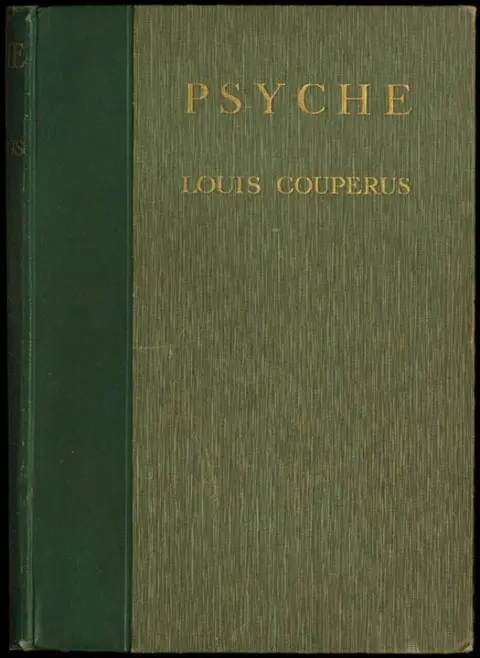
Louis Couperus
BEHIND THE BOOK
This eBook is for the use of anyone anywhere in the United States and most other parts of the world at no cost and with almost no restrictions whatsoever. You may copy it, give it away or re-use it under the terms of the Project Gutenberg License included with this eBook or online at www.gutenberg.org. If you are not located in the United States, you will have to check the laws of the country where you are located before using this eBook. Read the source licence.
The original source file, including credits and licence, is retained by this library. Request an original-format copy at no charge. Please include the book title and Project Gutenberg identifier #43827.
KEEP YOUR CURIOSITY GOING
Coulson Kernahan

Maurice Baring
Frances Wright
Cécile Tormay

Frederic Jesup Stimson

W. H. P. (William Henry Pope) Jarvis