THE CLASSIC COLLECTION✦Eline VereCLASSIC FREE BOOKS
Eline Vere
Louis Couperus
THE CLASSIC COLLECTION · 1921
"The Law Inevitable" by Louis Couperus is a novel written in the early 20th century. The story follows Cornélie de Retz van Loo, a young divorced woman traveling in Rome, seeking solace and a fresh start in life. As she navigates her new environment, the novel explores themes of identity, societal constraints, and the complexity of human relationships, set against the backdrop of a vibrant yet complex city. At the start of the book, the reader is introduced to Cornélie as she arrives at the Marchesa Belloni's boarding house in Rome. A mix of excitement and trepidation fills her as she settles into her new surroundings, and the initial interactions with other boarders reveal a rich tapestry of personalities, including the charming Mr. Rudyard, who seems to have a hidden agenda. Cornélie’s observations about her fellow guests and her inner musings about her past and future gradually paint a portrait of a woman in search of meaning amidst her disillusionment with the art and society she hoped would provide her solace. The opening chapters set the stage for her journey of self-discovery, as she grapples with loneliness, cultural expectations, and her desire to forge a new path in life.
Introduction adapted from the source catalogue; source summaries may be automatically generated.
Free to read · English · 85,792 words · No account needed
MAKE TIME FOR A GOOD BOOK
On by default. Untick to stop anonymous reading totals. Each page counts after 10 seconds in view. How this works.
Anonymous counting is on unless you have switched it off.
Gilio hated the villeggiatura at San Stefano, Every morning he had to be up and dressed by six o'clock, with Prince Ercole, Urania and the marchesa, to hear mass said by the chaplain in the private chapel of the castle. After that, he did not know what to do with his time. He had gone bicycling once or twice with Bob Hope, but the young Far-Westerner had too much energy for him, like Bob's sister, Urania. He flirted and argued a little with Cornélie, but secretly he was still offended and angry with himself and her. He remembered her first arrival that evening at the Palazzo Ruspoli, when she came and disturbed his rendez-vous with Urania. And in the camera degli sposi she had for the second time been too much for him! He seethed with fury when he thought of it and he hated her and swore by all his gods to be revenged. He cursed his own lack of resolution. He had been too weak to use violence or force and there ought never to have been any need to resort to force: he was accustomed to a quick surrender. And he had to be told by her, that Dutchwoman, that his temperament did not respond to hers! What was there about that woman? What did she mean by it? He was so unaccustomed to thinking, he was such a thoughtless, easy-going, Italian child of nature, so accustomed to let his life run on according to his every whim and impulse, that he hardly understood her--though he suspected the meaning of her words--hardly understood that reserve of hers. Why should she behave so to him, this foreigner with her demoniacal new ideas, who cared nothing about the world, who would have nothing to do with marriage, who lived with a painter as his mistress! She had no religion and no morals? he knew about religion and morals--she belonged to the devil; demoniacal was what she was: didn't she know all about Aunt Lucia Belloni's manoeuvres? And hadn't Aunt Lucia warned him lately that she was a dangerous woman, an uncanny woman, a woman of the devil? She was a witch! Why should she refuse? Hadn't he plainly seen her figure last night going through the courtyard in the moonlight, beside Van der Staal's figure, and hadn't he seen them opening the door that led to the terrace by the pergola? And hadn't he waited an hour, two hours, without sleeping, until he saw them come back and lock the door after them? And why did she love only him, that painter? Oh, he hated him, with all the blazing hatred of his jealousy; he hated her, for her exclusiveness, for her disdain, for her constant jesting and flirting, as though he were a buffoon, a clown! What was it that he asked? A favour such as she granted her lover! He was not asking for anything serious, any oath or life-long tie; he asked for so little: just one hour of love. It was of no importance: he had never looked upon that as of much importance. And she, she refused it to him! No, he did not understand her, but what he did understand was that she disdained him; and he, he hated the pair of them. And yet he was enamoured of her with all the violence of his thwarted passion. In the boredom of that villeggiatura, to which his wife condemned him in her new love for their ruined eyrie, his hatred and the thought of his revenge formed an occupation for his empty brains. Outwardly, he was the same as usual and flirted with Cornélie, flirted even more than usual, to annoy Van der Staal. And, when his cousin, the Contessa di Rosavilla--his "white" cousin, the lady-in-waiting to the queen--came to spend a few days with them, he flirted with her too and tried to provoke Cornélie's jealousy. He failed in this, however, and consoled himself with the countess, who made up to him for his disappointment. She was no longer a young woman, but represented the cold, sculptured Juno type, with a rather foolish expression; she had Juno eyes, protruding from their sockets; she was a leader of fashion at the Quirinal and in the "white" world; and her reputation for gallantry was generally known. She had never had a liaison with Gilio that had lasted for longer than an hour. She had very simple ideas on love, without much variety. Her light-hearted depravity amused Gilio. And flirting in the corners, with his foot on hers under her skirt, Gilio told her about Cornélie, about Duco and about the adventure in the camera degli sposi and asked his cousin whether she understood. No, the Contessa di Rosavilla did not understand it any too well either. Temperament? Oh, yes, perhaps she--questa Cornelia--preferred fair men to dark: there were women who had a preference! And Gilio laughed. It was so simple, l'amore; there wasn't very much to be said about it.
Your reading position is saved on this browser. Take it to another device with a library code. Reading pages adapt to text, rather than matching a printed edition.
Louis Couperus

Louis Couperus

Louis Couperus
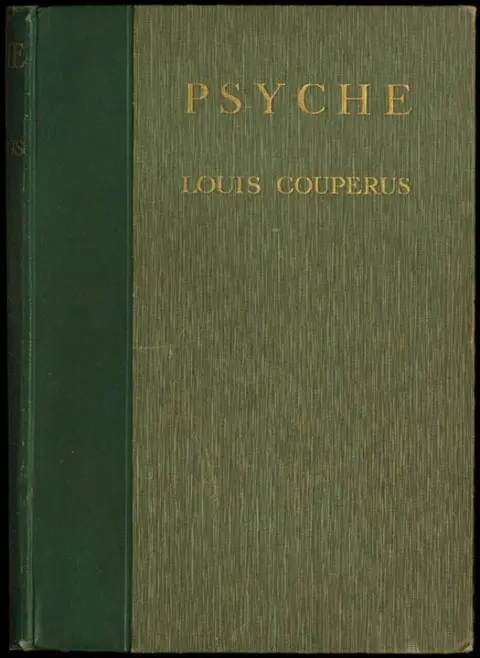
Louis Couperus
BEHIND THE BOOK
This eBook is for the use of anyone anywhere in the United States and most other parts of the world at no cost and with almost no restrictions whatsoever. You may copy it, give it away or re-use it under the terms of the Project Gutenberg License included with this eBook or online at www.gutenberg.org. If you are not located in the United States, you will have to check the laws of the country where you are located before using this eBook. Read the source licence.
The original source file, including credits and licence, is retained by this library. Request an original-format copy at no charge. Please include the book title and Project Gutenberg identifier #43827.
KEEP YOUR CURIOSITY GOING
Coulson Kernahan

Maurice Baring
Frances Wright
Cécile Tormay

Frederic Jesup Stimson

W. H. P. (William Henry Pope) Jarvis