THE CLASSIC COLLECTION✦Eline VereCLASSIC FREE BOOKS
Eline Vere
Louis Couperus

THE CLASSIC COLLECTION · 1920
"The Inevitable" by Louis Couperus is a novel written in the late 19th century. The story unfolds in a boarding house in Rome, focusing on the life of Cornélie de Retz van Loo, a young Dutch woman recovering from a recent divorce. As she navigates her new reality, the novel explores themes like loneliness, societal expectations, and the search for identity in a foreign city. The opening of the novel introduces the Marchesa Belloni's boarding house, where Cornélie arrives, filled with a mix of excitement and an undercurrent of foreboding. She is greeted by various characters, including the friendly porter and the boisterous marchesa, each representing different facets of life in the pension. While Cornélie attempts to settle into her new environment, she grapples with feelings of displacement and anticipates the arrival of new experiences. The foundation is laid for her introspective journey as she begins to confront not just the loneliness of travel but also the complexities of her past and the uncertain future that lies ahead.
Introduction adapted from the source catalogue; source summaries may be automatically generated.
Free to read · English · 85,880 words · No account needed
MAKE TIME FOR A GOOD BOOK
On by default. Untick to stop anonymous reading totals. Each page counts after 10 seconds in view. How this works.
Anonymous counting is on unless you have switched it off.
"Our famous bridal chamber," said the prince, laughing. "It was a strange idea of those old people, to spend the first night in such a peculiar apartment. When they married, in our family, they slept here on the bridal night. It was a sort of superstition. The young wife remained faithful only provided it was here that she spent the first night with her husband. Poor Urania! We did not sleep here, signora mia, among all these indecent goddesses of love. We no longer respect the family tradition. Urania is therefore doomed by fate to be unfaithful to me. Unless I take that doom on my own shoulders...."
"I suppose the fidelity of the husbands is not mentioned in this
family tradition?"
"No, we attached very little importance to that ... nor do we
nowadays...."
"It's glorious," Cornélie repeated, locking around her. "Duco will think it perfectly glorious. Oh, prince, I never saw such a room! Look at Venus over there, with the wounded Adonis, his head in her lap, the nymphs lamenting! It is a fairy-tale."
"There's too much gold for my taste."
"It may have been so before, too much gold...."
"Masses of gold denoted wealth and abundant love. The wealth is
gone...."
"But the gold is softened now, so beautifully toned down...."
"The abundant love has remained: the San Stefanos have always loved
much."
He went on jesting, called attention to the wantonness of the design
and risked an allusion.
She pretended not to hear. She looked at the tapestries. In the intervals between the panels golden peacocks drank from golden fountains and cupids played with doves.
"I am so fond of you!" he whispered in her ear, putting his arm round
her waist. "Angel! Angel!"
She pushed him away:
"Prince...."
"Call me Gilio!"
"Why can't we be just good friends?"
"Because I want something more than friendship."
She now released herself entirely:
"And I don't!" she answered, coldly.
"Do you only love one then?"
"Yes."
"That's not possible."
"Why not?"
"Because, if so, you would marry him. If you loved nobody but Van der Staal, you would marry him."
"I am opposed to marriage."
"Nonsense! You're not marrying him, so that you may be free. And, if you want to be free, I also am entitled to ask for my moment of love."
She gave him a strange look. He felt her scorn.
"You ... you don't understand me at all," she said, slowly and
compassionately.
"You understand me."
"Oh, yes! You are so very simple!"
"Why won't you?"
"Because I won't."
"Why not?"
"Because I haven't that feeling for you."
"Why not?" he insisted; and his hands clenched as he spoke.
Your reading position is saved on this browser. Take it to another device with a library code. Reading pages adapt to text, rather than matching a printed edition.
Louis Couperus

Louis Couperus
Louis Couperus
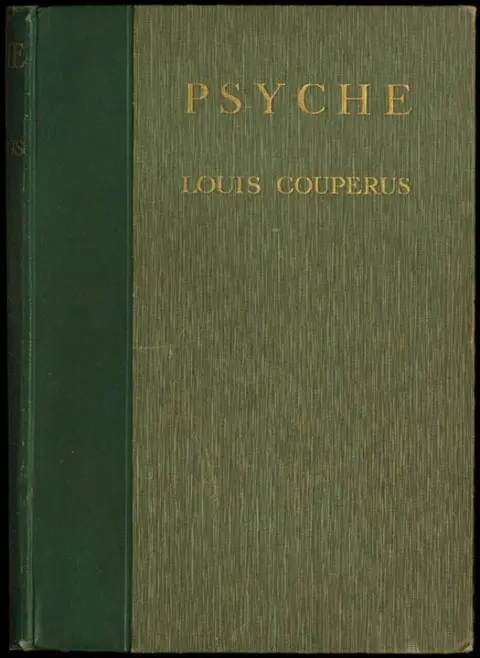
Louis Couperus
BEHIND THE BOOK
This eBook is for the use of anyone anywhere in the United States and most other parts of the world at no cost and with almost no restrictions whatsoever. You may copy it, give it away or re-use it under the terms of the Project Gutenberg License included with this eBook or online at www.gutenberg.org. If you are not located in the United States, you will have to check the laws of the country where you are located before using this eBook. Read the source licence.
The original source file, including credits and licence, is retained by this library. Request an original-format copy at no charge. Please include the book title and Project Gutenberg identifier #43005.
KEEP YOUR CURIOSITY GOING
Coulson Kernahan

Maurice Baring
Frances Wright
Cécile Tormay

Frederic Jesup Stimson

W. H. P. (William Henry Pope) Jarvis