THE CLASSIC COLLECTION✦Eline VereCLASSIC FREE BOOKS
Eline Vere
Louis Couperus

THE CLASSIC COLLECTION · 1920
"The Inevitable" by Louis Couperus is a novel written in the late 19th century. The story unfolds in a boarding house in Rome, focusing on the life of Cornélie de Retz van Loo, a young Dutch woman recovering from a recent divorce. As she navigates her new reality, the novel explores themes like loneliness, societal expectations, and the search for identity in a foreign city. The opening of the novel introduces the Marchesa Belloni's boarding house, where Cornélie arrives, filled with a mix of excitement and an undercurrent of foreboding. She is greeted by various characters, including the friendly porter and the boisterous marchesa, each representing different facets of life in the pension. While Cornélie attempts to settle into her new environment, she grapples with feelings of displacement and anticipates the arrival of new experiences. The foundation is laid for her introspective journey as she begins to confront not just the loneliness of travel but also the complexities of her past and the uncertain future that lies ahead.
Introduction adapted from the source catalogue; source summaries may be automatically generated.
Free to read · English · 85,880 words · No account needed
MAKE TIME FOR A GOOD BOOK
On by default. Untick to stop anonymous reading totals. Each page counts after 10 seconds in view. How this works.
Anonymous counting is on unless you have switched it off.
Gilio hated the villeggiatura at San Stefano. Every morning he had to be up and dressed by six o'clock, with Prince Ercole, Urania and the marchesa, to hear mass said by the chaplain in the private chapel of the castle. After that, he did not know what to do with his time. He had gone bicycling once or twice with Bob Hope, but the young Far-Westerner had too much energy for him, like Bob's sister, Urania. He flirted and argued a little with Cornélie, but secretly he was still offended and angry with himself and her. He remembered her first arrival that evening at the Palazzo Ruspoli, when she came and disturbed his rendez-vous with Urania. And in the camera degli sposi she had for the second time been too much for him! He seethed with fury when he thought of it and he hated her and swore by all his gods to be revenged. He cursed his own lack of resolution. He had been too weak to use violence or force and there ought never to have been any need to resort to force: he was accustomed to a quick surrender. And he had to be told by her, that Dutchwoman, that his temperament did not respond to hers! What was there about that woman? What did she mean by it? He was so unaccustomed to thinking, he was such a thoughtless, easy-going, Italian child of nature, so accustomed to let his life run on according to his every whim and impulse, that he hardly understood her--though he suspected the meaning of her words--hardly understood that reserve of hers. Why should she behave so to him, this foreigner with her demoniacal new ideas, who cared nothing about the world, who would have nothing to do with marriage, who lived with a painter as his mistress! She had no religion and no morals--he knew about religion and morals--she belonged to the devil; demoniacal was what she was: didn't she know all about Aunt Lucia Belloni's manoeuvres? And hadn't Aunt Lucia warned him lately that she was a dangerous woman, an uncanny woman, a woman of the devil? She was a witch! Why should she refuse? Hadn't he plainly seen her figure last night going through the courtyard in the moonlight, beside Van der Staal's figure, and hadn't he seen them opening the door that led to the terrace by the pergola? And hadn't he waited an hour, two hours, without sleeping, until he saw them come back and lock the door after them? And why did she love only him, that painter? Oh, he hated him, with all the blazing hatred of his jealousy; he hated her, for her exclusiveness, for her disdain, for all her jesting and flirting, as though he were a buffoon, a clown! What was it that he asked? A favour of love, such as she granted her lover! He was not asking for anything serious, any oath or lifelong tie; he asked for so little: just one hour of love. It was of no importance: he had never looked upon that as of much importance. And she, she refused it to him! No, he did not understand her, but what he did understand was that she disdained him; and he, he hated the pair of them. And yet he was enamoured of her with all the violence of his thwarted passion. In the boredom of that villeggiatura, to which his wife forced him in her new love for their ruined eyrie, his hatred and the thought of his revenge formed an occupation for his empty brains. Outwardly he was the same as usual and flirted with Cornélie, flirted even more than usual, to annoy Van der Staal. And, when his cousin, the Countess di Rosavilla--his "white" cousin, the lady-in-waiting to the queen--came to spend a few days with them, he flirted with her too and tried to provoke Cornélie's jealousy. He failed in this, however, and consoled himself with the countess, who made up to him for his disappointment. She was no longer a young woman, but represented the cold, sculptured Juno type, with a rather foolish expression; she had Juno eyes, protruding from their sockets; she was a leader of fashion at the Quirinal and in the "white" world; and her reputation for gallantry was generally known. She had never had a liaison with Gilio that lasted for longer than an hour. She had very simple ideas on love, without much variety. Her light-hearted depravity amused Gilio. And, flirting in the corners, with his foot on hers under her skirt, Gilio told her about Cornélie, about Duco and about the adventure in the camera degli sposi and asked his cousin whether she understood. No, the Countess di Rosavilla did not understand it any too well either. Temperament? Oh, yes, perhaps she--questa Cornelia--preferred fair men to dark: there were women who had a preference! And Gilio laughed. It was so simple, l'amore; there wasn't very much to be said about it.
Your reading position is saved on this browser. Take it to another device with a library code. Reading pages adapt to text, rather than matching a printed edition.
Louis Couperus

Louis Couperus
Louis Couperus
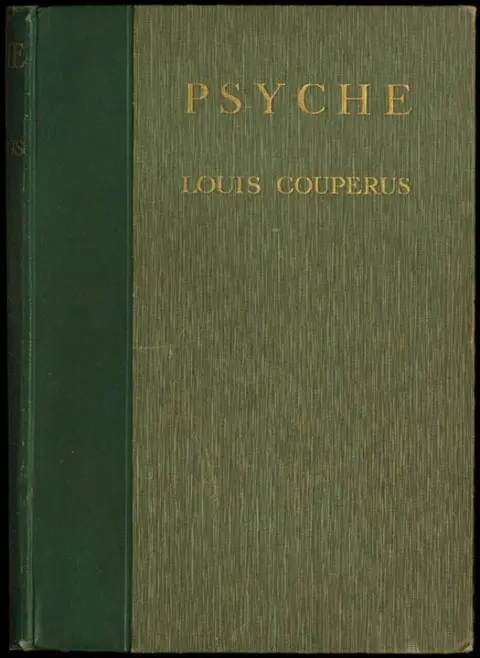
Louis Couperus
BEHIND THE BOOK
This eBook is for the use of anyone anywhere in the United States and most other parts of the world at no cost and with almost no restrictions whatsoever. You may copy it, give it away or re-use it under the terms of the Project Gutenberg License included with this eBook or online at www.gutenberg.org. If you are not located in the United States, you will have to check the laws of the country where you are located before using this eBook. Read the source licence.
The original source file, including credits and licence, is retained by this library. Request an original-format copy at no charge. Please include the book title and Project Gutenberg identifier #43005.
KEEP YOUR CURIOSITY GOING
Coulson Kernahan

Maurice Baring
Frances Wright
Cécile Tormay

Frederic Jesup Stimson

W. H. P. (William Henry Pope) Jarvis