THE CLASSIC COLLECTION✦An outlaw’s diary: the CommuneCLASSIC FREE BOOKS
An outlaw’s diary: the Commune
Cécile Tormay
THE CLASSIC COLLECTION · 1923
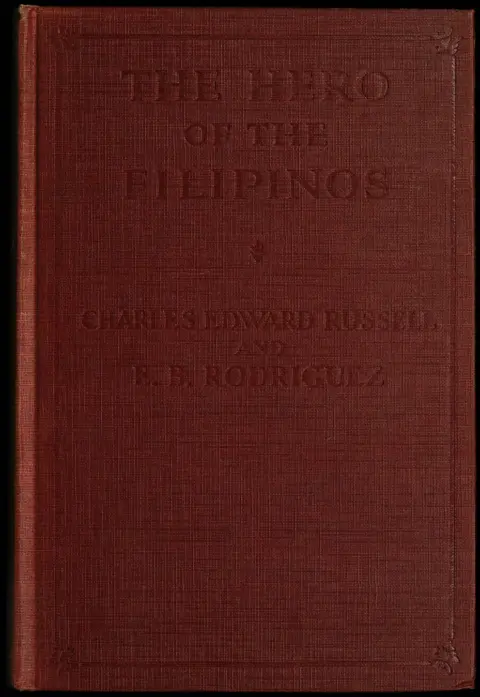
"The Hero of the Filipinos: The Story of José Rizal, Poet, Patriot and Martyr" by Charles Edward Russell and E. B. Rodriguez is a historical account written in the early 20th century. The work centers on José Rizal, a significant figure in Philippine history known for his poetry, patriotism, and tragic martyrdom. The authors aim to shed light on his life and the broader context of the struggles of the Filipino people against colonial oppression, particularly during the Spanish rule. The opening of the book sets the stage by detailing the oppressive conditions of the Philippines under Spanish tyranny, vividly illustrating the injustices faced by ordinary Filipinos. It introduces readers to Francisco Rizal Mercado, José Rizal's father, and describes his unfortunate encounters with the corrupt Spanish authorities. As the narrative unfolds, it highlights the prevailing climate of brutality, prejudice, and systematic injustice that formed Rizal’s formative experiences as a youth, ultimately portraying how these heavy burdens laid the groundwork for his awakening to a sense of national identity and the fight for reform. Thus, the beginning provides crucial context for understanding Rizal’s character, motivations, and the historic turbulence that pervaded his life and work.
Introduction adapted from the source catalogue; source summaries may be automatically generated.
Free to read · English · 108,207 words · No account needed
MAKE TIME FOR A GOOD BOOK
On by default. Untick to stop anonymous reading totals. Each page counts after 10 seconds in view. How this works.
Anonymous counting is on unless you have switched it off.
[44] These poems are printed by Retana, pp. 26–29. A translation of one of them is attempted for the first time in the Appendix A of this work.
[45] London, 1875.
[46] Craig, p. 95.
[47] Craig, pp. 696–98.
[48] Rizal’s “Boyhood Story.”
[49] Retana, p. 31.
[50] See Appendix A.
[51] Craig, pp. 109–110.
[52] “Fair hope of my fatherland.”
[53] See Appendix A.
[54] Craig, p. 109.
[55] It was founded in 1603, only thirty-three years after the capture of Manila and the beginning of the Spanish domination.
[56] Retana.
[57] Craig, p. 109; Retana, pp. 34–35.
[58] His father’s sore difficulties, to be described later, were then beginning. Mr. Mercado continued to send money regularly to José through Mr. Rivera, the detour being necessary to protect himself.
[59] Craig, p. 111; Retana, pp. 56 and 57.
[60] Craig, p. 117; Retana, p. 59; Derbyshire, p. xxvii.
[61] While he was in the Philippines on the occasion of his first return there, 1887, he had with him a considerable collection of books in many languages but scarcely any in Spanish. A friend once called his attention to this fact and asked why he omitted Spanish books. “Well,” said Rizal, in his quiet way but with a twinkle in his eyes, “if they can’t read them they will not borrow them, will they?”
[62] Fernando Canon, Manila “Citizen,” December 31, 1921.
[63] Craig, p. 99.
[64] Craig, p. 76.
[65] Senator Sandiko’s recollections.
[66] Retana, p. 99.
[67] Craig, p. 126; Retana, pp. 103–105.
[68] For example, “The Flowers of Heidelberg,” printed in “La Solidaridad,” December 15, 1889.
[69] Mr. Derbyshire, a discriminating critic, calls it “a story
pulsating with life.”
[70] Compare Derbyshire, p. xxxi.
[71] “Noli Me Tangere,” Chaps. LII and LVII.
[72] To western readers this will seem impossible. There are, however, attested instances of the savage practice.
[73] A vein of strange coincidence that seems almost like some intuition runs through Rizal’s novels. What happened to the ashes of the elder Ibarra in the story is exactly what happened a few years later to the ashes of Rizal’s brother-in-law.
[74] “The letter enters with the blood.” This was the favorite motto of Dr. Cruz, master of the school at Biñan, the first that Rizal attended. The protest here against corporal punishment in schools is doubtless sharpened from Rizal’s own experiences.
[75] “Noli Me Tangere,” Chap. XIX, Derbyshire’s translation.
[76] “Noli Me Tangere,” Chap. L, Derbyshire’s translation.
[77] Retana prints the original of this letter (in French) at pp.
125–126.
[78] For most of the information we have of this interesting young woman we are indebted to Miss Salud Sevilla of the College of Education, University of the Philippines, who traced her story and verified and illuminated the incidents here related.
[79] Retana, pp. 79–90, cites other references to letters received from and written to Leonora, indicating a prosperous correspondence.
[80] Craig, pp. 217–218.
[81] Miss Sevilla.
[82] Miss Sevilla.
[83] Craig, p. 219, and Miss Sevilla.
[84] A fact communicated by Mr. Fernando Canon.
Your reading position is saved on this browser. Take it to another device with a library code. Reading pages adapt to text, rather than matching a printed edition.
BEHIND THE BOOK
This eBook is for the use of anyone anywhere in the United States and most other parts of the world at no cost and with almost no restrictions whatsoever. You may copy it, give it away or re-use it under the terms of the Project Gutenberg License included with this eBook or online at www.gutenberg.org. If you are not located in the United States, you will have to check the laws of the country where you are located before using this eBook. Read the source licence.
The original source file, including credits and licence, is retained by this library. Request an original-format copy at no charge. Please include the book title and Project Gutenberg identifier #73848.
KEEP YOUR CURIOSITY GOING
Cécile Tormay

Moritz Busch
John L. Ransom
Frances Wright
Cécile Tormay

Mabel Potter Daggett