THE CLASSIC COLLECTION✦An outlaw’s diary: the CommuneCLASSIC FREE BOOKS
An outlaw’s diary: the Commune
Cécile Tormay
THE CLASSIC COLLECTION · 1923
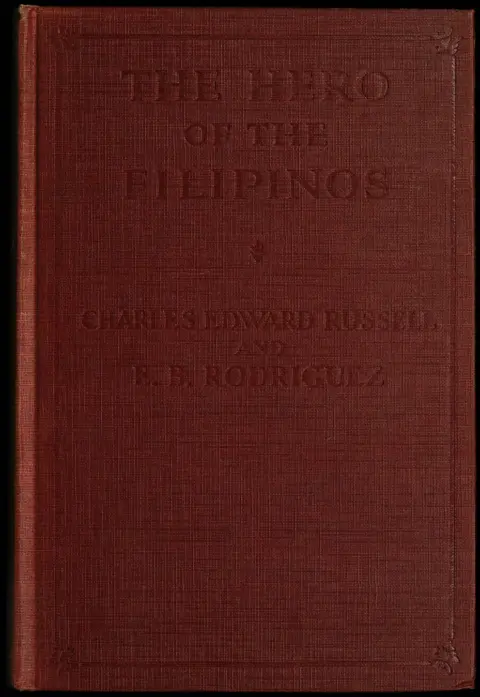
"The Hero of the Filipinos: The Story of José Rizal, Poet, Patriot and Martyr" by Charles Edward Russell and E. B. Rodriguez is a historical account written in the early 20th century. The work centers on José Rizal, a significant figure in Philippine history known for his poetry, patriotism, and tragic martyrdom. The authors aim to shed light on his life and the broader context of the struggles of the Filipino people against colonial oppression, particularly during the Spanish rule. The opening of the book sets the stage by detailing the oppressive conditions of the Philippines under Spanish tyranny, vividly illustrating the injustices faced by ordinary Filipinos. It introduces readers to Francisco Rizal Mercado, José Rizal's father, and describes his unfortunate encounters with the corrupt Spanish authorities. As the narrative unfolds, it highlights the prevailing climate of brutality, prejudice, and systematic injustice that formed Rizal’s formative experiences as a youth, ultimately portraying how these heavy burdens laid the groundwork for his awakening to a sense of national identity and the fight for reform. Thus, the beginning provides crucial context for understanding Rizal’s character, motivations, and the historic turbulence that pervaded his life and work.
Introduction adapted from the source catalogue; source summaries may be automatically generated.
Free to read · English · 108,207 words · No account needed
MAKE TIME FOR A GOOD BOOK
On by default. Untick to stop anonymous reading totals. Each page counts after 10 seconds in view. How this works.
Anonymous counting is on unless you have switched it off.
[8] Rizal, in his “Boyhood Story,” merely says her innocence was shown and she was released. It was Dr. Craig that, investigating the facts on the spot, came upon the incident of the dance and the pardon. At the time Rizal could hardly have published it.
[9] Retana, p. 15; Craig, Chap. II.
[10] Rizal, “Childhood Impressions,” p. 1.
[11] About seven thousand in all, including rocks and reefs.
[12] In “El Progreso Material,” “The National Forum,” July, 1922.
[13] To be discussed in a later chapter.
[14] Craig and Benitez, “Philippine Progress Prior to 1898.”
[15] Dominicans, Franciscans, Augustinians, and the Recollect Fathers. Compare Barrows, “History of the Philippines,” p. 121.
[16] Fernández, “A Brief History of the Philippines,” p. 136.
[17] The Philippine Independence Mission of 1922 estimated the number at one hundred, great and small.
[18] Barrio: hamlet. Most Philippine farmers live gregariously.
[19] From 1844 to 1850. He was one of the reforming governor-generals and left a name more revered than the others.
[20] Retana, pp. 14–15.
[21] Craig, pp. 61, 63.
[22] Derbyshire.
[23] College of Santa Rosa.
[24] Rizal’s “Boyhood Story,” “The First Reading Lesson.”
[25] Craig, p. 78.
[26] Azotea: the roof of the porch of a Philippine house, usually at
the rear.
[27] His “Boyhood Story,” p. 4.
[28] Sinamay: a native cloth woven of abaca (hemp) and sometimes of the fiber that is called “pineapple.”
[29] Mabolo: the date-plum, a reddish fruit, looking something like an
apple, but turnip-shaped.
[30] The Jesuits were not one of the four orders that figure so conspicuously in this story. They had been banished from the Philippines as from Spain in 1767, and all their insular property, valued at 3,320,000 pesos, was confiscated by the Government. In 1852 another royal decree allowed them to return, but they never regained their former prominence and power.
[31] Craig, p. 82.
[32] Craig, p. 83; Derbyshire, p. xvi; Fernández, p. 226.
[33] Retana, pp. 18, 19.
[34] See Dr. Blumentritt’s article, Appendix D.
[35] Dr. Blumentritt; see Appendix D.
[36] “Blackwood’s,” November, 1902, p. 620.
[37] “Boyhood Story,” p. vi.
[38] “Boyhood Story,” p. 19.
[39] With a girl older than he was and already engaged to another. She seems to have been something of a flirt. A few years afterward he wrote (apparently for himself) an account of his feelings and sufferings in those days. Mariano Ponce, his friend and confidant, published the document in the “Revista Filipina,” December, 1916. It shows Rizal to have been a poetical and dreamy lover. When he discovered the hopeless nature of his attachment he wandered alone in the woods, given up to a melancholy conviction of misfortune, but recovered in time to fall in love again and learn the reality of his forebodings.
[40] The professor speaks these words in the vulgar dialect.
[41] “El Filibusterismo,” Chap. XIII. Derbyshire’s translation.
[42] “Boyhood Story”: v.
[43] Craig, p. 92.
Your reading position is saved on this browser. Take it to another device with a library code. Reading pages adapt to text, rather than matching a printed edition.
BEHIND THE BOOK
This eBook is for the use of anyone anywhere in the United States and most other parts of the world at no cost and with almost no restrictions whatsoever. You may copy it, give it away or re-use it under the terms of the Project Gutenberg License included with this eBook or online at www.gutenberg.org. If you are not located in the United States, you will have to check the laws of the country where you are located before using this eBook. Read the source licence.
The original source file, including credits and licence, is retained by this library. Request an original-format copy at no charge. Please include the book title and Project Gutenberg identifier #73848.
KEEP YOUR CURIOSITY GOING
Cécile Tormay

Moritz Busch
John L. Ransom
Frances Wright
Cécile Tormay

Mabel Potter Daggett