THE CLASSIC COLLECTION✦An outlaw’s diary: the CommuneCLASSIC FREE BOOKS
An outlaw’s diary: the Commune
Cécile Tormay
THE CLASSIC COLLECTION · 1923
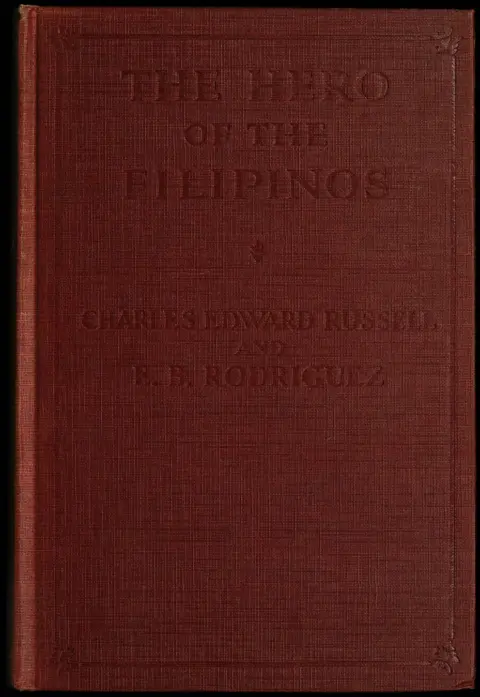
"The Hero of the Filipinos: The Story of José Rizal, Poet, Patriot and Martyr" by Charles Edward Russell and E. B. Rodriguez is a historical account written in the early 20th century. The work centers on José Rizal, a significant figure in Philippine history known for his poetry, patriotism, and tragic martyrdom. The authors aim to shed light on his life and the broader context of the struggles of the Filipino people against colonial oppression, particularly during the Spanish rule. The opening of the book sets the stage by detailing the oppressive conditions of the Philippines under Spanish tyranny, vividly illustrating the injustices faced by ordinary Filipinos. It introduces readers to Francisco Rizal Mercado, José Rizal's father, and describes his unfortunate encounters with the corrupt Spanish authorities. As the narrative unfolds, it highlights the prevailing climate of brutality, prejudice, and systematic injustice that formed Rizal’s formative experiences as a youth, ultimately portraying how these heavy burdens laid the groundwork for his awakening to a sense of national identity and the fight for reform. Thus, the beginning provides crucial context for understanding Rizal’s character, motivations, and the historic turbulence that pervaded his life and work.
Introduction adapted from the source catalogue; source summaries may be automatically generated.
Free to read · English · 108,207 words · No account needed
MAKE TIME FOR A GOOD BOOK
On by default. Untick to stop anonymous reading totals. Each page counts after 10 seconds in view. How this works.
Anonymous counting is on unless you have switched it off.
[85] The title-page bears this imprint: “Berlin, Berliner
buchdruckerei-actien-geselschaft.”
[86] Mr. Canon’s manuscript.
[87] Retana gives the findings and the letter of the archbishop, pp.
128–130.
[88] Derbyshire, p. xxxiii.
[89] Craig, p. 131; Retana, p. 135.
[90] Craig, p. 133.
[91] By this time, no doubt, he surmised that his love-affair had gone wrong, but he had no final confirmation of this misadventure until he reached Manila.
[92] Mr. Canon’s manuscript.
[93] Derbyshire, p. xxxiv.
[94] Craig, p. 137; Retana, pp. 144–145.
[95] It is customary to pretend otherwise, but this is the real heart
of modern imperialism.
[96] Derbyshire, p. xxxiv.
[97] Craig, p. 138.
[98] It is the whole philosophy of “Noli Me Tangere.”
[99] Ladrones and Carolines were groups of islands in the South Seas that Spain owned and misgoverned.
[100] Craig, p. 140.
[101] Retana, p. 150. He sees nothing remarkable in these suddenly
cordial relations.
[102] Rizal’s diary: see Appendix E. Retana (p. 152) prints a letter from Rizal to his friend Mariano Ponce in which he allows himself a little sarcasm about some of these experiences.
[103] Published in Mexico in 1609. De Morga had been in the Philippines from 1595 to 1605. Retana, pp. 172–173.
[104] This is confirmed by the recent investigations of Craig and Benitez, “Philippine Progress Prior to 1898.” No one denied or denies the existence of uncivilized or scantly civilized tribes in the interior. De Morga was speaking about the people near the coast.
Skepticism about early Filipino civilization is a necessary waiter at the heels of whomsoever wishes to defend imperialism.
De Morga’s work, newly translated, is printed in Blair and Robertson,
Vol. XV.
[105] Craig, p. 146.
[106] Retana, p. 193.
[107] The office of the governor-general at Malacañan, Manila, has one painting by Luna that, if he had never painted anything else, would be enough to insure his fame.
Juan Luna was also a sturdy patriot. In 1897 he was arrested in Manila for conspiring in behalf of his country’s independence and by a narrow chance missed the firing-squad. After six months close imprisonment he was released and escaped from the country but returned and was present when the Spanish domination came to an end. (Foreman, p. 394.) His career was picturesque. He had been born in as poor a home as any in the Philippines and had begun life as a sailor. The city of Barcelona purchased and still has one of his paintings that had been awarded a prize at the Madrid Salon.
[108] Mr. Derbyshire says it was thrown to the dogs, but this must be a figure of speech. It seems to have been exposed until buried in unconsecrated ground.
[109] Craig, p. 154; Retana, p. 195.
[110] Craig, p. 170.
[111] Rizal’s own account, “The Turkey That Caused the Calamba Land
Trouble.”
[112] Craig, p. 164.
Your reading position is saved on this browser. Take it to another device with a library code. Reading pages adapt to text, rather than matching a printed edition.
BEHIND THE BOOK
This eBook is for the use of anyone anywhere in the United States and most other parts of the world at no cost and with almost no restrictions whatsoever. You may copy it, give it away or re-use it under the terms of the Project Gutenberg License included with this eBook or online at www.gutenberg.org. If you are not located in the United States, you will have to check the laws of the country where you are located before using this eBook. Read the source licence.
The original source file, including credits and licence, is retained by this library. Request an original-format copy at no charge. Please include the book title and Project Gutenberg identifier #73848.
KEEP YOUR CURIOSITY GOING
Cécile Tormay

Moritz Busch
John L. Ransom
Frances Wright
Cécile Tormay

Mabel Potter Daggett