THE CLASSIC COLLECTION✦An outlaw’s diary: the CommuneCLASSIC FREE BOOKS
An outlaw’s diary: the Commune
Cécile Tormay
THE CLASSIC COLLECTION · 1923
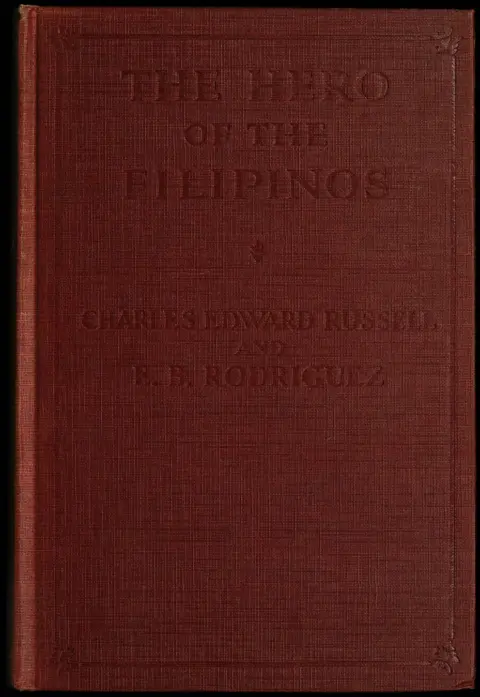
"The Hero of the Filipinos: The Story of José Rizal, Poet, Patriot and Martyr" by Charles Edward Russell and E. B. Rodriguez is a historical account written in the early 20th century. The work centers on José Rizal, a significant figure in Philippine history known for his poetry, patriotism, and tragic martyrdom. The authors aim to shed light on his life and the broader context of the struggles of the Filipino people against colonial oppression, particularly during the Spanish rule. The opening of the book sets the stage by detailing the oppressive conditions of the Philippines under Spanish tyranny, vividly illustrating the injustices faced by ordinary Filipinos. It introduces readers to Francisco Rizal Mercado, José Rizal's father, and describes his unfortunate encounters with the corrupt Spanish authorities. As the narrative unfolds, it highlights the prevailing climate of brutality, prejudice, and systematic injustice that formed Rizal’s formative experiences as a youth, ultimately portraying how these heavy burdens laid the groundwork for his awakening to a sense of national identity and the fight for reform. Thus, the beginning provides crucial context for understanding Rizal’s character, motivations, and the historic turbulence that pervaded his life and work.
Introduction adapted from the source catalogue; source summaries may be automatically generated.
Free to read · English · 108,207 words · No account needed
MAKE TIME FOR A GOOD BOOK
On by default. Untick to stop anonymous reading totals. Each page counts after 10 seconds in view. How this works.
Anonymous counting is on unless you have switched it off.
Another posthumous article, published in the Manila “Citizen,” February
7, 1919.
The following books and articles relating to Rizal may also be noted:
“The Story of Rizal,” Hugh Clifford, “Blackwood’s,” November, 1902.
“Rizal’s Views on Race Differences,” “Popular Science Monthly,” July,
1902.
“The Future of the Philippines,” M. F. Steele, “The Nation,” March 27,
1902.
“A Filipino That Died for His Country,” “Literary Digest,” July 26,
1919.
“Rizal’s Picture of the Philippines under Spain,” “Review of Reviews,”
May, 1913.
“The Martyred Novelist of the Philippines,” “Current Opinion,” April,
1913.
“The Malay Novelist,” “The Nation,” January 9, 1913.
“The Composite Rizal,” “The Nation,” April 10, 1913.
“The Life of José Rizal, a Chronology by Austin Craig,” “The Manila Independent,” December 31, 1921.
“Autógrafos de Rizal,” Fernando Canon, “The Manila Independent,”
December 31, 1921.
“Páginas Inéditas de Rizal” (Dapitan), “Dia Filipino,” Manila, June 19,
1918.
“Rizal en Hong-Kong,” by Vicente Sotto, in “Renacimiento Filipino,” Manila, July 7, 1913.
“Rizal’s Story of His Life,” the Manila “Citizen,” August and
September, 1918.
“Rizal and Philippine Nationalism,” by José Melencio, the Manila “Citizen,” February 21, 1919.
“Rizal as a Historian,” by Austin Craig, “Philippine Herald,” Manila,
July 10, 1921.
“The Song of the Wanderer,” translated by Arthur Ferguson, “Dia
Filipino,” June, 1918.
“The Song of the Wanderer,” translated by Charles Derbyshire, “Philippine Journal of Education,” Manila, December, 1919.
“To My Muse,” translated by Charles Derbyshire, “Philippine Journal of Education,” December, 1919.
“To the Flowers of Heidelberg,” translated by Charles Derbyshire, “Philippine Journal of Education,” December, 1919.
“Rizal as a Poet,” by Eliseo Hervas, “Philippine Journal of Education,”
1919.
“Inspiring Traits of Rizal’s Character,” by Ignacio Villamor, “Philippine Journal of Education,” December, 1919.
“Rizal as a Patriot, Author, and Scientist,” by former Governor-General Francis Burton Harrison, “Philippine Journal of Education,” December, 1919.
“Rizal as a Scientist,” Benito Soliven, “Philippine Journal of Education,” December, 1919.
“Rizal’s Character,” by T. H. Pardo de Tavera, published by the Manila
Filatélica, 1918.
“The Story of José Rizal,” by Austin Craig, published by the Philippine Education Publishing Company, 1909.
“Revista Filipina,” Manila, December, 1916, a Rizal number, with articles by Mariano Ponce, Epifanio de los Santos, and others.
“Murió el Doctor Rizal Cristianamente? Reconstitución de las Ultimas Horas de Su Vida.” Estudio Histórico por Gonzalo M. Piñana, Barcelona, 1920.
[1] Craig, p. 83; Derbyshire, p. xvi. Blair and Robertson, “The Philippine Islands,” Vol. LII, p. 170.
[2] “Noli Me Tangere,” Chap. LVII.
[3] Created after one of the many insurrections and contributing to the causes of the insurrection of 1872. Craig, p. 80.
[4] Craig, pp. 86–87.
[5] Born 1792, died 1872. He was once governor of Hong-Kong.
[6] Craig, p. 88.
[7] The ease with which false accusations could be manufactured, as Rizal showed afterward in his novels, was a valid asset in Spanish supremacy.
Your reading position is saved on this browser. Take it to another device with a library code. Reading pages adapt to text, rather than matching a printed edition.
BEHIND THE BOOK
This eBook is for the use of anyone anywhere in the United States and most other parts of the world at no cost and with almost no restrictions whatsoever. You may copy it, give it away or re-use it under the terms of the Project Gutenberg License included with this eBook or online at www.gutenberg.org. If you are not located in the United States, you will have to check the laws of the country where you are located before using this eBook. Read the source licence.
The original source file, including credits and licence, is retained by this library. Request an original-format copy at no charge. Please include the book title and Project Gutenberg identifier #73848.
KEEP YOUR CURIOSITY GOING
Cécile Tormay

Moritz Busch
John L. Ransom
Frances Wright
Cécile Tormay

Mabel Potter Daggett