THE CLASSIC COLLECTION✦The queen of the isleCLASSIC FREE BOOKS
The queen of the isle
May Agnes Fleming
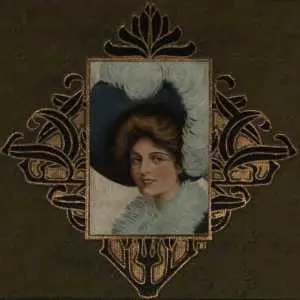
THE CLASSIC COLLECTION · 1875
"The Gypsy Queen's Vow" by May Agnes Fleming is a novel written in the late 19th century. The story opens with the figure of a gipsy queen, Ketura, determinedly making her way through a stormy night toward London, driven by an overwhelming desire that hints at deep emotional turmoil and desperation. This character's fierce qualities set the stage for a gripping tale of love, loss, and revenge while intertwining the fates of various characters, including her son, Reginald Germaine, who faces his own dramatic struggles. At the start of the novel, the gipsy queen is depicted fleeing the harsh elements, all while fixated on the distant lights of the city, symbolizing her determination and desperate hope. Introduced alongside her are contrasting figures, including the kind-hearted Mr. Toosypegs and the gruff driver, Mr. Harkins, who inadvertently become part of her journey. As the plot unfolds, so does a series of events involving betrayal and injustice, particularly surrounding Reginald, who is imprisoned for theft, and his mother's anguished plea for his life. The dramatic opening sets a foreboding tone, suggesting that themes of vengeance and deep-seated emotional conflict will permeate this tale as Ketura's vow becomes a central motif in the unfolding narrative.
Introduction adapted from the source catalogue; source summaries may be automatically generated.
Free to read · English · 145,912 words · No account needed
MAKE TIME FOR A GOOD BOOK
On by default. Untick to stop anonymous reading totals. Each page counts after 10 seconds in view. How this works.
Anonymous counting is on unless you have switched it off.
"His father's name was Germaine," the woman hastened to explain, "and I called him Raymond because I saw R. G. on his father's handkerchief; and I thought maybe it might have been that."
"Very good. Will you come with me, Raymond?"
"If Susan lets me," answered the boy, looking at his foster-mother.
"She will let you," said the gipsy, calmly. "Get him ready instantly. I
have no time to lose."
The woman, though looking deeply grieved and sorry, did not hesitate to obey, for there was something in the age of Ketura that might have made a bolder woman yield. So she dressed little Raymond in silence, made up the rest of his clothing in a bundle, kissed him, and said good-by amid many tears and sobs, and saw him depart with Ketura.
"Let me carry you--we have a long way to go," said the gipsy, stooping to lift him in her strong arms.
"I don't want to be carried. I'll walk," said Master Ray, kicking
manfully.
The gipsy smiled a hard, grim smile.
"His father's spirit," she muttered. "I like it. We'll see how long he
will hold out."
For nearly an hour the little hero trudged sturdily along, but at the end of that time his steps began to grow slow and weary.
"Ain't we most there?" he said, looking ruefully down the long muddy
road.
"No; we're a long way off. You had better let me carry you."
With a somewhat sleepy look of mortification, Master Ray, permitted his grandmother to lift him up; and scarcely had she taken him in her arms, before his curly head dropped heavily on her shoulder, and he was fast asleep.
With the approach of night, feeling somewhat fatigued and footsore herself, she overtook our friend Mr. Harkins, who, as he related to Mr. Toosypegs, "took 'er hin," and brought her to his own house, where "Missis 'Arkins" regaled young Mr. Germaine with a supper of bread and milk, to which that small youth did ample justice.
Another hour brought her to the place where the gipsy boy was waiting, and to his care she consigned her still-sleeping grandson, with many injunctions that he was to be taken the best care of. These commands were, however, unnecessary; for, looking upon the sleeping child as the future king of his tribe, the lad bore him along as reverentially as though he were a prince of the blood-royal.
Then the gipsy queen, Ketura, giving up all other thoughts but that of vengeance, turned her steps in the direction of London, where, by fortune-telling, and the other arts of her people, she could live and never lose sight of her deadly foe.
Your reading position is saved on this browser. Take it to another device with a library code. Reading pages adapt to text, rather than matching a printed edition.
May Agnes Fleming
May Agnes Fleming
May Agnes Fleming
May Agnes Fleming
BEHIND THE BOOK
This eBook is for the use of anyone anywhere in the United States and most other parts of the world at no cost and with almost no restrictions whatsoever. You may copy it, give it away or re-use it under the terms of the Project Gutenberg License included with this eBook or online at www.gutenberg.org. If you are not located in the United States, you will have to check the laws of the country where you are located before using this eBook. Read the source licence.
The original source file, including credits and licence, is retained by this library. Request an original-format copy at no charge. Please include the book title and Project Gutenberg identifier #43489.
KEEP YOUR CURIOSITY GOING
Coulson Kernahan

Maurice Baring
Frances Wright
Cécile Tormay

Frederic Jesup Stimson

W. H. P. (William Henry Pope) Jarvis