THE CLASSIC COLLECTION✦The queen of the isleCLASSIC FREE BOOKS
The queen of the isle
May Agnes Fleming
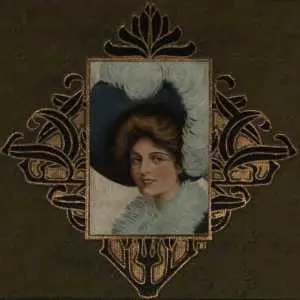
THE CLASSIC COLLECTION · 1875
"The Gypsy Queen's Vow" by May Agnes Fleming is a novel written in the late 19th century. The story opens with the figure of a gipsy queen, Ketura, determinedly making her way through a stormy night toward London, driven by an overwhelming desire that hints at deep emotional turmoil and desperation. This character's fierce qualities set the stage for a gripping tale of love, loss, and revenge while intertwining the fates of various characters, including her son, Reginald Germaine, who faces his own dramatic struggles. At the start of the novel, the gipsy queen is depicted fleeing the harsh elements, all while fixated on the distant lights of the city, symbolizing her determination and desperate hope. Introduced alongside her are contrasting figures, including the kind-hearted Mr. Toosypegs and the gruff driver, Mr. Harkins, who inadvertently become part of her journey. As the plot unfolds, so does a series of events involving betrayal and injustice, particularly surrounding Reginald, who is imprisoned for theft, and his mother's anguished plea for his life. The dramatic opening sets a foreboding tone, suggesting that themes of vengeance and deep-seated emotional conflict will permeate this tale as Ketura's vow becomes a central motif in the unfolding narrative.
Introduction adapted from the source catalogue; source summaries may be automatically generated.
Free to read · English · 145,912 words · No account needed
MAKE TIME FOR A GOOD BOOK
On by default. Untick to stop anonymous reading totals. Each page counts after 10 seconds in view. How this works.
Anonymous counting is on unless you have switched it off.
"Oh, thou shalt be all else to me,
That heart can feel, or tongue can feign;
I'll praise, admire, and worship thee,
But must not, dare not, love again."
--MOORE.
While the solitary wagon was driving, through wind and rain, along the lonely north road, bearing its three strangely-contrasted inmates--the gruff, avaricious driver, the simple, kind-hearted youth, and the dark, fierce, stern woman--a far different scene was passing in another quarter of the city. At that same hour the town mansion of Hugh Seyton--Earl De Courcy--was all ablaze with lights, music and mirth. Gorgeous drawing-rooms, fretted with gold and carving, dazzling with numberless jets of light from the pendant chandeliers, odorous with the heavy perfume of costly exotics, the very air quivering with softest music, were thrown open, and were filled with the proud, the high-born, the beautiful, of London. Peers and peeresses, gallant nobles and ladies bright, moved through the glittering rooms, and with singing, talking, flirting, dancing, the night was waning apace.
Two young men stood together within the deep shadow of a bay-window, in the music-room, watching a group assembled round a young lady at the piano, and conversing in low tones.
One of these was decidedly the handsomest man present that night. In stature he was tall, somewhat above the common height, and faultless in form and figure, with a certain air of DISTINGUE about him that stamped him as one of noble birth. His clear, fair complexion, his curling chestnut hair, and large blue eyes, betrayed his Saxon blood. His face might have seemed slightly effeminate; but no one, in looking at the high, kingly brow, the dark, flashing eyes, and firm-set mouth, would have thought that long. A dark mustache shaded his upper lip, and a strange, nameless beauty lit up and softened his handsome face whenever he smiled. Adored by the ladies, envied by the men, Lord Ernest Villiers, only son of Earl De Courcy, seemed to have nothing on earth left to wish for.
And yet, at times, over that white, intellectual brow a dark shadow would flit; from the depths of those dark, handsome eyes the bright light of a happy heart would pass; the mouth would grow stern, and a look of troubled care would darken his young face.
His companion, a good-looking young man, with a certain air about him as if he were somebody and knew it, with a listless look, and most desirable curling whiskers, leaned against a marble Hebe, and listened languidly to the singing. He wore the undress uniform of an officer, and being interpreted, was no other than Captain George Jernyngham, of the Guards.
Your reading position is saved on this browser. Take it to another device with a library code. Reading pages adapt to text, rather than matching a printed edition.
May Agnes Fleming
May Agnes Fleming
May Agnes Fleming
May Agnes Fleming
BEHIND THE BOOK
This eBook is for the use of anyone anywhere in the United States and most other parts of the world at no cost and with almost no restrictions whatsoever. You may copy it, give it away or re-use it under the terms of the Project Gutenberg License included with this eBook or online at www.gutenberg.org. If you are not located in the United States, you will have to check the laws of the country where you are located before using this eBook. Read the source licence.
The original source file, including credits and licence, is retained by this library. Request an original-format copy at no charge. Please include the book title and Project Gutenberg identifier #43489.
KEEP YOUR CURIOSITY GOING
Coulson Kernahan

Maurice Baring
Frances Wright
Cécile Tormay

Frederic Jesup Stimson

W. H. P. (William Henry Pope) Jarvis