THE CLASSIC COLLECTION✦The queen of the isleCLASSIC FREE BOOKS
The queen of the isle
May Agnes Fleming
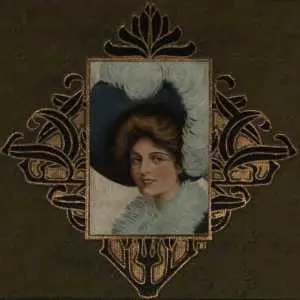
THE CLASSIC COLLECTION · 1875
"The Gypsy Queen's Vow" by May Agnes Fleming is a novel written in the late 19th century. The story opens with the figure of a gipsy queen, Ketura, determinedly making her way through a stormy night toward London, driven by an overwhelming desire that hints at deep emotional turmoil and desperation. This character's fierce qualities set the stage for a gripping tale of love, loss, and revenge while intertwining the fates of various characters, including her son, Reginald Germaine, who faces his own dramatic struggles. At the start of the novel, the gipsy queen is depicted fleeing the harsh elements, all while fixated on the distant lights of the city, symbolizing her determination and desperate hope. Introduced alongside her are contrasting figures, including the kind-hearted Mr. Toosypegs and the gruff driver, Mr. Harkins, who inadvertently become part of her journey. As the plot unfolds, so does a series of events involving betrayal and injustice, particularly surrounding Reginald, who is imprisoned for theft, and his mother's anguished plea for his life. The dramatic opening sets a foreboding tone, suggesting that themes of vengeance and deep-seated emotional conflict will permeate this tale as Ketura's vow becomes a central motif in the unfolding narrative.
Introduction adapted from the source catalogue; source summaries may be automatically generated.
Free to read · English · 145,912 words · No account needed
MAKE TIME FOR A GOOD BOOK
On by default. Untick to stop anonymous reading totals. Each page counts after 10 seconds in view. How this works.
Anonymous counting is on unless you have switched it off.
"----Then more fierce
The conflict grew: the din of arms; the yell
Of savage rage; the shriek of agony;
The groans of death, commingled with one sound
Of undistinguished horrors."
--SOUTHEY.
Silent, motionless, speechless, with surprise and many contending emotions, Ray stood gazing on his new-found father, like one suddenly stricken dumb. And with one hand resting on the young man's shoulders, the outlaw stood before him, looking in his pale, wild, excited face, with a strange, sad smile.
"My father!" repeated Ray, like one in a dream.
"Yes, even so; you have little cause, I fear, to be proud of the relationship. In the branded outlaw, smuggler, and pirate, Captain Reginald, you behold him who was once known as the Count Germaine, the husband of the beautiful, high-born Lady Maude Percy, and your father. Strange, strange, that we should meet thus."
For some moments Ray paced up and down the floor rapidly and excitedly, with a face from which every trace of color had fled. His father stood watching him, one arm leaning on a sort of mantel, with a look half proud, half sad, half bitter, commingled on his still fine face.
"I see you are not disposed to acknowledge the relationship between us, sir," he said, almost haughtily. "Well, I own you are not to blame for that. Let us part as we met first, as strangers; you go your way and I will continue mine! The world need never know that you are aught to the outlawed rover-chief. You are free, sir; free to go, and to take Miss Lawless with you, if you choose. I did wish to see my poor old mother before I left, but, perhaps, it is better as it is. I will leave this part of the world altogether, and return no more; the son of Maude Percy, the one love of my crime-darkened life, will never be compromised by me."
There was something unspeakably sad in the proud, cold way this was said, compared with the deep melancholy, the bitter remorse in his dark eyes. There were tears that did honor to his manly heart in Ray's eyes, as he came over and held out his hand.
"My father, you wrong me," he said, earnestly; "it was from no such unworthy feeling I hesitated to reply. These revelations came so suddenly, so unexpectedly, that for the time being I was stunned, and unable to comprehend all clearly. Outlaw or not, you are my father still; and as such, we will leave the world and its scorn together. If your crimes have been great, so have your wrongs; and let him who is without sin cast the first stone."
Your reading position is saved on this browser. Take it to another device with a library code. Reading pages adapt to text, rather than matching a printed edition.
May Agnes Fleming
May Agnes Fleming
May Agnes Fleming
May Agnes Fleming
BEHIND THE BOOK
This eBook is for the use of anyone anywhere in the United States and most other parts of the world at no cost and with almost no restrictions whatsoever. You may copy it, give it away or re-use it under the terms of the Project Gutenberg License included with this eBook or online at www.gutenberg.org. If you are not located in the United States, you will have to check the laws of the country where you are located before using this eBook. Read the source licence.
The original source file, including credits and licence, is retained by this library. Request an original-format copy at no charge. Please include the book title and Project Gutenberg identifier #43489.
KEEP YOUR CURIOSITY GOING
Coulson Kernahan

Maurice Baring
Frances Wright
Cécile Tormay

Frederic Jesup Stimson

W. H. P. (William Henry Pope) Jarvis