THE CLASSIC COLLECTION✦The queen of the isleCLASSIC FREE BOOKS
The queen of the isle
May Agnes Fleming
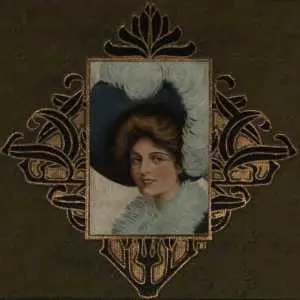
THE CLASSIC COLLECTION · 1875
"The Gypsy Queen's Vow" by May Agnes Fleming is a novel written in the late 19th century. The story opens with the figure of a gipsy queen, Ketura, determinedly making her way through a stormy night toward London, driven by an overwhelming desire that hints at deep emotional turmoil and desperation. This character's fierce qualities set the stage for a gripping tale of love, loss, and revenge while intertwining the fates of various characters, including her son, Reginald Germaine, who faces his own dramatic struggles. At the start of the novel, the gipsy queen is depicted fleeing the harsh elements, all while fixated on the distant lights of the city, symbolizing her determination and desperate hope. Introduced alongside her are contrasting figures, including the kind-hearted Mr. Toosypegs and the gruff driver, Mr. Harkins, who inadvertently become part of her journey. As the plot unfolds, so does a series of events involving betrayal and injustice, particularly surrounding Reginald, who is imprisoned for theft, and his mother's anguished plea for his life. The dramatic opening sets a foreboding tone, suggesting that themes of vengeance and deep-seated emotional conflict will permeate this tale as Ketura's vow becomes a central motif in the unfolding narrative.
Introduction adapted from the source catalogue; source summaries may be automatically generated.
Free to read · English · 145,912 words · No account needed
MAKE TIME FOR A GOOD BOOK
On by default. Untick to stop anonymous reading totals. Each page counts after 10 seconds in view. How this works.
Anonymous counting is on unless you have switched it off.
"Oh, she is the most charming little ducks o' diamonds I ever beheld in my life! Such a beautiful skin, just like white satin!" reiterated the duchess, punctuating her remarks by a series of short, sharp little kisses, that made sweet Erminie open her large blue eyes in subdued wonder. "Oh, Maude! I don't wonder you are so saintly, with this little beautiful seraph ever with you! Sweet little angel Erminie! thou almost persuadest me to be a Christian!"
There was a soft tap at the door, and the nurse, who had hitherto remained in the back-ground, and listened with professional stoicism to these raptures, went and opened it; and Lord Villiers entered.
He started in some surprise, as he beheld how the room was tenanted, and then advanced with a smile. Lady Maude, with more than the adoring love of two years before, went over, and, laying her hand on his shoulder, said:
"Clara wanted to see Erminie before we descended to the drawing-room, dearest Ernest, and has fallen even more deeply in love with her than she has with the Turkish ambassador, the fortunate possessor of the interestingly melancholy dark eyes."
Lord Villiers smiled, and looked, with eyes full of love, on sweet Erminie, who sprung up, crowing gleefully, and crying, "Papa!"
"Wait one moment, till I see. Why, she's the very picture of your lordship! Keep still, little girl, till I compare you with your papa. There's the same large, blue, Saxon eyes; the same fair, curling hair; the same high, princely forehead; the same handsome mouth (no harm to compliment a married man--eh, Maude); the same long, aristocratic, white fingers--your very image, my lord!"
"I had rather she looked like Maude," said the young husband, encircling his wife's small waist fondly with his arm.
"Well, so she does when she smiles. Don't you perceive the resemblance now? Miss Erminie, will you be still? What a restless little creature it is."
"Papa, papa, tate Minnie," crowed that small individual, holding out her little arms, and looking pathetic and imploring.
"Here, papa, take the young lady," said the duchess, depositing her in the young man's arms, and shaking out her glittering plumage, slightly discomposed by the frantic exertions of the "young lady" in question. "She is fonder of gentlemen than ladies, I perceive. She wouldn't be a true female, though, if she wasn't."
Your reading position is saved on this browser. Take it to another device with a library code. Reading pages adapt to text, rather than matching a printed edition.
May Agnes Fleming
May Agnes Fleming
May Agnes Fleming
May Agnes Fleming
BEHIND THE BOOK
This eBook is for the use of anyone anywhere in the United States and most other parts of the world at no cost and with almost no restrictions whatsoever. You may copy it, give it away or re-use it under the terms of the Project Gutenberg License included with this eBook or online at www.gutenberg.org. If you are not located in the United States, you will have to check the laws of the country where you are located before using this eBook. Read the source licence.
The original source file, including credits and licence, is retained by this library. Request an original-format copy at no charge. Please include the book title and Project Gutenberg identifier #43489.
KEEP YOUR CURIOSITY GOING
Coulson Kernahan

Maurice Baring
Frances Wright
Cécile Tormay

Frederic Jesup Stimson

W. H. P. (William Henry Pope) Jarvis