THE CLASSIC COLLECTION✦The queen of the isleCLASSIC FREE BOOKS
The queen of the isle
May Agnes Fleming
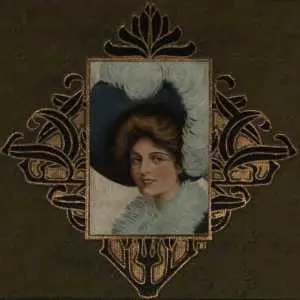
THE CLASSIC COLLECTION · 1875
"The Gypsy Queen's Vow" by May Agnes Fleming is a novel written in the late 19th century. The story opens with the figure of a gipsy queen, Ketura, determinedly making her way through a stormy night toward London, driven by an overwhelming desire that hints at deep emotional turmoil and desperation. This character's fierce qualities set the stage for a gripping tale of love, loss, and revenge while intertwining the fates of various characters, including her son, Reginald Germaine, who faces his own dramatic struggles. At the start of the novel, the gipsy queen is depicted fleeing the harsh elements, all while fixated on the distant lights of the city, symbolizing her determination and desperate hope. Introduced alongside her are contrasting figures, including the kind-hearted Mr. Toosypegs and the gruff driver, Mr. Harkins, who inadvertently become part of her journey. As the plot unfolds, so does a series of events involving betrayal and injustice, particularly surrounding Reginald, who is imprisoned for theft, and his mother's anguished plea for his life. The dramatic opening sets a foreboding tone, suggesting that themes of vengeance and deep-seated emotional conflict will permeate this tale as Ketura's vow becomes a central motif in the unfolding narrative.
Introduction adapted from the source catalogue; source summaries may be automatically generated.
Free to read · English · 145,912 words · No account needed
MAKE TIME FOR A GOOD BOOK
On by default. Untick to stop anonymous reading totals. Each page counts after 10 seconds in view. How this works.
Anonymous counting is on unless you have switched it off.
But still Black Bart gave vent to such appalling laughter-claps, without speaking, throwing himself back as if his spine was made of steel springs, and then jerking himself straight again, kicking his heels, snapping his finger and thumb, and indulging in such extraordinary antics of delight, that Boniface, completely at a loss, stood staring at him in silent wonder, thinking the judge's communication, whatever it might have been, had completely turned his brain.
"There, Bart, be quiet now," said the host, soothingly. "You're scaring the people in the shop out of their wits. What's the matter with you, anyway?"
"Nothing!" replied Black Bart, going off into another roar, more deafening, if possible, than the first.
"Well, I must say 'nothing' seems to be rather funny," said the puzzled landlord. "Was the judge pumping you about the smugglers?"
"Oh, Lord, don't!" shouted the sailor with such a yell of laughter, and putting himself into such frightful contortions of delight that the startled host stepped back and grasped the handle of the door with an alarmed glance toward his strange customer.
"I'm off now," said Bart at length, as soon as he had recovered from this last paroxysm; and wiping the tears from his eyes, he started at a Flora Temple pace down the street, pausing, however, now and then, as his lively sense of the ridiculous overcame him, to indulge in another terrifying peal of laughter, till affrighted pedestrians fled from him in horror, thinking a dangerous lunatic had somewhere broken loose.
He reached a low, smoky, obscure drinking den, near the end of the town, at last, and passing through the bar-room he entered another low, dirty, dingy apartment, where the first individual on whom his eyes rested, was our some-time friend, Mr. Rozzel Garnet.
"Well, Bart," asked that gentleman, eagerly, "what did Judge Lawless
want of you in such haste?"
"Oh! ha! ha! ha! ha! ha! ha!" roared Black Bart, in a perfect agony of enjoyment. "If it isn't about the best fun I've ever heard tell on. Why, man alive, you'd never guess if you were to try from this to doomsday. Judge Lawless, the saint, the angel, the parson, has fell in love, and wants the girl carried off! Oh! ha! ha! ha! ha! I'll split my sides!"
Mr. Rozzel Garnet did not join in Black Bart's merriment. He opened his eyes to their widest extent, and indulged in a long, low whistle, expressive of any amount of astonishment.
"Who's the girl?" he asked, at length.
Your reading position is saved on this browser. Take it to another device with a library code. Reading pages adapt to text, rather than matching a printed edition.
May Agnes Fleming
May Agnes Fleming
May Agnes Fleming
May Agnes Fleming
BEHIND THE BOOK
This eBook is for the use of anyone anywhere in the United States and most other parts of the world at no cost and with almost no restrictions whatsoever. You may copy it, give it away or re-use it under the terms of the Project Gutenberg License included with this eBook or online at www.gutenberg.org. If you are not located in the United States, you will have to check the laws of the country where you are located before using this eBook. Read the source licence.
The original source file, including credits and licence, is retained by this library. Request an original-format copy at no charge. Please include the book title and Project Gutenberg identifier #43489.
KEEP YOUR CURIOSITY GOING
Coulson Kernahan

Maurice Baring
Frances Wright
Cécile Tormay

Frederic Jesup Stimson

W. H. P. (William Henry Pope) Jarvis