THE CLASSIC COLLECTION✦The queen of the isleCLASSIC FREE BOOKS
The queen of the isle
May Agnes Fleming
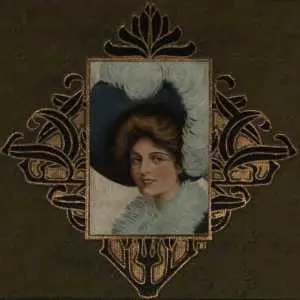
THE CLASSIC COLLECTION · 1875
"The Gypsy Queen's Vow" by May Agnes Fleming is a novel written in the late 19th century. The story opens with the figure of a gipsy queen, Ketura, determinedly making her way through a stormy night toward London, driven by an overwhelming desire that hints at deep emotional turmoil and desperation. This character's fierce qualities set the stage for a gripping tale of love, loss, and revenge while intertwining the fates of various characters, including her son, Reginald Germaine, who faces his own dramatic struggles. At the start of the novel, the gipsy queen is depicted fleeing the harsh elements, all while fixated on the distant lights of the city, symbolizing her determination and desperate hope. Introduced alongside her are contrasting figures, including the kind-hearted Mr. Toosypegs and the gruff driver, Mr. Harkins, who inadvertently become part of her journey. As the plot unfolds, so does a series of events involving betrayal and injustice, particularly surrounding Reginald, who is imprisoned for theft, and his mother's anguished plea for his life. The dramatic opening sets a foreboding tone, suggesting that themes of vengeance and deep-seated emotional conflict will permeate this tale as Ketura's vow becomes a central motif in the unfolding narrative.
Introduction adapted from the source catalogue; source summaries may be automatically generated.
Free to read · English · 145,912 words · No account needed
MAKE TIME FOR A GOOD BOOK
On by default. Untick to stop anonymous reading totals. Each page counts after 10 seconds in view. How this works.
Anonymous counting is on unless you have switched it off.
Note: Images of the original pages are available through
Internet Archive. See
http://archive.org/details/gypsyqueensvow00flemgoog
by
Author of "The Dark Secret," "The Queen of the Isle," "The Heiress of Castle Cliff," "Magdalen's Vow," "The Midnight Queen," "The Rival Brothers," etc.
Copyright, 1875, by Beadle & Adams.
New York
Hurst & Company
Publishers
Overhead, the storm-clouds were scudding wildly across the sky, until all above was one dense pall of impenetrable gloom. A chill, penetrating rain was falling, and the wind came sweeping in long, fitful gusts--piercingly cold; for it was a night in March.
It was the north road to London. A thick, yellow fog, that had been rising all day from the bosom of the Thames, wrapped the great city in a blackness that might almost be felt; and its innumerable lights were shrouded in the deep gloom. Yet the solitary figure, flitting through the pelting rain and bleak wind, strained her eyes as she fled along, as though, despite the more than Egyptian darkness, she would force, by her fierce, steady glare, the obscure lights of the city to show themselves.
The night lingered and lingered, the gloom deepened and deepened, the rain plashed dismally; the wind blew in moaning, lamentable gusts, penetrating through the thick mantle she held closely around her. And still the woman fled on, stopping neither for wind, nor rain, nor storm--unheeding, unfeeling them all--keeping her fierce, devouring gaze fixed, with a look that might have pierced the very heavens, on the still far-distant city.
There was no one on the road but herself. The lateness of the hour--for it was almost midnight--and the increasing storm, kept pedestrians within doors that cheerless March night. Now and then she would pass cottages in which lights were still glaring, but most of the houses were wrapped in silence and darkness.
And still on, through night, and storm, and gloom, fled the wanderer, with the pitiless rain beating in her face--the chill blasts fluttering her thin-worn garments and long, wild, black hair. Still on, pausing not, resting not, never removing her steadfast gaze from the distant city--like a lost soul hurrying to its doom.
Suddenly, above the wailing of the wind and plashing of the rain, arose the thunder of horses' hoofs and the crash of approaching carriage wheels. Rapidly they came on, and the woman paused for a moment and leaned again a cottage porch, as if waiting until it should pass.
Your reading position is saved on this browser. Take it to another device with a library code. Reading pages adapt to text, rather than matching a printed edition.
May Agnes Fleming
May Agnes Fleming
May Agnes Fleming
May Agnes Fleming
BEHIND THE BOOK
This eBook is for the use of anyone anywhere in the United States and most other parts of the world at no cost and with almost no restrictions whatsoever. You may copy it, give it away or re-use it under the terms of the Project Gutenberg License included with this eBook or online at www.gutenberg.org. If you are not located in the United States, you will have to check the laws of the country where you are located before using this eBook. Read the source licence.
The original source file, including credits and licence, is retained by this library. Request an original-format copy at no charge. Please include the book title and Project Gutenberg identifier #43489.
KEEP YOUR CURIOSITY GOING
Coulson Kernahan

Maurice Baring
Frances Wright
Cécile Tormay

Frederic Jesup Stimson

W. H. P. (William Henry Pope) Jarvis