THE CLASSIC COLLECTION✦Ruben and Ivy SênCLASSIC FREE BOOKS
Ruben and Ivy Sên
Louise Jordan Miln
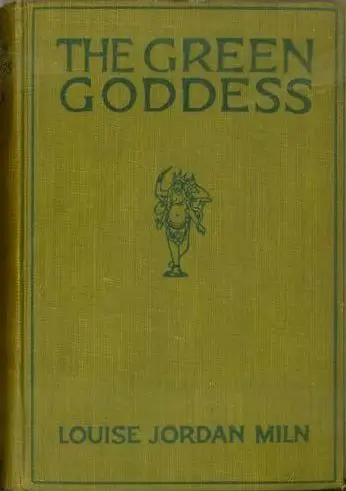
THE CLASSIC COLLECTION · 1922
"The Green Goddess" by Louise Jordan Miln is a novel written in the early 20th century. The story revolves around the Reverend Philip Reynolds, a devoted father and vicar grappling with profound loss as he prepares to marry off his beloved daughter, Lucilla. Set against a backdrop of pastoral life and the struggles of human emotion, the narrative explores themes of love, faith, and the complexities of relationships. The opening of the book introduces the character of Philip Reynolds, highlighting his deep love for his deceased wife, Helen, their son, Jack, and his living daughter, Lucilla. As the vicar reflects on his past, the reader learns about his joyful life filled with books, gardening, and a close relationship with his daughter, who is about to embark on a new chapter by marrying Captain Crespin. The narrative poignantly captures the quiet yet profound changes in their lives, as Philip struggles to maintain his sunny facade despite the impending loss of his daughter, underscoring the themes of love and the bittersweet nature of letting go.
Introduction adapted from the source catalogue; source summaries may be automatically generated.
Free to read · English · 88,728 words · No account needed
MAKE TIME FOR A GOOD BOOK
On by default. Untick to stop anonymous reading totals. Each page counts after 10 seconds in view. How this works.
Anonymous counting is on unless you have switched it off.
The man had come in noiselessly, carrying a centerpiece for the dinner table, a silver elephant very beautiful in its workmanship, the howdah filled with fresh flowers—delicate filmy orchids, radiant and deep carnations and odorous violets. He put it down and turned to go, as he had come, but it was then that Crespin had seen, and Traherne had heard.
“Hullo!” Crespin hailed him. “Hullo! What’s your name? Just come here a minute, will you?”
“Meaning me, sir?” Watkins advanced a few steps, with a touch of covert insolence in manner and voice, his nervousness of an hour ago seemingly gone.
“Yes, you, Mr.—? Mr.—?” Crespin said, involuntarily speaking in his turn with a touch of contempt.
“Watkins is my name, sir,” the man told him.
“Right-o, Watkins.” Far wiser to be as hail-fellow as one could contrivably stomach with a fellow so near the person and the ear of the autocrat upon whom one’s fate actually depended. And after all this chap was English—the letter H was his hall-mark for that—not much English, but English, the only being of their own island-race within impassable miles of them probably. That counted for something! It always does in the wilds. “Can you tell us where we are, Watkins?”
“They calls the place Rukh, sir.”
Traherne, listening and watching, knew that the man was not to be drawn.
But Crespin persisted, “Yes, yes, we know that. But where is Rukh?”
“I understand these mountains is called the ’Imalayas, sir,” Watkins replied in a tone that said clearly that he merely passed on a rumor he’d heard, and in no way vouched for it.
“Damn it, sir, we don’t want a lesson in geography!” the Major snapped.
“No, sir?” Watkins seemed surprised, then added apologetically, “My mistake, sir,” but the insolence still lurked in the voice and manner.
“Major Crespin means that we want to know,” Traherne intervened, “how far we are from the nearest point in India.”
“I really couldn’t say, sir.” Well, Traherne had not expected that he would. “Not so very far, I dessay, as the crow flies.”
“Unfortunately we’re not in a position to fly with the crow,” Traherne retorted. “How long does the journey take?” He had no idea that Watkins knowingly would admit anything useful, but there was always the chance that the better and finer trained intelligence might trap the boorish and feebler.
“They tell me it takes about three weeks to Cashmere,” the valet said
indifferently.
“They tell you!” Crespin almost snarled. “Surely you must remember how long it took you?”
Your reading position is saved on this browser. Take it to another device with a library code. Reading pages adapt to text, rather than matching a printed edition.
Louise Jordan Miln
Louise Jordan Miln & Harold Owen & Harry M. Vernon
William Archer
Louise Jordan Miln
BEHIND THE BOOK
This eBook is for the use of anyone anywhere in the United States and most other parts of the world at no cost and with almost no restrictions whatsoever. You may copy it, give it away or re-use it under the terms of the Project Gutenberg License included with this eBook or online at www.gutenberg.org. If you are not located in the United States, you will have to check the laws of the country where you are located before using this eBook. Read the source licence.
The original source file, including credits and licence, is retained by this library. Request an original-format copy at no charge. Please include the book title and Project Gutenberg identifier #48112.
KEEP YOUR CURIOSITY GOING
Coulson Kernahan

Maurice Baring
Frances Wright
Cécile Tormay

Frederic Jesup Stimson

W. H. P. (William Henry Pope) Jarvis