THE CLASSIC COLLECTION✦An Introduction to MythologyCLASSIC FREE BOOKS
An Introduction to Mythology
Lewis Spence
THE CLASSIC COLLECTION · 1923
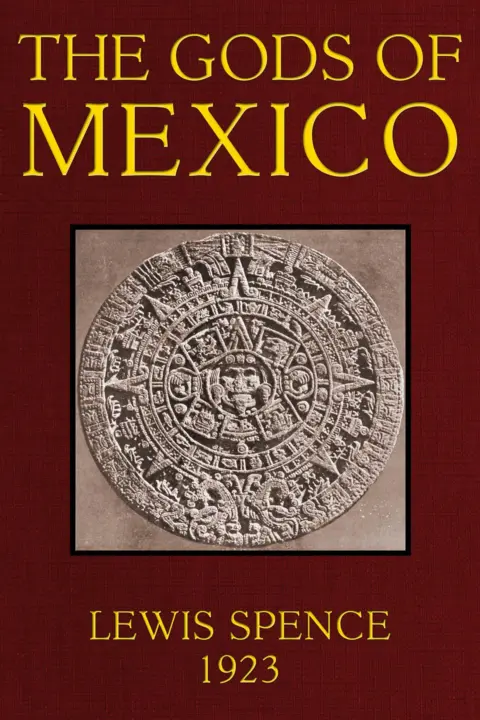
"The Gods of Mexico" by Lewis Spence is a scholarly work focused on the religion of ancient Mexico, written in the early 20th century. This book delves into the mythology and deities associated with the Nahua peoples, particularly the Aztec and Chichimec cultures, while distinguishing these beliefs from those of the Maya civilization further south. The text explores the origins, characteristics, and evolution of these gods, as well as their rituals and cultural significance. The opening of the book sets the stage for a detailed examination of Mexican religious beliefs, establishing the intention to separate the nuances of Nahua religion from broader Central American practices. Spence emphasizes the complexity and development of Mexican gods, introducing significant themes such as the agricultural rain-cult and the necessity of human sacrifice intertwined with divine favor. He mentions various deities while hinting at the deep historical and archaeological context necessary for understanding these ancient beliefs. Through an academic lens, Spence seeks to unpack the intricate tapestry of ceremonial practices and mythological narratives that shaped the spiritual life of pre-Columbian Mexico.
Introduction adapted from the source catalogue; source summaries may be automatically generated.
Free to read · English · 130,713 words · No account needed
MAKE TIME FOR A GOOD BOOK
On by default. Untick to stop anonymous reading totals. Each page counts after 10 seconds in view. How this works.
Anonymous counting is on unless you have switched it off.
How, then, may we reconcile the primitive fetish of the maguey-plant with the later solar deity? In my view the course of development of the concept of Uitzilopochtli is much the same as that of the Hellenic god Apollo, who, originally a spirit of the apple-tree, [110] came in like manner to be regarded as the god of the sun. But, to adhere to the Mexican concept, the sun was regarded by the peoples of Anahuac as the great eater of hearts and drinker of blood. These must be obtained for him by war, or he would perish, and all creation along with him. Uitzilopochtli, as the spirit of the maguey-plant, was the tribal fetish of the Aztecâ, and therefore their natural leader in battle. The connection is obvious and does not require to be laboured. Because of his tribal leadership in war, a governance of which Mexican myth and history bear eloquent testimony, he became confounded with the luminary which demanded blood and lived by human strife.
The solar connection of the octli liquor yielded by his plant is also most clear. Says Duran [111]: “The octli was a favourite offering to the gods, and especially to the god of fire. Sometimes it was placed before a fire in vases; sometimes it was scattered upon the flames with a brush (aspergillum?); at other times it was poured out around the fire-place.” Fire is, of course, a surrogate of the sun, and Seler has already identified Uitzilopochtli as a fire-god in virtue of his status as a sun-deity, [112] showing that the drilling of the solar fire before the beginning of the new cycle of fifty-two years was deferred until the panquetzalitztli, the great feast of Uitzilopochtli. Jacinto de la Serna, too, says that the octli ritual invoked the “shining Rose; light-giving Rose, to receive and rejoice my heart before the god.” The “rose,” of course, referring to the fire or sun. It would seem, however, that before he became confounded or identified with the sun, Uitzilopochtli may have possessed a lunar significance, and this may have obtained in the period while yet the calendar was reckoned upon a lunar basis and its solar connection still remained undefined. The name Mexitli, which has already been remarked upon, and which means “Hare of the Maguey” appears to place Uitzilopochtli upon a level with the other gods of octli, if not to class him as one of these. It bears a suspicious resemblance, too, to the name of the Moon-god, Metztli. The hare or rabbit in Mexico was invariably associated both with the moon and the octli-gods, whose chief characteristic, perhaps, is the lunar nose-plate. But among many of the native tribes of North America the hare or rabbit is the representative of the sun or the dawn, under the names of Michabo, Manibozho, Wabos, and so forth, being described in myth as a warrior, hero-god and culture-bringer. Perhaps the Nahua, while still in a more northern region where the agave was unknown to them, worshipped the rabbit of the sun or moon, and on establishing themselves in a region where the maguey was one of the salient features in the landscape, fused his myth with that of a newly-acquired fetish, discarding later the more ancient belief, or retaining but a confused memory of it. But this train of reasoning lacks evidence to support it. Nor need the consideration of Uitzilopochtli’s serpent-form detain us long. I think I see in the myth which recounts how the Aztecâ, on settling in Tenochtitlan, beheld an eagle perched on a cactus with a serpent in its talons, some relation to Uitzilopochtli, but what it precisely portends is still obscure to me. In any case the symbol of the eagle enters into his insignia, as does that of the serpent. We will recall that he was known as Magueycoatl, [113] “Serpent of the Maguey.” Again the solar character of the serpent in America, as elsewhere, readily accounts for his later connection with it, and for the prevalence of serpentine forms in his insignia and temple. But I confess that these two points of contact with the serpent do not altogether satisfy me as regards the god’s connection with it, nor does the fact of the serpentine character of his mother commend itself to me as altogether explanatory of this, and I think we must look to Uitzilopochtli’s nature as a wizard or sorcerer to enlighten us upon this point. Jacinto de la Serna [114] states that in his time some of the Mexican conjurers used a wand around which was fastened a living serpent, in much the same way as the priests of the Pueblo Indians do at the present day; and as the great invisible medicine man of the tribe, Uitzilopochtli may have been thought of as doing the same. “Who is a manito?” asks the Meda chant of the Algonquins. “He,” is the reply, “who walketh with a serpent, he is a manito.” For the connection of the Indian magicians with the serpent the reader is referred to the pages of Brinton. [115]
Your reading position is saved on this browser. Take it to another device with a library code. Reading pages adapt to text, rather than matching a printed edition.
BEHIND THE BOOK
This eBook is for the use of anyone anywhere in the United States and most other parts of the world at no cost and with almost no restrictions whatsoever. You may copy it, give it away or re-use it under the terms of the Project Gutenberg License included with this eBook or online at www.gutenberg.org. If you are not located in the United States, you will have to check the laws of the country where you are located before using this eBook. Read the source licence.
The original source file, including credits and licence, is retained by this library. Request an original-format copy at no charge. Please include the book title and Project Gutenberg identifier #71503.
KEEP YOUR CURIOSITY GOING

David Patterson (Spirit) Hatch

David Patterson (Spirit) Hatch

David Patterson (Spirit) Hatch
Cécile Tormay

Moritz Busch
John L. Ransom