THE CLASSIC COLLECTION✦An Introduction to MythologyCLASSIC FREE BOOKS
An Introduction to Mythology
Lewis Spence
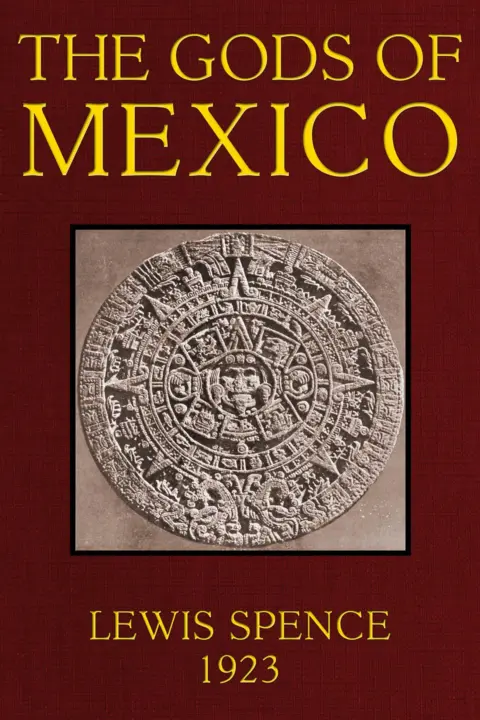
THE CLASSIC COLLECTION · 1923
"The Gods of Mexico" by Lewis Spence is a scholarly work focused on the religion of ancient Mexico, written in the early 20th century. This book delves into the mythology and deities associated with the Nahua peoples, particularly the Aztec and Chichimec cultures, while distinguishing these beliefs from those of the Maya civilization further south. The text explores the origins, characteristics, and evolution of these gods, as well as their rituals and cultural significance. The opening of the book sets the stage for a detailed examination of Mexican religious beliefs, establishing the intention to separate the nuances of Nahua religion from broader Central American practices. Spence emphasizes the complexity and development of Mexican gods, introducing significant themes such as the agricultural rain-cult and the necessity of human sacrifice intertwined with divine favor. He mentions various deities while hinting at the deep historical and archaeological context necessary for understanding these ancient beliefs. Through an academic lens, Spence seeks to unpack the intricate tapestry of ceremonial practices and mythological narratives that shaped the spiritual life of pre-Columbian Mexico.
Introduction adapted from the source catalogue; source summaries may be automatically generated.
Free to read · English · 130,713 words · No account needed
MAKE TIME FOR A GOOD BOOK
On by default. Untick to stop anonymous reading totals. Each page counts after 10 seconds in view. How this works.
Anonymous counting is on unless you have switched it off.
[173] Seler, Codex Vaticanus B, p. 132.
[174] Spence, Popol Vuh. London, 1908.
[175] Tonalamatl of the Aubin-Goupil Collection, 1900–1901.
[176] This circular patch with the centre punched out is worn by the women of more than one Asiatic country.
[177] Sahagun, Bks. viii and x.
[178] By Seler, in Commentary on Aubin Tonalamatl, p. 93.
[179] Sahagun, bk. i, c. xii.
[180] As regards these translations of hymns throughout the work, some have been translated by me from the Mexican originals, others have been translated from the German of Seler. Like that authority I have not received any enlightenment from Brinton’s “translations” in his Sacred Chants of the Ancient Mexicans.
[181] Bk. ii, c. xxx; see also Torquemada, bk. x, c. xxxv.
[182] Pyramid temple.
[183] Seler, Commentary on Vaticanus B, p. 262, believes the ceremony to refer to the parturition of the goddess, who gives birth to Cinteotl, although he at first elucidated the ceremony as here indicated. Seler confounds the postures of sexual intercourse and parturition.
[184] See picture in Codex Borbonicus.
[185] As do Aphrodite, and other goddesses of love.
[186] It is equally the symbol of the fertility-pot.
[187] Bk. ii, c. xxiii.
[188] Lib. x, c. xiii.
[189] A species of wild laurel.
[190] The custom of wearing a mask of the deity worshipped (in this case the slain woman represented the goddess) is widespread.
[191] Sahagun, bk. ii.
[192] Appendix to bk. ii.
[193] Who, like several of the older Spanish authorities, regarded Cinteotl as a goddess, a belief now exploded. See vol. i, bk. vi (English translation).
[194] It might be quoted against this view that the lewd life of pleasure of which Xochipilli and Macuilxochitl are the representatives results in that death which is the child of sin, and that these gods are therefore “brothers” to Cinteotl in this especial connection. Seler, Comm. Codex Fej.-Mayer, p. 66; Comm. Codex Vat. B, pp. 207–208.
[195] Sahagun, bk. ix, c. xvii.
[196] Sahagun MS.
[197] At the festival of Demeter, with whose worship the serpent was connected, the earth was struck with rods by the priest who called upon the goddess. This is also done during the act of divination among the Zulus, when they call upon spirits. See Callaway, Izinyanga Zokubula, p. 362.
[198] Lib. ii, c. ii.
[199] Brasseur de Bourbourg, Hist. Nat. Civ. du Mex. (quoting a
Cakchiquel MS.), vol. i, p. 248.
[200] Bk. i, c. vi.
[201] Sahagun, bk. i, c. vi.
[202] Idem, bk. 2, Appendix.
[203] Idea, p. 27; vol. i, pp. 419 ff.
[204] See Introduction, pp. 14, 16.
[205] See Uitzilopochtli, pp. 73 ff.
[206] Bk. i, c. xix.
Your reading position is saved on this browser. Take it to another device with a library code. Reading pages adapt to text, rather than matching a printed edition.
BEHIND THE BOOK
This eBook is for the use of anyone anywhere in the United States and most other parts of the world at no cost and with almost no restrictions whatsoever. You may copy it, give it away or re-use it under the terms of the Project Gutenberg License included with this eBook or online at www.gutenberg.org. If you are not located in the United States, you will have to check the laws of the country where you are located before using this eBook. Read the source licence.
The original source file, including credits and licence, is retained by this library. Request an original-format copy at no charge. Please include the book title and Project Gutenberg identifier #71503.
KEEP YOUR CURIOSITY GOING

David Patterson (Spirit) Hatch

David Patterson (Spirit) Hatch

David Patterson (Spirit) Hatch
Cécile Tormay

Moritz Busch
John L. Ransom