THE CLASSIC COLLECTION✦An Introduction to MythologyCLASSIC FREE BOOKS
An Introduction to Mythology
Lewis Spence
THE CLASSIC COLLECTION · 1923
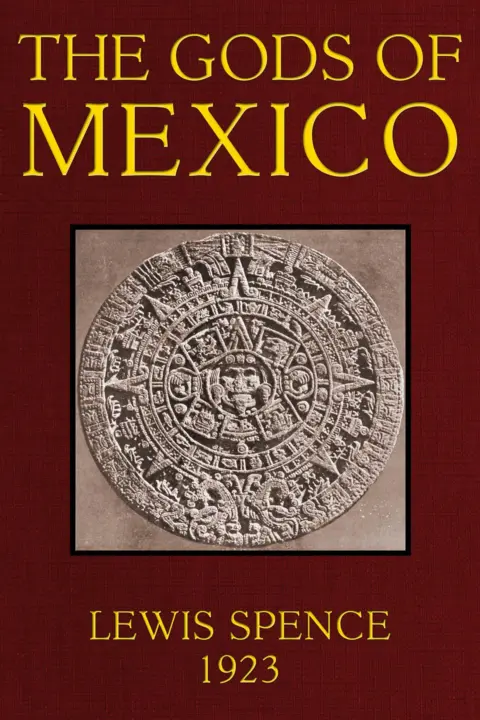
"The Gods of Mexico" by Lewis Spence is a scholarly work focused on the religion of ancient Mexico, written in the early 20th century. This book delves into the mythology and deities associated with the Nahua peoples, particularly the Aztec and Chichimec cultures, while distinguishing these beliefs from those of the Maya civilization further south. The text explores the origins, characteristics, and evolution of these gods, as well as their rituals and cultural significance. The opening of the book sets the stage for a detailed examination of Mexican religious beliefs, establishing the intention to separate the nuances of Nahua religion from broader Central American practices. Spence emphasizes the complexity and development of Mexican gods, introducing significant themes such as the agricultural rain-cult and the necessity of human sacrifice intertwined with divine favor. He mentions various deities while hinting at the deep historical and archaeological context necessary for understanding these ancient beliefs. Through an academic lens, Spence seeks to unpack the intricate tapestry of ceremonial practices and mythological narratives that shaped the spiritual life of pre-Columbian Mexico.
Introduction adapted from the source catalogue; source summaries may be automatically generated.
Free to read · English · 130,713 words · No account needed
MAKE TIME FOR A GOOD BOOK
On by default. Untick to stop anonymous reading totals. Each page counts after 10 seconds in view. How this works.
Anonymous counting is on unless you have switched it off.
In the same way, it may be that the maguey plant may have been regarded by the Mexicans as a repository of thunder and the heavenly fire. Octli, its sap, was connected with fire (see octli gods, “Nature and Status”), and Uitzilopochtli was the humming-bird who dwelt among its leaves. He springs from his mother’s body fully armed, as does Athena from the head of Zeus. A similar train of thought appears to be present in both ideas.
[111] Manuel de Ministros, p. 35.
[112] Commentary on Codex Vaticanus B, p. 91.
[113] Maguey is an Antillean word imported into Mexico by the Spaniards, but the use of a post-Columbian word does not exclude the possibility of a synonymous pre-Columbian form.
[114] Manuel de Ministros, p. 37.
[115] Myths of the New World, pp. 129 ff.
[116] Hist. Nat. Ind., c. ix, bk. v (English translation from Purchas
his Pilgrimes).
[117] Obviously an error for tlachialoni.
[118] More probably like a jaguar, one of the forms of the god.
[119] See précis in chapter on Cosmogony.
[120] The Morelosia huañita of the family Styraciñes.
[121] Inga circinalis.
[122] Paper hand.
[123] Face of the temple.
[124] Young brother.
[125] Hist. Gen., bk. i. c. iii.
[126] Hist. Nat. y Moral, c. ix.
[127] Hist. Mex., English translation, vol. i, bk. vi, p. 243.
[128] Hist. Gen., bk. iii, c. vi–ix.
[129] These both mean the same thing, “shield of precious stones.”
[130] Diccionario Universal, Appendix, s.v.
[131] See ante, Aspect and Insignia.
[132] Commentary C. Fejérváry-Mayer, p. 34.
[133] See the Stone of Tizoc for examples of this practice.
[134] This figure conventionally represents the turkey and strikingly exhibits the large red wattles and lobe of that bird. In most of the MSS. it wears Tezcatlipocâ’s smoking mirror at the temple, the warrior’s headdress of heron-feathers, and in Codex Borbonicus it appears as a naualli or disguise of the god, having his crown painted with stars and his anauatl or ring of mussel-shell. On sheet 6 of Codex Fejérváry-Mayer the bird appears as an image of Tezcatlipocâ and is represented along with the signs of mortification and blood-letting, as it is on sheet 17 of the Aubin tonalamatl, where it wears the bone-piercer in its ears and a red robe edged with blue and brown. Indeed, it represents the blood-offering connected with the worship of Tezcatlipocâ. The turkey-cock’s foot, too, is sometimes symbolic of the god, and the interpretative codices tell us that “of the demons we often see nothing more than a cock’s or eagle’s foot.” The turkey-cock is to be conceived as representative of rain, which was believed by the Nahua to be nothing else than the magically altered blood he shed in penitence or sacrifice. It may be that the red wattles and lobe of the turkey suggested the idea of blood, and that the shades in his plumage were equally suggestive of water. Thus it would come to be regarded as the blood shed by the stone knife of sacrifice. It is also obvious that Tezcatlipocâ’s patronage of slaves, who were strictly regarded as his property, arose out of the idea that those unfortunates, whenever used for the purposes of sacrificial ritual, constituted the “food” of the obsidian knife.
Your reading position is saved on this browser. Take it to another device with a library code. Reading pages adapt to text, rather than matching a printed edition.
BEHIND THE BOOK
This eBook is for the use of anyone anywhere in the United States and most other parts of the world at no cost and with almost no restrictions whatsoever. You may copy it, give it away or re-use it under the terms of the Project Gutenberg License included with this eBook or online at www.gutenberg.org. If you are not located in the United States, you will have to check the laws of the country where you are located before using this eBook. Read the source licence.
The original source file, including credits and licence, is retained by this library. Request an original-format copy at no charge. Please include the book title and Project Gutenberg identifier #71503.
KEEP YOUR CURIOSITY GOING

David Patterson (Spirit) Hatch

David Patterson (Spirit) Hatch

David Patterson (Spirit) Hatch
Cécile Tormay

Moritz Busch
John L. Ransom