THE CLASSIC COLLECTION✦An Introduction to MythologyCLASSIC FREE BOOKS
An Introduction to Mythology
Lewis Spence
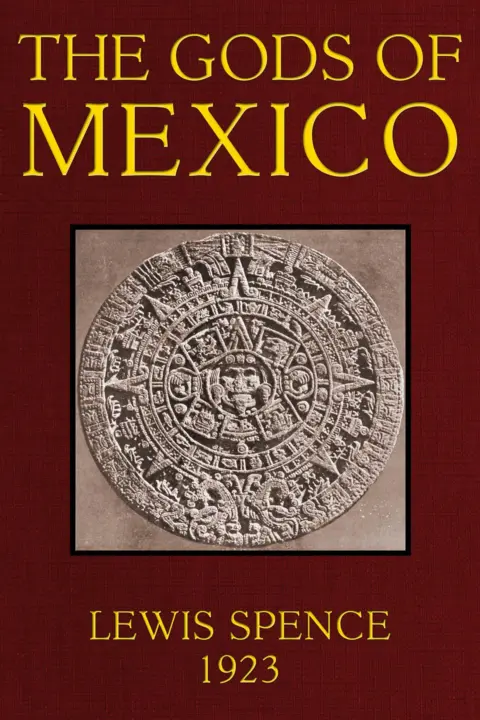
THE CLASSIC COLLECTION · 1923
"The Gods of Mexico" by Lewis Spence is a scholarly work focused on the religion of ancient Mexico, written in the early 20th century. This book delves into the mythology and deities associated with the Nahua peoples, particularly the Aztec and Chichimec cultures, while distinguishing these beliefs from those of the Maya civilization further south. The text explores the origins, characteristics, and evolution of these gods, as well as their rituals and cultural significance. The opening of the book sets the stage for a detailed examination of Mexican religious beliefs, establishing the intention to separate the nuances of Nahua religion from broader Central American practices. Spence emphasizes the complexity and development of Mexican gods, introducing significant themes such as the agricultural rain-cult and the necessity of human sacrifice intertwined with divine favor. He mentions various deities while hinting at the deep historical and archaeological context necessary for understanding these ancient beliefs. Through an academic lens, Spence seeks to unpack the intricate tapestry of ceremonial practices and mythological narratives that shaped the spiritual life of pre-Columbian Mexico.
Introduction adapted from the source catalogue; source summaries may be automatically generated.
Free to read · English · 130,713 words · No account needed
MAKE TIME FOR A GOOD BOOK
On by default. Untick to stop anonymous reading totals. Each page counts after 10 seconds in view. How this works.
Anonymous counting is on unless you have switched it off.
In my view the sun-god Piltzintecutli is merely a personification of Tonatiuh, the sun. As has already been said, solar worship in Mexico seems to have been developed at a comparatively late period. In the myths regarding the origin of the sun given by Olmos and Sahagun, it is clear that he is regarded more as a luminary than as a god. The name Tonatiuh, indeed, means nothing more than “sun,” and although one of the sacrificed gods was believed to have given him life, and he afterwards acts as a living being, he does not seem to possess the same qualities of personality as his later form, Piltzintecutli. The expression “Tonatiuh” seems to have been regarded as a divine place-name, a paradise to which those warriors fared who died in battle.
Tonatiuh was known as the Teotl, that is as the god par excellence, but this does not by any means imply that the Mexicans regarded him as the highest form of deity known to them. I think it rather means that the priests, having arrived at the conclusion that the tonalamatl and the calendar hinged, so to speak, upon the solar periods, came very naturally to regard the sun as the centre or hub of the intricate system which they had built up through generations. The very name Teotl, too, shows that, in later times at least, the sun was regarded as a deity, perhaps because he occupied the vault of the sky “where the gods live.”
But above and beyond this we have to regard Mexican sun-worship from an entirely different point of view. There is abundant evidence that the hunting tribes of the northern steppes, the Chichimec immigrants, possessed a primitive sun-worship of their own. It may be, indeed, that it was from this that the worship of Tonatiuh sprang, and not from the consideration of calendric science; but the criteria we possess regarding this part of the question is at present much too scanty to permit of more precise statement. But if we know that sun-worship obtained among the nomadic tribes of northern Mexico, we are somewhat ignorant of the precise form it took. One thing, however, seems certain, and that is that it was founded on the belief that the sun existed on the blood of animals, preferably deer, and that when these were scarce, on the blood of human beings. If blood-offerings to the sun were to cease, it was thought that the luminary would grow weak, fail, and become extinguished, or else would visit his wrath upon humanity in some such manner as we read of in those myths which recount the recurrent catastrophes of fire, wind, deluge, and earthquakes which the wrathful luminary brought upon mankind. I would, therefore, date the introduction of the solar worship proper into Mexico, and consequently that of human sacrifice, from the period of entry of those northern Chichimec peoples, who, entering the Valley of Mexico at an epoch shortly after the disintegration of the Toltec civilization, adopted an agricultural existence, and finding the supply of wild animals insufficient to meet the requirements of sacrifice, instituted the occasional immolation of human beings. This custom seems, indeed, to have already obtained in the case of the ritual of some of the native gods, for example, Tlaloc and the Earth-mother, and it may be, indeed, that the northern nomads drew the inspiration which prompted them to this evil practice from their more civilized neighbours. But it is even more probable that, as the various Mexican peoples were for the most part of cognate origin and contiguous civilization, the practice of human sacrifice had been common to all of them in a more or less modified form for some generations, and only received an impetus after the Chichimec immigration. Against this view may be quoted the myth which refers the introduction of human sacrifice to a group of Huaxtec earth-goddesses, Tlazolteotl and her sisters. But it seems to me that this Maya people were by no means so prone to the custom, and that in this instance Tlazolteotl has been confounded with some of her Mexican forms. The process by which blood was thought of as being transformed into rain has already been fully described, and it but remains here to indicate that Tonatiuh is, in places, closely identified with the sign atl, water, and is indeed one of the four rulers of the week beginning with the day “one rain,” probably because of the early belief that on one occasion the sun “drank up” all the water on earth and later disgorged it in floods.
Your reading position is saved on this browser. Take it to another device with a library code. Reading pages adapt to text, rather than matching a printed edition.
BEHIND THE BOOK
This eBook is for the use of anyone anywhere in the United States and most other parts of the world at no cost and with almost no restrictions whatsoever. You may copy it, give it away or re-use it under the terms of the Project Gutenberg License included with this eBook or online at www.gutenberg.org. If you are not located in the United States, you will have to check the laws of the country where you are located before using this eBook. Read the source licence.
The original source file, including credits and licence, is retained by this library. Request an original-format copy at no charge. Please include the book title and Project Gutenberg identifier #71503.
KEEP YOUR CURIOSITY GOING

David Patterson (Spirit) Hatch

David Patterson (Spirit) Hatch

David Patterson (Spirit) Hatch
Cécile Tormay

Moritz Busch
John L. Ransom