
Lucinda
Anthony Hope
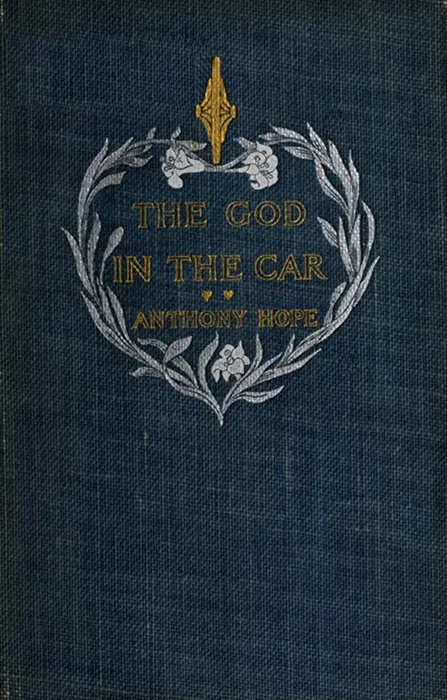
THE CLASSIC COLLECTION · 1894
"The God in the Car: A Novel" by Anthony Hope is a fictional work written in the late 19th century. The story appears to delve into the lives of several socialites navigating relationships and business affairs, with a central character named Willie Ruston who is involved in a new venture concerning the African territory of Omofaga. The narrative seems to oscillate between personal dynamics and the challenging financial schemes of that era, including the challenges posed by competing interests. The opening of the novel introduces a lively social gathering where Miss Ferrars is seeking to identify a man of intrigue, Foster Belford, while exchanging witty banter with Lord Semingham. Social hierarchies and the dynamics of friendship and flirtation are caricatured through the conversations, particularly spotlighting the character of Mrs. Dennison, who is depicted as thoughtful and somewhat troubled by her past connections, especially with Ruston. As the characters engage in discussions about business and memories, the tone hints at underlying tensions tying their personal lives to the larger economic ambitions surrounding Ruston’s endeavors in Omofaga, setting the stage for further clashes between social expectation and personal ambition.
Introduction adapted from the source catalogue; source summaries may be automatically generated.
Free to read · English · 69,737 words · No account needed
MAKE TIME FOR A GOOD BOOK
On by default. Untick to stop anonymous reading totals. Each page counts after 10 seconds in view. How this works.
Anonymous counting is on unless you have switched it off.
The Baron knew that this statement was true. As his study of Willie Ruston progressed, he became inclined to think that it might be important. Mere right (so far as such a thing could be given by prior treaties) was not of much moment; but right and Ruston together might be formidable. Now the Baron (and his friends were friends much in the way, mutatis mutandis, that Mr. Wagg and Mr. Wenham were friends of the Marquis of Steyne, and may therefore drop out of consideration) was old and rich, and, by consequence, at a great disadvantage with a man who was young and poor.
"I don't see the bearing of that," he observed, having paused for a moment to consider all its bearings.
"It means that you can't have Omofaga," said Willie Ruston. "You were
too late, you see."
The Baron smoked and drank and laughed.
"You're a young fool, my boy--or something quite different," said he, laying a hand on his companion's arm. Then he asked suddenly, "What about Dennisons?"
"They're behind me if----"
"Well?"
"If you're not in front of me."
"But if I am, my son?" asked the Baron, almost caressingly.
"Then I leave for Omofaga by the next boat."
"Eh! And for what?"
"Never mind what. You'll find out when you come."
The Baron sighed and tugged his beard.
"You English!" said he. "Your Government won't help you."
"Damn my Government."
"You English!" said the Baron again, his tone struggling between admiration and a sort of oppression, while his face wore the look a man has who sees another push in front of him in a crowd, and wonders how the fellow works his way through.
There was a long pause. Ruston lit his pipe, and, crossing his arms on his breast, blinked at the sun; the Baron puffed away, shooting a glance now and then at his young friend, then he asked,
"Well, my boy, what do you offer?"
"Shares," answered Ruston composedly.
The Baron laughed. The impudence of the offer pleased him.
"Yes, shares, of course. And besides?"
Willie Ruston turned to him.
"I shan't haggle," he announced. "I'll make you one offer, Baron, and it's an uncommon handsome offer for a trunk of waste paper."
"What's the offer?" asked the Baron, smiling with rich subdued mirth.
"Fifty thousand down, and the same in shares fully paid."
"Not enough, my son."
"All right," and Mr. Ruston rose. "Much obliged for your hospitality, Baron," he added, holding out his hand.
"Where are you going?" asked the Baron.
"Omofaga--viâ London."
The Baron caught him by the arm, and whispered in his ear,
"There's not so much in it, first and last."
Your reading position is saved on this browser. Take it to another device with a library code. Reading pages adapt to text, rather than matching a printed edition.
Anthony Hope

Anthony Hope

Anthony Hope

Anthony Hope
BEHIND THE BOOK
This eBook is for the use of anyone anywhere in the United States and most other parts of the world at no cost and with almost no restrictions whatsoever. You may copy it, give it away or re-use it under the terms of the Project Gutenberg License included with this eBook or online at www.gutenberg.org. If you are not located in the United States, you will have to check the laws of the country where you are located before using this eBook. Read the source licence.
The original source file, including credits and licence, is retained by this library. Request an original-format copy at no charge. Please include the book title and Project Gutenberg identifier #40583.
KEEP YOUR CURIOSITY GOING
Coulson Kernahan

Maurice Baring
Frances Wright
Cécile Tormay

Frederic Jesup Stimson

W. H. P. (William Henry Pope) Jarvis