
Lucinda
Anthony Hope
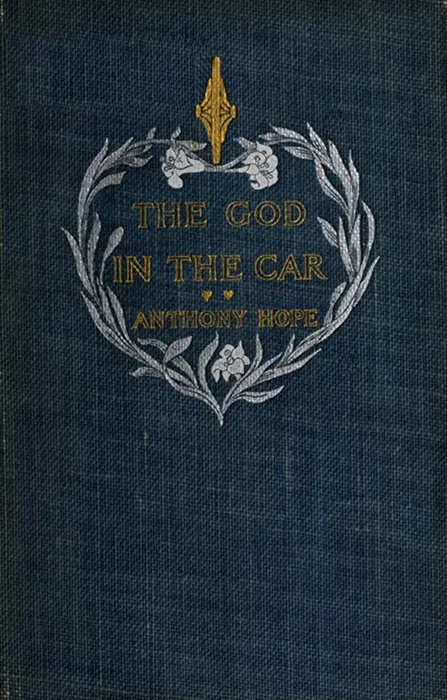
THE CLASSIC COLLECTION · 1894
"The God in the Car: A Novel" by Anthony Hope is a fictional work written in the late 19th century. The story appears to delve into the lives of several socialites navigating relationships and business affairs, with a central character named Willie Ruston who is involved in a new venture concerning the African territory of Omofaga. The narrative seems to oscillate between personal dynamics and the challenging financial schemes of that era, including the challenges posed by competing interests. The opening of the novel introduces a lively social gathering where Miss Ferrars is seeking to identify a man of intrigue, Foster Belford, while exchanging witty banter with Lord Semingham. Social hierarchies and the dynamics of friendship and flirtation are caricatured through the conversations, particularly spotlighting the character of Mrs. Dennison, who is depicted as thoughtful and somewhat troubled by her past connections, especially with Ruston. As the characters engage in discussions about business and memories, the tone hints at underlying tensions tying their personal lives to the larger economic ambitions surrounding Ruston’s endeavors in Omofaga, setting the stage for further clashes between social expectation and personal ambition.
Introduction adapted from the source catalogue; source summaries may be automatically generated.
Free to read · English · 69,737 words · No account needed
MAKE TIME FOR A GOOD BOOK
On by default. Untick to stop anonymous reading totals. Each page counts after 10 seconds in view. How this works.
Anonymous counting is on unless you have switched it off.
"The great Napoleon once observed----"
"Don't quote from 'Anecdotes, New and Old,'" interrupted Adela unkindly.
"That when his death was announced," pursued Lord Semingham, who thought it good for Adela to take no notice of such interruptions, "everybody would say Ouf. I say 'Ouf' now," and he stretched his arms luxuriously to their full length. "There's room here," he added, explaining the gesture.
"Well, who's dead?" asked Adela, choosing to be exasperatingly literal.
"Nobody's dead; but a lot of people--and things--are a long way off."
"That's not so satisfactorily final," said Adela.
"No, but it serves for the time. Did you see me on my bicycle this
morning?"
"What, going round here?" and Adela waved her hand circularly, as though embracing the broad path that runs round the grass by the sea at Dieppe.
"Yes--just behind a charming Parisienne in a pair of--behind a charming Parisienne in an appropriate costume."
"Bessie must get one," said Adela.
"Good heavens!"
"I mean a bicycle."
"Oh, certainly, if she likes; but she'd as soon mount Salisbury Spire."
"How did you learn?"
"I really beg your pardon," said Semingham, "but the fact is--Ruston
taught me."
"Let's change the subject," said Adela, smiling.
"A charming child, this Marjory Valentine," observed Semingham. "She's too good for young Evan. I'm very glad she wouldn't have him."
"I'm not."
"You're always sorry other girls don't marry. Heaven knows why."
"Well, I'm sorry she didn't take Evan."
"Why?"
"I can't tell you."
"Not--not the forbidden topic?"
"I half believe so."
"But she's here with Maggie Dennison."
"Well, everybody doesn't chatter as you do," said Adela incisively.
"I don't believe it. She----Hallo! here she is!"
Marjory Valentine came along, bending her slim figure a little, the better to resist a fresh breeze that blew her skirts out behind her, and threatened to carry off her broad-brimmed hat. She had been bathing; the water was warm, and her cheeks glowed with a fine colour. As she came up, both Adela and Lord Semingham put on their eyeglasses.
"An uncommon pretty girl," observed the latter.
"Isn't it glorious?" cried Marjory, yet several yards away. "Walter will enjoy the bathing tremendously."
"When's he coming?"
"Saturday," answered Marjory. "Where is Lady Semingham?"
"Dressing," said Semingham solemnly. "Costume number one, off at 11.30. Costume number two, on at 12. Costume number two, off at 3.30. Costume----"
"After all, she's your wife," said Adela, in tones of grave reproach.
"But for that, I shouldn't have a word to say against it. Women are very
queer reasoners."
Marjory sat down next to Adela.
Your reading position is saved on this browser. Take it to another device with a library code. Reading pages adapt to text, rather than matching a printed edition.
Anthony Hope

Anthony Hope

Anthony Hope

Anthony Hope
BEHIND THE BOOK
This eBook is for the use of anyone anywhere in the United States and most other parts of the world at no cost and with almost no restrictions whatsoever. You may copy it, give it away or re-use it under the terms of the Project Gutenberg License included with this eBook or online at www.gutenberg.org. If you are not located in the United States, you will have to check the laws of the country where you are located before using this eBook. Read the source licence.
The original source file, including credits and licence, is retained by this library. Request an original-format copy at no charge. Please include the book title and Project Gutenberg identifier #40583.
KEEP YOUR CURIOSITY GOING
Coulson Kernahan

Maurice Baring
Frances Wright
Cécile Tormay

Frederic Jesup Stimson

W. H. P. (William Henry Pope) Jarvis