
Lucinda
Anthony Hope
THE CLASSIC COLLECTION · 1894
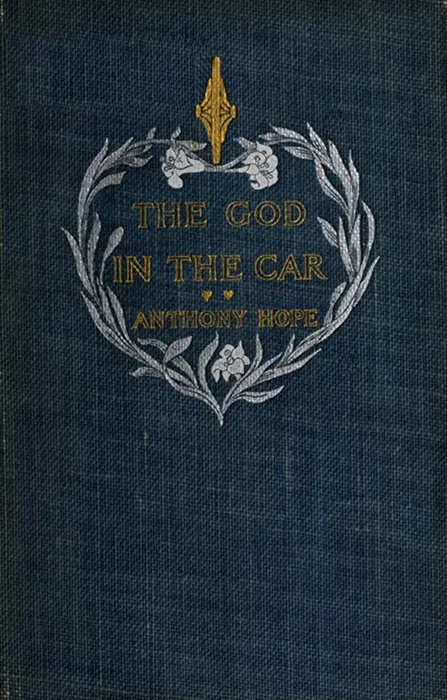
"The God in the Car: A Novel" by Anthony Hope is a fictional work written in the late 19th century. The story appears to delve into the lives of several socialites navigating relationships and business affairs, with a central character named Willie Ruston who is involved in a new venture concerning the African territory of Omofaga. The narrative seems to oscillate between personal dynamics and the challenging financial schemes of that era, including the challenges posed by competing interests. The opening of the novel introduces a lively social gathering where Miss Ferrars is seeking to identify a man of intrigue, Foster Belford, while exchanging witty banter with Lord Semingham. Social hierarchies and the dynamics of friendship and flirtation are caricatured through the conversations, particularly spotlighting the character of Mrs. Dennison, who is depicted as thoughtful and somewhat troubled by her past connections, especially with Ruston. As the characters engage in discussions about business and memories, the tone hints at underlying tensions tying their personal lives to the larger economic ambitions surrounding Ruston’s endeavors in Omofaga, setting the stage for further clashes between social expectation and personal ambition.
Introduction adapted from the source catalogue; source summaries may be automatically generated.
Free to read · English · 69,737 words · No account needed
MAKE TIME FOR A GOOD BOOK
On by default. Untick to stop anonymous reading totals. Each page counts after 10 seconds in view. How this works.
Anonymous counting is on unless you have switched it off.
Ruston had laid the whole position before Baron von Geltschmidt of Frankfort, with--as it seemed--the utmost candour. He and his friends were not deeply committed in the matter; there was, as yet, only a small syndicate; of course they had paid something for their rights, but, as the Baron knew (and Willie's tone emphasised the fact that he must know) the actual sums paid out of pocket in these cases were not of staggering magnitude; no company was formed yet; none would be, unless all went smoothly. If the Baron and his friends were sure of their ground, and preferred to go on--why, he and his friends were not eager to commit themselves to a long and arduous contest. There must, he supposed, be a give-and-take between them.
"It looks," he said, "as far as I can judge, as if either we should have to buy you out, or you would have to buy us out."
"Perhaps," suggested the Baron, blinking lazily behind his gold spectacles, "we could get rid of you without buying you out."
"Oh, if you drove us to it, by refusing to treat, we should have a shot at that too, of course," laughed Willie Ruston, swallowing a glass of white wine. The Baron had asked him to discuss the matter over luncheon.
"It seems to me," observed the Baron, lighting a cigar, "that people are rather cold about speculations just now."
"I should think so; but this is not a speculation; it's a certainty."
"Why do you tell me that, when you want to get rid of me?"
"Because you won't believe it. Wasn't that Bismarck's way?"
"You are not Bismarck--and a certainty is what the public thinks one."
"Is that philosophy or finance?" asked Ruston, laughing again.
The Baron, who had in his day loved both the subjects referred to, drank a glass of wine and chuckled as he delivered himself of the following doctrine:
"What the public thinks a certainty, is a certainty for the public--that would be philosophy, eh?"
"I believe so. I never read much, and your extract doesn't raise my idea
of its value."
"But what the public thinks a certainty, is a certainty--for the promotors--that is finance. You see the difference is simple."
"And the distinction luminous. This, Baron, seems to be the age of
finance."
"Ah, well, there are still honest men," said the Baron, with the
optimism of age.
"Yes, I'm one--and you're another."
"I'm much obliged. You've been in Omofaga?"
"Oh, yes. And you haven't, Baron."
"Friends of mine have."
"Yes. They came just after I left."
Your reading position is saved on this browser. Take it to another device with a library code. Reading pages adapt to text, rather than matching a printed edition.
Anthony Hope

Anthony Hope

Anthony Hope

Anthony Hope
BEHIND THE BOOK
This eBook is for the use of anyone anywhere in the United States and most other parts of the world at no cost and with almost no restrictions whatsoever. You may copy it, give it away or re-use it under the terms of the Project Gutenberg License included with this eBook or online at www.gutenberg.org. If you are not located in the United States, you will have to check the laws of the country where you are located before using this eBook. Read the source licence.
The original source file, including credits and licence, is retained by this library. Request an original-format copy at no charge. Please include the book title and Project Gutenberg identifier #40583.
KEEP YOUR CURIOSITY GOING
Coulson Kernahan

Maurice Baring
Frances Wright
Cécile Tormay

Frederic Jesup Stimson

W. H. P. (William Henry Pope) Jarvis