
Lucinda
Anthony Hope
THE CLASSIC COLLECTION · 1894
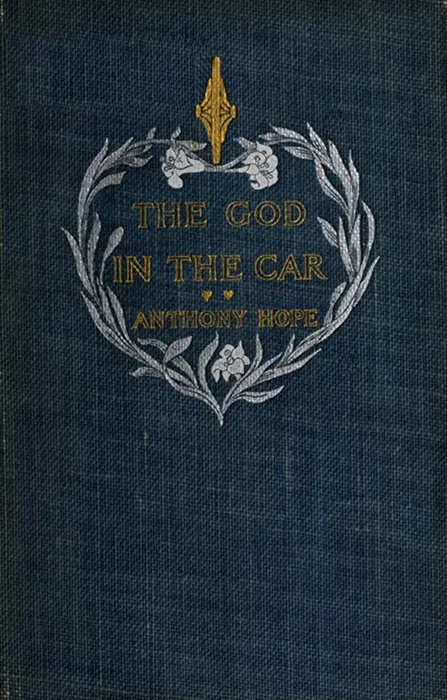
"The God in the Car: A Novel" by Anthony Hope is a fictional work written in the late 19th century. The story appears to delve into the lives of several socialites navigating relationships and business affairs, with a central character named Willie Ruston who is involved in a new venture concerning the African territory of Omofaga. The narrative seems to oscillate between personal dynamics and the challenging financial schemes of that era, including the challenges posed by competing interests. The opening of the novel introduces a lively social gathering where Miss Ferrars is seeking to identify a man of intrigue, Foster Belford, while exchanging witty banter with Lord Semingham. Social hierarchies and the dynamics of friendship and flirtation are caricatured through the conversations, particularly spotlighting the character of Mrs. Dennison, who is depicted as thoughtful and somewhat troubled by her past connections, especially with Ruston. As the characters engage in discussions about business and memories, the tone hints at underlying tensions tying their personal lives to the larger economic ambitions surrounding Ruston’s endeavors in Omofaga, setting the stage for further clashes between social expectation and personal ambition.
Introduction adapted from the source catalogue; source summaries may be automatically generated.
Free to read · English · 69,737 words · No account needed
MAKE TIME FOR A GOOD BOOK
On by default. Untick to stop anonymous reading totals. Each page counts after 10 seconds in view. How this works.
Anonymous counting is on unless you have switched it off.
Tom Loring had arranged to spend the whole of the autumn in London. His Omofaga articles had gained such favourable notice that his editor had engaged him to contribute a series dealing with African questions and African companies (and the latter are in the habit of producing the former), while he was occupied, on his own account, at the British Museum, in making way with a treatise of a politico-philosophical description, which had been in his head for several years. He hailed with pleasure the prospect of getting on with it; the leisure afforded him by his departure from the Dennisons was, in its way, a consolation for the wrench involved in the parting. Could he have felt more at ease about the course of events in his absence, he would have endured his sojourn in town with equanimity.
Of course, the place was fast becoming a desert, but, at this moment, chance, which always objects to our taking things for granted, brought a carriage exactly opposite the bench on which Tom was seated, and he heard his name called in a high-pitched voice that he recognised. Looking up, he saw Mrs. Cormack leaning over the side of her victoria, smiling effusively and beckoning to him. That everyone should go save Mrs. Cormack seemed to Tom the irony of circumstance. With a mutter to himself, he rose and walked up to the carriage. He then perceived, to his surprise, that it contained, hidden behind Mrs. Cormack's sleeves--sleeves were large that year--another inmate. It was Evan Haselden, and he greeted Tom with an off-hand nod.
"The good God," cried Mrs. Cormack, "evidently kept me here to console young men! Are you left desolate like Mr. Haselden here?"
"Well, it's not very lively," responded Tom, as amiably as he could.
"No, it isn't," she agreed, with the slightest, quickest glance at Evan, who was staring moodily at the tops of the trees.
Tom laughed. The woman amused him in spite of himself. And her failures to extract entertainment from poor heart-broken Evan struck him as humorous.
"But I'm at work," he went on, "so I don't mind."
"Ah! Are you still crushing----?"
"No," interrupted Tom quickly. "That's done."
"I should not have guessed it," said Mrs. Cormack, opening her eyes.
"I mean, I've finished the articles on that point."
"That is rather a different thing," laughed she.
"I'm afraid so," said Tom.
"I wish to heaven it wasn't!" ejaculated Evan suddenly, without shifting his gaze from the treetops.
"Oh, he is very very bad," whispered Mrs. Cormack. "Poor young man! Are
you bad too?"
"Eh?"
"Oh, but I know."
"Oh, no, you don't," said Tom.
Your reading position is saved on this browser. Take it to another device with a library code. Reading pages adapt to text, rather than matching a printed edition.
Anthony Hope

Anthony Hope

Anthony Hope

Anthony Hope
BEHIND THE BOOK
This eBook is for the use of anyone anywhere in the United States and most other parts of the world at no cost and with almost no restrictions whatsoever. You may copy it, give it away or re-use it under the terms of the Project Gutenberg License included with this eBook or online at www.gutenberg.org. If you are not located in the United States, you will have to check the laws of the country where you are located before using this eBook. Read the source licence.
The original source file, including credits and licence, is retained by this library. Request an original-format copy at no charge. Please include the book title and Project Gutenberg identifier #40583.
KEEP YOUR CURIOSITY GOING
Coulson Kernahan

Maurice Baring
Frances Wright
Cécile Tormay

Frederic Jesup Stimson

W. H. P. (William Henry Pope) Jarvis