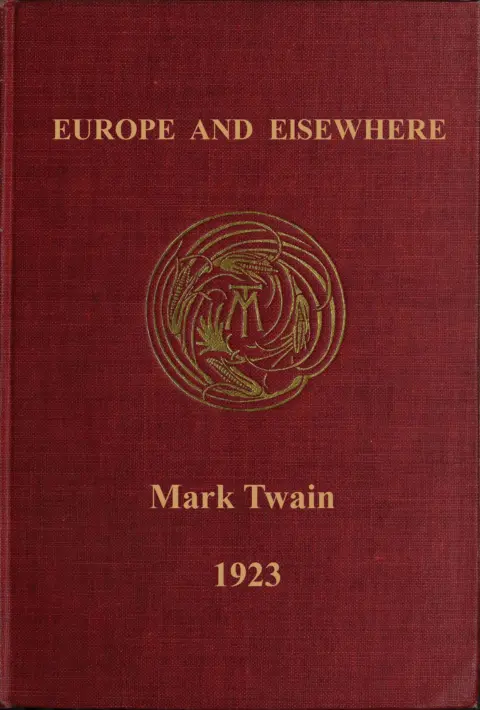
Europe and elsewhere
Mark Twain
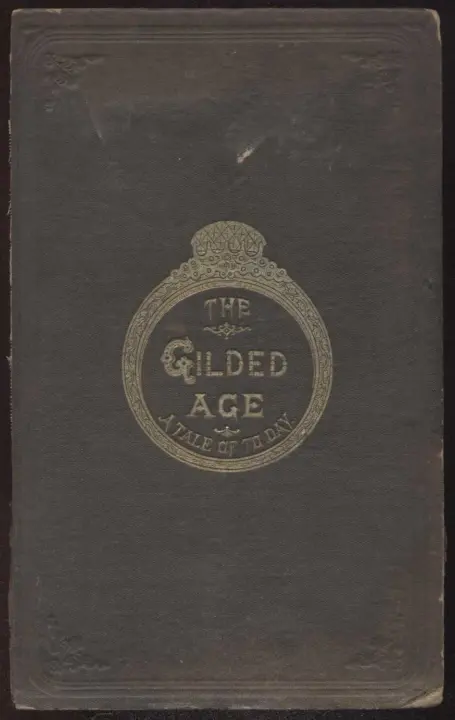
THE CLASSIC COLLECTION · 1873
"The Gilded Age: A Tale of Today" by Mark Twain and Charles Dudley Warner is a satirical novel published in 1873. It follows a poor rural family's attempts to strike it rich by selling their vast Tennessee land, while their adopted daughter Laura becomes a Washington lobbyist seeking congressional support. Meanwhile, two young men pursue fortune through land speculation. The novel skewers the greed, materialism, and political corruption of post-Civil War America—so effectively that it named an entire era of American history.
Introduction adapted from the source catalogue; source summaries may be automatically generated.
Free to read · English · 158,492 words · No account needed
MAKE TIME FOR A GOOD BOOK
On by default. Untick to stop anonymous reading totals. Each page counts after 10 seconds in view. How this works.
Anonymous counting is on unless you have switched it off.
“Have you been at the Capitol to-day, Mr. Hawkins?”
Washington had not. “Is anything uncommon going on?”
“They say it was very exciting. The Alabama business you know. Gen. Sutler, of Massachusetts, defied England, and they say he wants war.”
“He wants to make himself conspicuous more like,” said Laura. “He always, you have noticed, talks with one eye on the gallery, while the other is on the speaker.”
“Well, my husband says, its nonsense to talk of war, and wicked. He knows what war is. If we do have war, I hope it will be for the patriots of Cuba. Don't you think we want Cuba, Mr. Hawkins?”
“I think we want it bad,” said Washington. “And Santo Domingo. Senator Dilworthy says, we are bound to extend our religion over the isles of the sea. We've got to round out our territory, and--”
Washington's further observations were broken off by Laura, who whisked him off to another part of the room, and reminded him that they must make their adieux.
“How stupid and tiresome these people are,” she said. “Let's go.”
They were turning to say good-by to the hostess, when Laura's attention was arrested by the sight of a gentleman who was just speaking to Mrs. Schoonmaker. For a second her heart stopped beating. He was a handsome man of forty and perhaps more, with grayish hair and whiskers, and he walked with a cane, as if he were slightly lame. He might be less than forty, for his face was worn into hard lines, and he was pale.
No. It could not be, she said to herself. It is only a resemblance. But as the gentleman turned and she saw his full face, Laura put out her hand and clutched Washington's arm to prevent herself from falling.
Washington, who was not minding anything, as usual, looked 'round in wonder. Laura's eyes were blazing fire and hatred; he had never seen her look so before; and her face, was livid.
“Why, what is it, sis? Your face is as white as paper.”
“It's he, it's he. Come, come,” and she dragged him away.
“It's who?” asked Washington, when they had gained the carriage.
“It's nobody, it's nothing. Did I say he? I was faint with the heat. Don't mention it. Don't you speak of it,” she added earnestly, grasping his arm.
When she had gained her room she went to the glass and saw a pallid and
haggard face.
Your reading position is saved on this browser. Take it to another device with a library code. Reading pages adapt to text, rather than matching a printed edition.
BEHIND THE BOOK
This eBook is for the use of anyone anywhere in the United States and most other parts of the world at no cost and with almost no restrictions whatsoever. You may copy it, give it away or re-use it under the terms of the Project Gutenberg License included with this eBook or online at www.gutenberg.org. If you are not located in the United States, you will have to check the laws of the country where you are located before using this eBook. Read the source licence.
The original source file, including credits and licence, is retained by this library. Request an original-format copy at no charge. Please include the book title and Project Gutenberg identifier #3178.
KEEP YOUR CURIOSITY GOING
Coulson Kernahan

Maurice Baring
Frances Wright
Cécile Tormay

Frederic Jesup Stimson

W. H. P. (William Henry Pope) Jarvis