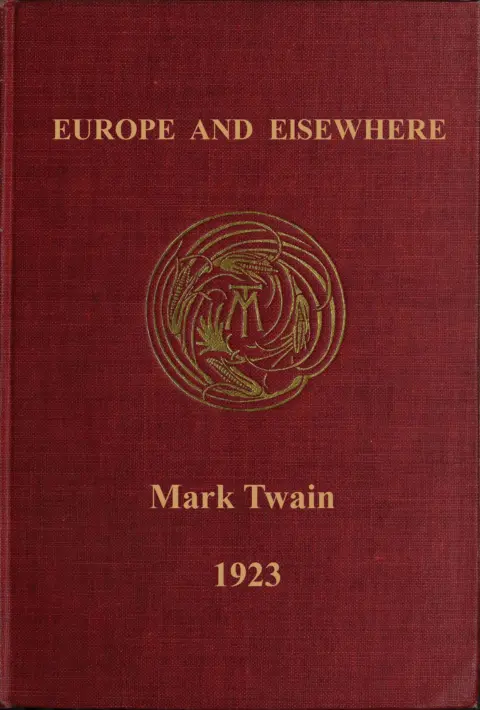
Europe and elsewhere
Mark Twain
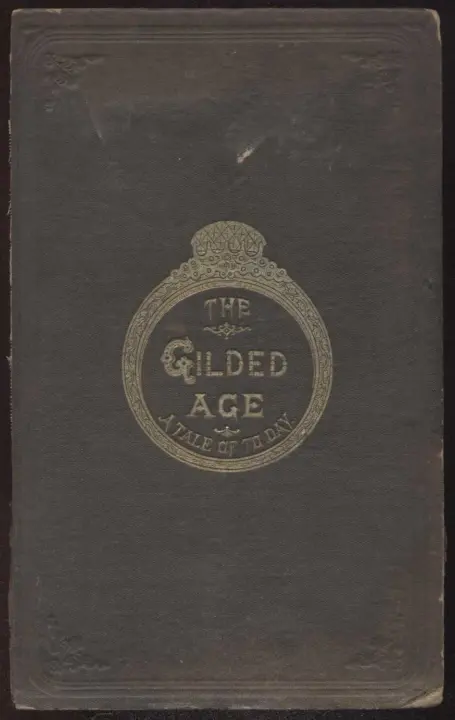
THE CLASSIC COLLECTION · 1873
"The Gilded Age: A Tale of Today" by Mark Twain and Charles Dudley Warner is a satirical novel published in 1873. It follows a poor rural family's attempts to strike it rich by selling their vast Tennessee land, while their adopted daughter Laura becomes a Washington lobbyist seeking congressional support. Meanwhile, two young men pursue fortune through land speculation. The novel skewers the greed, materialism, and political corruption of post-Civil War America—so effectively that it named an entire era of American history.
Introduction adapted from the source catalogue; source summaries may be automatically generated.
Free to read · English · 158,492 words · No account needed
MAKE TIME FOR A GOOD BOOK
On by default. Untick to stop anonymous reading totals. Each page counts after 10 seconds in view. How this works.
Anonymous counting is on unless you have switched it off.
These day receptions were attended by more women than men, and those interested in the problem might have studied the costumes of the ladies present, in view of this fact, to discover whether women dress more for the eyes of women or for effect upon men. It is a very important problem, and has been a good deal discussed, and its solution would form one fixed, philosophical basis, upon which to estimate woman's character. We are inclined to take a medium ground, and aver that woman dresses to please herself, and in obedience to a law of her own nature.
“They are coming this way,” said Blanche. People who made way for them to pass, turned to look at them. Washington began to feel that the eyes of the public were on him also, and his eyes rolled about, now towards the ceiling, now towards the floor, in an effort to look unconscious.
“Good morning, Miss Hawkins. Delighted. Mr. Hawkins. My friend, Miss
Medlar.”
Mr. Hawkins, who was endeavoring to square himself for a bow, put his foot through the train of Mrs. Senator Poplin, who looked round with a scowl, which turned into a smile as she saw who it was. In extricating himself, Mr. Hawkins, who had the care of his hat as well as the introduction on his mind, shambled against Miss Blanche, who said pardon, with the prettiest accent, as if the awkwardness were her own. And Mr. Hawkins righted himself.
“Don't you find it very warm to-day, Mr. Hawkins?” said Blanche, by way
of a remark.
“It's awful hot,” said Washington.
“It's warm for the season,” continued Blanche pleasantly. “But I suppose you are accustomed to it,” she added, with a general idea that the thermometer always stands at 90 deg. in all parts of the late slave states. “Washington weather generally cannot be very congenial to you?”
“It's congenial,” said Washington brightening up, “when it's not
congealed.”
“That's very good. Did you hear, Grace, Mr. Hawkins says it's congenial when it's not congealed.”
“What is, dear?” said Grace, who was talking with Laura.
The conversation was now finely under way. Washington launched out an
observation of his own.
“Did you see those Japs, Miss Leavitt?”
“Oh, yes, aren't they queer. But so high-bred, so picturesque. Do you think that color makes any difference, Mr. Hawkins? I used to be so prejudiced against color.”
“Did you? I never was. I used to think my old mammy was handsome.”
“How interesting your life must have been! I should like to hear about
it.”
Washington was about settling himself into his narrative style, when Mrs. Gen. McFingal caught his eye.
Your reading position is saved on this browser. Take it to another device with a library code. Reading pages adapt to text, rather than matching a printed edition.
BEHIND THE BOOK
This eBook is for the use of anyone anywhere in the United States and most other parts of the world at no cost and with almost no restrictions whatsoever. You may copy it, give it away or re-use it under the terms of the Project Gutenberg License included with this eBook or online at www.gutenberg.org. If you are not located in the United States, you will have to check the laws of the country where you are located before using this eBook. Read the source licence.
The original source file, including credits and licence, is retained by this library. Request an original-format copy at no charge. Please include the book title and Project Gutenberg identifier #3178.
KEEP YOUR CURIOSITY GOING
Coulson Kernahan

Maurice Baring
Frances Wright
Cécile Tormay

Frederic Jesup Stimson

W. H. P. (William Henry Pope) Jarvis