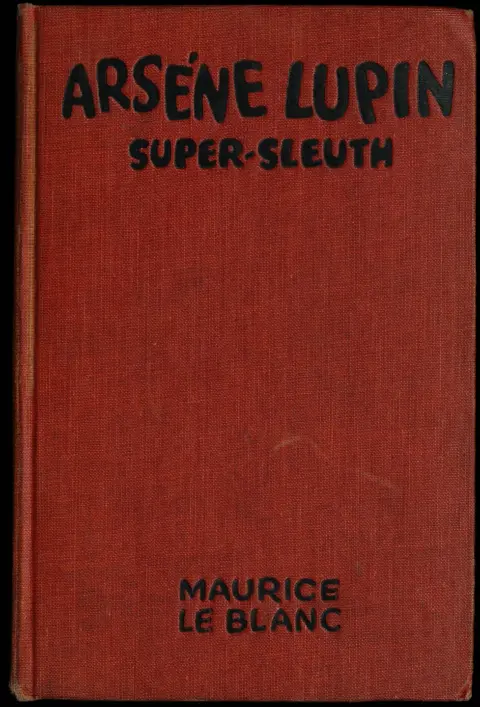
Arsène Lupin, super-sleuth
Maurice Leblanc
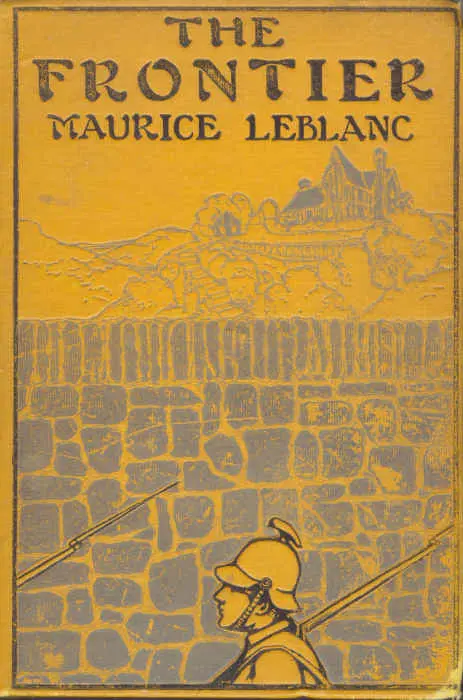
THE CLASSIC COLLECTION · 1912
"The Frontier" by Maurice Leblanc is a novel written in the early 20th century. The story revolves around the character of Morestal, a patriotic farmer and mayor, whose life is intricately connected to the tension between France and Germany, set against the backdrop of looming war. Through the lives of Morestal, his son Philippe, and the intertwining paths of other residents near the French-German border, the narrative grapples with themes of loyalty, national pride, and the personal costs of conflict. The opening of the book sets a tense atmosphere as Morestal and his wife discuss the ongoing disturbances along the French-German frontier, specifically the repeated damage to a boundary post, symbolizing deeper issues of national integrity and personal conflict stemming from past wars. We see Morestal's fierce pride in France and a palpable sense of foreboding as he reflects on the possibility of conflict re-emerging with Germany. The arrival of their son Philippe, a professor who has differing views, introduces an imminent clash of ideologies within the family, encapsulating the overarching struggle between old patriotic sentiments and newer, more progressive worldviews. As Philippe returns home with his wife Marthe, layers of personal history entwine with the national narrative, hinting at dramatic tensions both within the family and across the border.
Introduction adapted from the source catalogue; source summaries may be automatically generated.
Free to read · English · 57,388 words · No account needed
MAKE TIME FOR A GOOD BOOK
On by default. Untick to stop anonymous reading totals. Each page counts after 10 seconds in view. How this works.
Anonymous counting is on unless you have switched it off.
"Very well, supposing," she said, pretending to be serious. "Philippe loves another woman. He is madly in love with her. What then?"
"In that case, what would you do?"
"Upon my word ... I've never thought about it."
"Wouldn't you go for a divorce?"
"And my children?"
"But, if he wanted to be divorced?"
"Then it would be, 'Good-bye, M. Philippe!'"
Suzanne reflected, without taking her eyes from Marthe, as though she were spying for a sign of uneasiness on her features or seeking to fathom the depths of her most secret thoughts.
She murmured:
"And, if he deceived you?"
This time, the thrust went home. Marthe shivered, stung to the quick. Her face altered. And she said, in a voice which she made an effort to contain:
"Oh, that, no! If Philippe fell in love with another woman, if he wanted to begin his life again, without me, and if he confessed it frankly, I should consent to everything ... yes, to everything, even to a divorce, however great my despair.... But treachery, lying ..."
"You would not forgive him?"
"Never! Philippe is not a man whom one can forgive. He is a conscious man, who knows what he is doing, incapable of a weakness; and no forgiveness would absolve him. Besides, I myself could not ... no ... I could not indeed." And she added, "I have too much pride."
The phrase was gravely and simply uttered and revealed a haughtiness of soul which Suzanne had not suspected. She felt a sort of confusion in the presence of the rival whom she was attacking and who held her at bay with such disdain.
A long silence divided the two women; and Marthe said:
"You're in one of your wicked moods to-day, Suzanne, aren't you?"
"I am too happy to be wicked," chuckled the girl. "Only it's such a strange happiness! I am afraid it won't last."
"Your marriage ..."
"I won't get married!" declared Suzanne, excitedly. "I won't get married at any price! I hate that man.... He's not the only man in the world, is he? There are others ... others who will love me.... I too am worthy of being loved ... worthy of being lived for!..."
There were tears in her voice; and so great a despondency overwhelmed her features that Marthe felt a longing to console her, as was her habit in such cases. Nevertheless, she said nothing. Suzanne had wounded her, not so much by her questions as by her attitude, by a certain sarcasm in her accent and by an air of defiance that mingled with the expression of her grief.
Your reading position is saved on this browser. Take it to another device with a library code. Reading pages adapt to text, rather than matching a printed edition.
Maurice Leblanc

Maurice Leblanc
Maurice Leblanc
Maurice Leblanc
BEHIND THE BOOK
This eBook is for the use of anyone anywhere in the United States and most other parts of the world at no cost and with almost no restrictions whatsoever. You may copy it, give it away or re-use it under the terms of the Project Gutenberg License included with this eBook or online at www.gutenberg.org. If you are not located in the United States, you will have to check the laws of the country where you are located before using this eBook. Read the source licence.
The original source file, including credits and licence, is retained by this library. Request an original-format copy at no charge. Please include the book title and Project Gutenberg identifier #28480.
KEEP YOUR CURIOSITY GOING
Cécile Tormay

Moritz Busch
Coulson Kernahan
John L. Ransom

Maurice Baring
Frances Wright