Arsène Lupin, super-sleuth
Maurice Leblanc
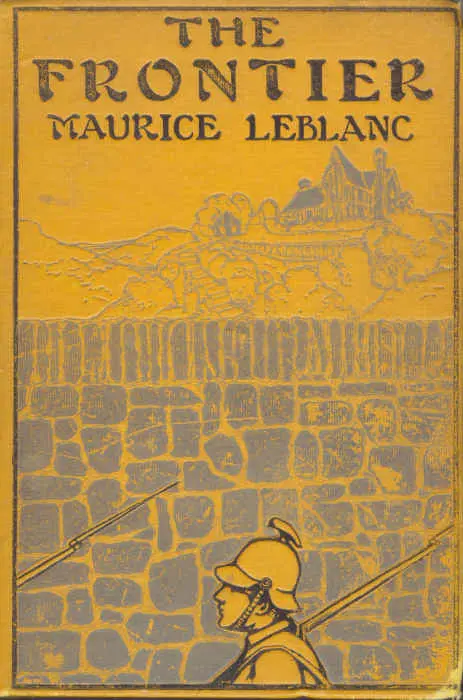
THE CLASSIC COLLECTION · 1912
"The Frontier" by Maurice Leblanc is a novel written in the early 20th century. The story revolves around the character of Morestal, a patriotic farmer and mayor, whose life is intricately connected to the tension between France and Germany, set against the backdrop of looming war. Through the lives of Morestal, his son Philippe, and the intertwining paths of other residents near the French-German border, the narrative grapples with themes of loyalty, national pride, and the personal costs of conflict. The opening of the book sets a tense atmosphere as Morestal and his wife discuss the ongoing disturbances along the French-German frontier, specifically the repeated damage to a boundary post, symbolizing deeper issues of national integrity and personal conflict stemming from past wars. We see Morestal's fierce pride in France and a palpable sense of foreboding as he reflects on the possibility of conflict re-emerging with Germany. The arrival of their son Philippe, a professor who has differing views, introduces an imminent clash of ideologies within the family, encapsulating the overarching struggle between old patriotic sentiments and newer, more progressive worldviews. As Philippe returns home with his wife Marthe, layers of personal history entwine with the national narrative, hinting at dramatic tensions both within the family and across the border.
Introduction adapted from the source catalogue; source summaries may be automatically generated.
Free to read · English · 57,388 words · No account needed
MAKE TIME FOR A GOOD BOOK
On by default. Untick to stop anonymous reading totals. Each page counts after 10 seconds in view. How this works.
Anonymous counting is on unless you have switched it off.
"There!" she said, after a few minutes. "The storm is over."
She raised her beautiful face, now lit with a smile:
"No black on my eye-lashes, you see," she added, gaily. "No rouge on my lips.... Take note, please.... Nothing that comes off!"
This versatility of mood, the despair, which he had felt to be real, followed by a light-heartedness which he felt to be equally sincere; all this bewildered Philippe.
She began to laugh:
"Philippe! Philippe! You look as though you did not understand much about women ... and even less about girls!"
She rose and went to the next room, which was her bedroom, as he saw by the white curtains and the arrangement of the furniture; and she returned with an album, in which she showed him, on the first page, the photograph of a child, crying:
"Look, Philippe. I haven't changed. At two years old, just as now, I used to have great big sorrows and eyes that flowed like taps."
He turned the pages of the album. There were portraits of Suzanne at all ages: Suzanne as a child, Suzanne as a little girl, Suzanne as a young girl; and each was more bewitching than the last.
At the bottom of one page, he read:
"Suzanne, twenty."
"Lord, how pretty you were!" he muttered, dazed by that image of beauty
and gladness.
And he looked at Suzanne, in spite of himself.
"I have grown older," she said. "Three long years...."
He shrugged his shoulders without replying, for, on the contrary, he thought her lovelier still; and he turned the pages. Two loose photographs slipped to the floor. She put out her hand to take them, but did not complete the movement.
"May I?" asked Philippe.
"Yes, certainly."
He was much astonished when he examined one of the portraits:
"This," he said, "makes you look older than you are.... How funny! And why that old-fashioned dress?... That quaint way of doing your hair.... It's you ... and yet it's not you.... Who is it?"
"Mamma," she said.
He was surprised, knowing Jorance's persistent rancour, that he should have given his daughter the portrait of a mother whom she had been taught to believe long dead. And he remembered the riotous adventures of the divorced wife, now the beautiful Mme. de Glaris, who was celebrated in the chronicles of fast society for her dresses and her jewellery and whose photographs were displayed in the shop-windows of the Rue de Rivoli for the admiration of the passers-by.
"Yes," he said, awkwardly and not quite knowing what he was saying, "yes, you are like her.... And is this also ...?"
Your reading position is saved on this browser. Take it to another device with a library code. Reading pages adapt to text, rather than matching a printed edition.
Maurice Leblanc
Maurice Leblanc
Maurice Leblanc
Maurice Leblanc
BEHIND THE BOOK
This eBook is for the use of anyone anywhere in the United States and most other parts of the world at no cost and with almost no restrictions whatsoever. You may copy it, give it away or re-use it under the terms of the Project Gutenberg License included with this eBook or online at www.gutenberg.org. If you are not located in the United States, you will have to check the laws of the country where you are located before using this eBook. Read the source licence.
The original source file, including credits and licence, is retained by this library. Request an original-format copy at no charge. Please include the book title and Project Gutenberg identifier #28480.
KEEP YOUR CURIOSITY GOING
Cécile Tormay

Moritz Busch
Coulson Kernahan
John L. Ransom

Maurice Baring
Frances Wright