Arsène Lupin, super-sleuth
Maurice Leblanc
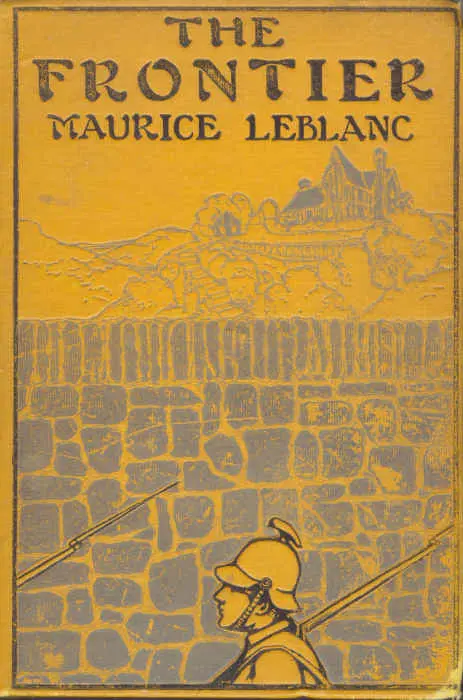
THE CLASSIC COLLECTION · 1912
"The Frontier" by Maurice Leblanc is a novel written in the early 20th century. The story revolves around the character of Morestal, a patriotic farmer and mayor, whose life is intricately connected to the tension between France and Germany, set against the backdrop of looming war. Through the lives of Morestal, his son Philippe, and the intertwining paths of other residents near the French-German border, the narrative grapples with themes of loyalty, national pride, and the personal costs of conflict. The opening of the book sets a tense atmosphere as Morestal and his wife discuss the ongoing disturbances along the French-German frontier, specifically the repeated damage to a boundary post, symbolizing deeper issues of national integrity and personal conflict stemming from past wars. We see Morestal's fierce pride in France and a palpable sense of foreboding as he reflects on the possibility of conflict re-emerging with Germany. The arrival of their son Philippe, a professor who has differing views, introduces an imminent clash of ideologies within the family, encapsulating the overarching struggle between old patriotic sentiments and newer, more progressive worldviews. As Philippe returns home with his wife Marthe, layers of personal history entwine with the national narrative, hinting at dramatic tensions both within the family and across the border.
Introduction adapted from the source catalogue; source summaries may be automatically generated.
Free to read · English · 57,388 words · No account needed
MAKE TIME FOR A GOOD BOOK
On by default. Untick to stop anonymous reading totals. Each page counts after 10 seconds in view. How this works.
Anonymous counting is on unless you have switched it off.
"Do you mind if I finish my letters?" asked Marthe, taking up her pen.
Suzanne strolled round the room, looking out of the window, leant to see if Philippe's was open, then sat down opposite Marthe and examined her long and carefully. She noted the eye-lids, which were a little rumpled; the uneven colouring; the tiny wrinkles on the temples; a few white hairs mingling with the dark tresses; all that proclaims time's little victories over waning youth. And, raising her eyes, she saw herself in a glass.
Marthe surprised her glance and cried, with an admiration free from all
envy:
"You are splendid, Suzanne! You look like a triumphant goddess. What
triumph have you achieved?"
Suzanne flushed and, in her confusion, said, at random:
"But you, Marthe, you look worried...."
"Well, yes ... perhaps I am."
And Marthe told how, on the previous evening, finding herself alone with her mother-in-law, she had spoken to her of Philippe's new ideas, the spirit of his work, his plan of resigning his position and his firm intention to have an explanation with M. Morestal.
"Well?"
"Well," said Marthe, "my mother-in-law flew out. She absolutely objects to any explanation whatever."
"Why?"
"M. Morestal is suffering from heart-trouble. Dr. Borel, who has attended him for the last twenty years, says that he must be spared any annoyance, any excessive excitement. And an interview with Philippe might have fatal results.... What can one reply to that?"
"You will have to tell Philippe."
"Certainly. And he, he must either keep silent and continue to lead an intolerable existence, or else, at the cost of the most terrible anguish, face M. Morestal's anger."
She was silent for a moment and then, striking the table with her
clenched fists:
"Oh," she exclaimed, "if I could only take all those worries upon myself and save Philippe's peace of mind!"
Suzanne felt all the force of her vehemence and energy. No pain would
have frightened Marthe, no sacrifice would have been beyond her
strength.
"Do you love Philippe very much?" she asked.
Marthe smiled:
"With all my heart.... He deserves it."
The younger woman felt a certain bitterness and could not help saying:
"Does he love you as much as you love him?"
"Why, yes, I think so.... I deserve it too."
"And do you trust him?"
"Oh, fully! Philippe is the most loyal creature I know."
"Still ..."
"What?"
"Nothing."
"Yes, say what you were going to.... Oh, you need not be afraid of
asking me questions!"
"Well, I was thinking ... suppose Philippe loved another woman...."
Marthe burst out laughing:
"If you knew how little importance Philippe attaches to all that
business of love!"
"However, supposing ..."
Your reading position is saved on this browser. Take it to another device with a library code. Reading pages adapt to text, rather than matching a printed edition.
Maurice Leblanc
Maurice Leblanc
Maurice Leblanc
Maurice Leblanc
BEHIND THE BOOK
This eBook is for the use of anyone anywhere in the United States and most other parts of the world at no cost and with almost no restrictions whatsoever. You may copy it, give it away or re-use it under the terms of the Project Gutenberg License included with this eBook or online at www.gutenberg.org. If you are not located in the United States, you will have to check the laws of the country where you are located before using this eBook. Read the source licence.
The original source file, including credits and licence, is retained by this library. Request an original-format copy at no charge. Please include the book title and Project Gutenberg identifier #28480.
KEEP YOUR CURIOSITY GOING
Cécile Tormay

Moritz Busch
Coulson Kernahan
John L. Ransom

Maurice Baring
Frances Wright