Arsène Lupin, super-sleuth
Maurice Leblanc
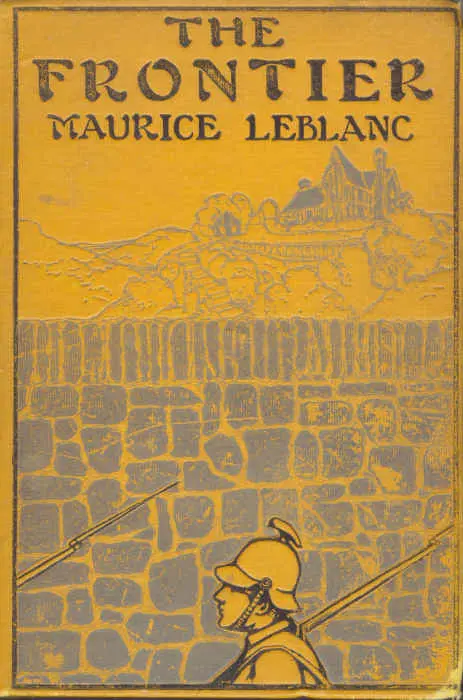
THE CLASSIC COLLECTION · 1912
"The Frontier" by Maurice Leblanc is a novel written in the early 20th century. The story revolves around the character of Morestal, a patriotic farmer and mayor, whose life is intricately connected to the tension between France and Germany, set against the backdrop of looming war. Through the lives of Morestal, his son Philippe, and the intertwining paths of other residents near the French-German border, the narrative grapples with themes of loyalty, national pride, and the personal costs of conflict. The opening of the book sets a tense atmosphere as Morestal and his wife discuss the ongoing disturbances along the French-German frontier, specifically the repeated damage to a boundary post, symbolizing deeper issues of national integrity and personal conflict stemming from past wars. We see Morestal's fierce pride in France and a palpable sense of foreboding as he reflects on the possibility of conflict re-emerging with Germany. The arrival of their son Philippe, a professor who has differing views, introduces an imminent clash of ideologies within the family, encapsulating the overarching struggle between old patriotic sentiments and newer, more progressive worldviews. As Philippe returns home with his wife Marthe, layers of personal history entwine with the national narrative, hinting at dramatic tensions both within the family and across the border.
Introduction adapted from the source catalogue; source summaries may be automatically generated.
Free to read · English · 57,388 words · No account needed
MAKE TIME FOR A GOOD BOOK
On by default. Untick to stop anonymous reading totals. Each page counts after 10 seconds in view. How this works.
Anonymous counting is on unless you have switched it off.
Suzanne Jorance pushed the swing-gate and entered the grounds of the Old
Mill.
She was dressed in white and her face looked fresh and cool under a large hat of Leghorn straw, with its black-velvet strings hanging loose upon her shoulders. Her short skirt showed her dainty ankles. She walked with a brisk step, using a tall, iron-shod stick, while her disengaged hand crumpled some flowers which she had gathered on the way and which she dropped heedlessly as she went.
The Morestals' peaceful house was waking in the morning sun. Several of the windows were open; and Suzanne saw Marthe writing at the table in her bedroom.
She called out:
"Can I come up?"
But Mme. Morestal appeared at one of the windows of the drawing-room and made an imperious sign to her:
"Hush! Don't speak!"
"What's the matter?" asked Suzanne, when she joined the old lady.
"They're asleep."
"Who?"
"Why, the father and son."
"Oh!" said Suzanne. "Philippe too?..."
"Yes, they must have come in late and they are resting. Neither of them has rung his bell yet. But tell me, Suzanne, aren't you going away?"
"To-morrow ... or the next day.... I confess, I'm in no hurry to go."
Mme. Morestal took her to her daughter-in-law's room and asked:
"Philippe's still asleep, isn't he?"
"I suppose so," said Marthe. "I haven't heard him move...."
"Nor I Morestal.... And yet he's an early riser, as a rule.... And Philippe, who wanted to go tramping at daybreak!... However, so much the better, sleep suits both of my men.... By the way, Marthe, didn't the shooting wake you in the night?"
"The shooting!"
"Oh, of course, your room is on the other side. The sound came from the frontier.... Some poacher, I suppose...."
"Were M. Morestal and Philippe in?"
"Surely! It must have been one or two o'clock ... perhaps later ... I
don't quite know."
She put the tea-pot and the jar of honey, which Marthe had had for breakfast, on the tray; and, with her mania for tidying, obeying some mysterious principle of symmetry, settled her daughter-in-law's things and any piece of furniture in the room that had been moved from its place. This done, with her hands hanging before her, she looked round for an excuse to discontinue this irksome activity. Then, discovering none, she left the room.
"How early you are," said Marthe to Suzanne.
"I wanted air ... and movement.... Besides, I told Philippe that I would come and fetch him. I want to go and see the ruins of the Petite-Chartreuse with him ... It's a bore that he's not up yet."
She seemed disappointed at this accident which deprived her of a
pleasure.
Your reading position is saved on this browser. Take it to another device with a library code. Reading pages adapt to text, rather than matching a printed edition.
Maurice Leblanc
Maurice Leblanc
Maurice Leblanc
Maurice Leblanc
BEHIND THE BOOK
This eBook is for the use of anyone anywhere in the United States and most other parts of the world at no cost and with almost no restrictions whatsoever. You may copy it, give it away or re-use it under the terms of the Project Gutenberg License included with this eBook or online at www.gutenberg.org. If you are not located in the United States, you will have to check the laws of the country where you are located before using this eBook. Read the source licence.
The original source file, including credits and licence, is retained by this library. Request an original-format copy at no charge. Please include the book title and Project Gutenberg identifier #28480.
KEEP YOUR CURIOSITY GOING
Cécile Tormay

Moritz Busch
Coulson Kernahan
John L. Ransom

Maurice Baring
Frances Wright